

Creativity is no longer confined to campaigns or communications. It lives in decisions, in systems, and in experiences. And in the most unlikely of places, like a regulated medical industry, it becomes the very engine of growth, trust, and innovation.
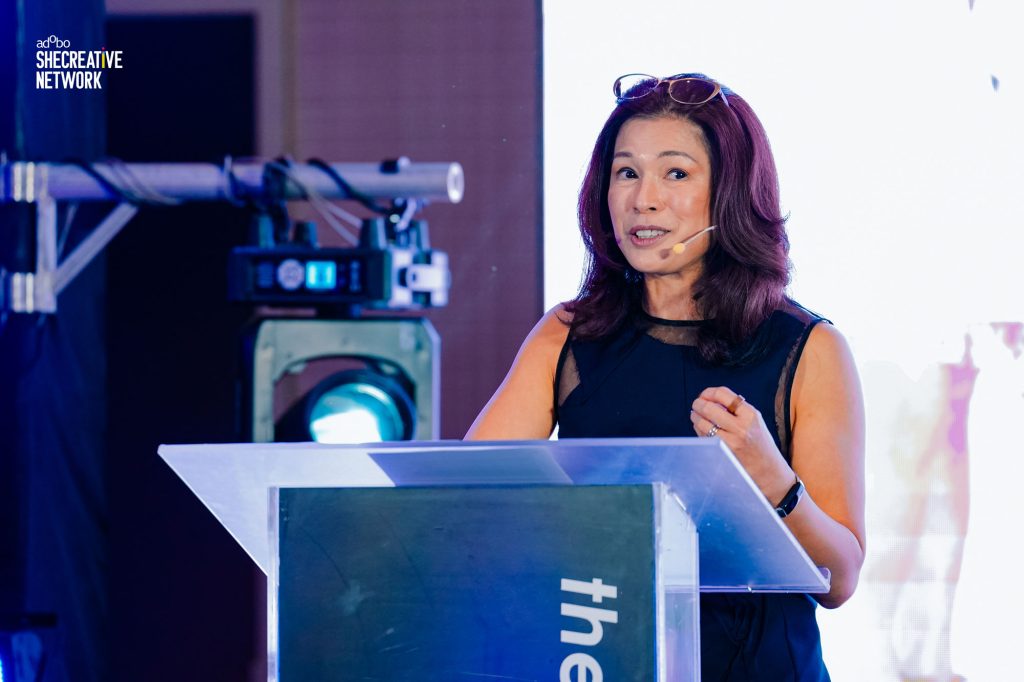
This is what Belo Medical Group Chief Executive Officer (CEO) Gina Lorenzana implied at the adobo SheCreative Network Conference 2026 held at Shangri-La The Fort in Taguig City on Tuesday, March 24. She offered a perspective shaped not by trend cycles or campaign wins, but by the realities of a highly regulated, high-stakes industry where creativity is not decoration, but discipline.
Under her leadership, Belo has evolved from a clinical service provider into one of the Philippines’ most enduring healthcare brands. This transformation, she explained, was not driven solely by aesthetics or advertising, but by embedding creativity into the very system of the business — how it understands people, develops solutions, and delivers experiences at every touchpoint.
“In medical aesthetics, creativity is really about going beyond what is there and what is obvious,” she said, pushing back against the idea that creativity lives only in advertising or design.
According to her, creativity in Belo operates at a much deeper level, guiding how problems are understood, how solutions are developed, and how trust is built in an environment where mistakes carry real consequences.
“It’s very challenging because we work with professionals, and they work under strict regulations,” she noted. “So when we talk about creativity, it really needs to be something that is beyond superficial.”
Starting with what people really mean
Gina framed Belo’s strategy around three guiding principles, starting with one that anchors both medicine and creativity: empathy. She pointed out that what people express isn’t always the full story. For instance, a request for a procedure often carries something deeper. It could be a desire for confidence, a sense of control, or a change in how one is perceived.
“What people say isn’t really what they necessarily mean, right? Because underneath is actually what’s more important. Underneath what they say is a deeply human concern, and that is something that we go at length to really understand at Belo,” she explained.
Gina also underscored that patients aren’t simply seeking treatments; they’re pursuing transformation. By recognizing that, the brand moves beyond a transactional model and into something more intentional. Instead of focusing on selling procedures, Belo designs experiences that support a patient’s personal journey, where emotional impact matters just as much as clinical results. As Gina puts it, while medical services address symptoms, a true healthcare brand understands the person behind them.
“When we understand human emotion more than the delivery of the service, it is about how we made people feel. It goes back to all of the things we learned around marketing, around brands, and how we make things stick. It is about how we made people feel. That’s what’s most important.”
Making innovation matter
Gina’s second principle is differentiation, but not in the way most healthcare brands define it. At Belo, differentiation isn’t about having the most advanced machines or the longest list of treatments. It’s about what she calls “advanced science, simply delivered.”
In an industry saturated with claims of breakthrough technology and miracle solutions, she pointed out that patients today are overwhelmed rather than reassured. For her, constant exposure to information doesn’t build confidence, but creates confusion.
“The more you say, the less is actually remembered,” she said, underscoring how excessive messaging often dilutes, rather than strengthens, trust.
Hence, Gina believes that the answer isn’t to compete on noise, but to reduce it. Creativity, in this context, becomes an act of simplification. Instead of taking every new technology at face value, the company takes a more critical and deliberate approach. Devices and treatments are rigorously tested, refined, and, in many cases, reworked entirely.
“Technology alone doesn’t bring trust. True differentiation happens when you know what to do with that technology. Putting [technology, service, and the people we serve] all together is what really creates the difference. And that’s what differentiates just services from real, enduring brands.”
Building a brand people actually experience
Gina’s third principle turns toward the brand itself. For Belo, differentiation and empathy only hold weight if they are anchored in a clear and consistent story.
“You build a consistent brand through a brand story,” she said, emphasizing that this story must live across every touchpoint, not just in campaigns or presentations, because a brand, in her view, isn’t defined by what it claims, but by what people remember and trust.
“The strongest of brands really embed their story into the heart of their operations,” Gina said.
“When customers experience that care in all the touchpoints, they themselves will talk about the brand to other people — in private groups, not just in social media, but in private groups and through word of mouth.
Gina ties this back to Belo’s larger philosophy that creativity and innovation are ultimately about making advanced care accessible and meaningful. It’s not just about the science or the technology, but about how these are delivered within a system that understands people.
“Creativity and innovation are something that really is about making advanced care accessible to all. That’s, I think, the lifeblood of what we have learned in the Belo Group,” she shared.
Rethinking creativity’s role in business
Ultimately, Gina reframed what creativity actually means in a business context. Stripped of buzzwords, she defined it simply as the ability to solve problems in ways that haven’t been done before, and that kind of problem-solving begins with listening.
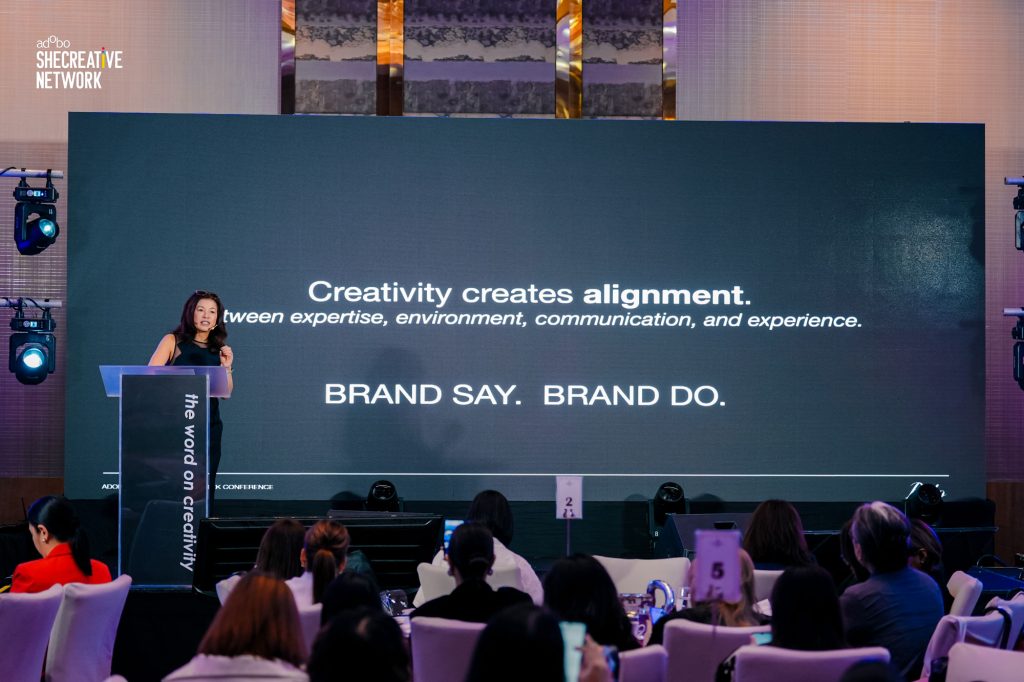
Likewise, she implied that creativity is not an optional layer or a finishing touch. It is fundamental to how businesses grow and compete. While facilities, technologies, and services can be replicated, it isn’t the same with trust and genuine understanding. These are built over time, through alignment, or when what a brand promises consistently matches what it delivers.
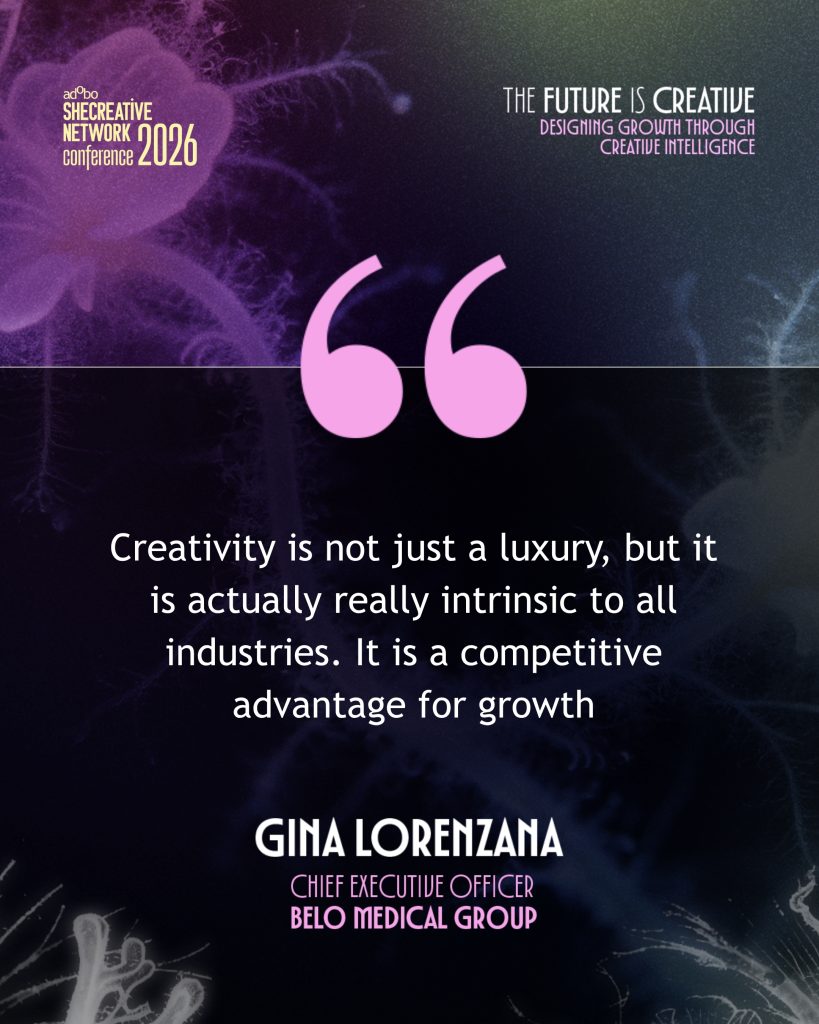
“Creativity is not just a luxury, but it is actually really intrinsic to all industries. It is a competitive advantage for growth.”
That alignment, she noted, is what makes Belo stand out. Its strength lies in the clarity between its message and its actions, something customers can feel at every interaction. And as human needs continue to shift, the brand’s responsibility is to evolve alongside them — listening, adapting, and creating in ways that remain relevant.
“As human concerns evolve over time, we will continue to evolve with them, and we will continue to be creative,” she concluded.
READ MORE:
The post Here’s how Gina Lorenzana reframes creativity as a system for trust, innovation, and business growth appeared first on adobo Magazine Online.

0 Comments