Ad Code

Search This Blog

Categories
- ’ arestado (1)
- ’ calls for UN ideals to be upheld (1)
- ’ itinuturo sa mga estudyante sa isang klase sa Tokyo (1)
- ’ mabenta matapos bumagsak ang presyo sa Vigan City (1)
- ’ nakunan ang pagbagsak sa isang garden sa Turkiye (1)
- ’ says study (1)
- ’ says US defense official (1)
- ’ to top Vatican post (1)
- ‘Decent but basic’: Britain’s new barge for asylum seekers (1)
- ‘Defective’ bills at coins (1)
- ‘di nakalusot sa Comelec (1)
- ‘di pa nagsasampa ng reklamo (1)
- ‘di pa rin nakikita (1)
- ‘di pinauwi at pinagbantaan ng amo nang tumangging makipagtalik (1)
- ‘di raw chismis ang totoong ipinapakalat (1)
- ‘Flying sofa (1)
- ‘Go bag (1)
- ‘Heat storm” stretches into southern Europe (1)
- ‘Hollywood smile (1)
- ‘Househelp’ who stole from former employers nabbed after months in hiding (1)
- ‘I”ve ruined my life (1)
- ‘Incredible fear’ among women across Afghanistan – UN official (1)
- ‘influence operations’ affected 2022 elections (1)
- ‘Learning aides’ help bridge homeschool gaps amid COVID-19 pandemic (1)
- ‘Like Chernobyl”: Wary Ukrainians return to ruined towns after Russian retreat (1)
- ‘Many may die’ warns UN after end of Black Sea grain deal (1)
- ‘Marites’ sa viral video (1)
- ‘Minor incidents’ reported but Undas 2022 ‘generally peaceful’ –Azurin (1)
- ‘Motorcycle ambulance’ pitched for medical emergencies (1)
- ‘Mr. Ingrown’ ng Davao City at ang ‘Human Waze’ ng QC (1)
- ‘now taking off” (1)
- ‘Police asset” killed by motorcycle-riding suspects in Novaliches (1)
- ‘Policeman” puts chili on 17-year-old complainant”s privates (1)
- ‘Reborn doll (1)
- ‘Shabu” worth P19M found in bag abandoned at NAIA (1)
- ‘Sick of everything”: Beijing residents fed up with tightening restrictions (1)
- ‘siningil’ ng batas (1)
- ‘Ukraine will never be a victory for Russia – never’ (1)
- ‘Usis’ turn hostage drama into potential COVID-19 super spreader event (1)
- ‘variant of concern’ (1)
- ‘War is not an option’ (1)
- ‘What ceasefire?’: Shells fly at Ukraine front despite Putin’s truce (1)
- ” French pupil shouted after killing teacher (1)
- ” inaruga na parang tunay na sanggol ng babaeng nagkaroon ng miscarriage (1)
- ” police raid drills for Nobel laureate Maria Ressa (1)
- ” says Imee (1)
- 000 (2)
- 000 a day — UK research firm (1)
- 000 aid from gov”t (1)
- 000 and 13 (1)
- 000 as cold compounds misery (1)
- 000 bill (2)
- 000 bill with faces of three Philippine heroes will not be demonetized –Palace (1)
- 000 classroom shortage -Pia Cayetano (1)
- 000 Davao City locals -Paolo Duterte (1)
- 000 doses of Merck’s COVID-19 antiviral pill molnupiravir (1)
- 000 doses of Pfizer COVID-19 vaccine (1)
- 000 families evacuated due to Mayon’s unrest –Gov. Lagman (1)
- 000 foreign workers on COVID-19 frontline (1)
- 000 gelati from pope during Rome’s long (1)
- 000 if current conditions maintained (1)
- 000 in shabu seized in Pasay City (1)
- 000 Lubao college students receive P2 (1)
- 000 marine creatures in Chile (1)
- 000 Moderna COVID-19 vaccine doses arrive in the Philippines (1)
- 000 people affected by oil spill (1)
- 000 Pfizer-BioNTech vaccine doses from COVAX arrive (1)
- 000 POGO workers have sought police clearance so far –Azurin (1)
- 000 police after riots over teen’s death (1)
- 000 residents left homeless in Cebu City fire (1)
- 000 service providers for Konsulta Package (1)
- 000 soldiers in war — official (1)
- 000 vaccine doses to suspects catering to VIPs (1)
- 000 vaxxed in Bohol province (1)
- 000 violators recorded amid Alert Level 4 in NCR (1)
- 000 violators recorded in NCR amid Alert Level 3 — PNP (1)
- 000 violators reported in NCR amid Alert Level 3 (1)
- 000 worth of unregistered cooking oil seized in Pampanga (1)
- 000% sure Duterte not referring to him as cocaine user (1)
- 004 (1)
- 031 (1)
- 038 (1)
- 047 (1)
- 048 (1)
- 063 new COVID-19 cases; active tally at 18 (1)
- 071 new COVID-19 cases; active tally rises to 19 (1)
- 1 (3)
- 1 mananaya (1)
- 1 menor de edad at 2 senior citizen (1)
- 1 patay (2)
- 1 patay matapos salpukin ng nag-overtake na van ang tricycle sa Quezon (1)
- 1 pulis (1)
- 1 sugatan sa sunog sa Port Area (1)
- 1 sundalo sugatan (1)
- 10 (1)
- 10 arrested in QC for e-sabong (1)
- 10 iba pa (1)
- 10 na nasawi sa sunog sa Muntinlupa (1)
- 10 sugatan (1)
- 10-wheeler na nakipagkarerahan umano (1)
- 100 ex-rebels received gov’t assistance under Marcos so far (1)
- 102 (1)
- 107.46% of QC target population vaccinated for COVID-19 (1)
- 11.4-pounds ang timbang (1)
- 117 (1)
- 119 (1)
- 12 arrested for illegal quarrying (1)
- 12 Carmelite nuns in Rizal test positive for COVID-19 (1)
- 12 other deals (1)
- 12-year-old told by mother not to report abuses by father (1)
- 120K missing expected in possible 7.2 magnitude quake in NCR (1)
- 126 na grupong sasali sa party-list elections (1)
- 13 San Juan City public schools install free internet (1)
- 13-anyos (1)
- 13-anyos na estudyante (1)
- 14 reported dead (1)
- 14-anyos (1)
- 145 more PNP personnel contract COVID-19 (1)
- 145 students in Occidental Mindoro hospitalized since March due to extreme heat (1)
- 15-year-old girl raped (1)
- 153 new COVID-19 cases (1)
- 15K more doses of Sputnik V vaccine arrive in the Philippines (1)
- 17 arrested in Cavite for alleged digital currency scam (1)
- 18 wounded in Colorado LGBTQ nightclub shooting (1)
- 18-anyos na tricycle driver na nakabangga ng nasawing rider sa Caloocan (1)
- 181 kilos of shabu seized in Bacoor anti-drug op (1)
- 186 NCR areas under granular lockdown –PNP (1)
- 19 reported dead (1)
- 19-anyos na rider (1)
- 196 new COVID-19 cases logged; active tally at 18 (1)
- 197 cases from January to November (1)
- 199 (1)
- 2 (4)
- 2 ‘kamote’ rider sa Zambales (1)
- 2 ‘secret’ bars caught operating undercover amid MECQ in Makati (1)
- 2 agents nabbed in Taguig buy-bust op (1)
- 2 anak na babae ng inang OFW (1)
- 2 bangkay ng lalaki (1)
- 2 bata (1)
- 2 brothers nabbed for possession of firearms (1)
- 2 EDCA sites used in search ops for 4 missing people off Tubbataha –military (1)
- 2 elderly Laguna women killed in separate attacks (1)
- 2 estudyante (1)
- 2 estudyanteng nag-abutan ng pinatuyong dahon ng marijuana sa paaralan (1)
- 2 iba pa na ginawang online scammer sa Myanmar (1)
- 2 katao (1)
- 2 magkapatid (1)
- 2 mananaya (2)
- 2 minors nabbed for alleged sex trafficking; 12 victims rescued (1)
- 2 nabbed in Panglao (1)
- 2 Nigerians nabbed in online ‘love scam’ by anti-cybercrime unit (1)
- 2 others guilty of graft (1)
- 2 Pinoy (1)
- 2 pulis na nagtangka umanong halayin ang babaeng grade 12 student (1)
- 2 senators tell BFP (1)
- 2 sundalo (1)
- 2 suspected members of Daulah Islamiyah (1)
- 2 suspects killed (1)
- 2 suspek (1)
- 2 Taiwanese fugitives among rescued workers in Las Piñas raid –police (1)
- 2 talunan sa bilyar (1)
- 2 Visayas-based medical graduates top Physicians Licensure Exams (1)
- 2-in-5 shark species lurch towards extinction (1)
- 2-year-old’s positive antigen result won’t affect NCR’s Alert Level 2 -DOH (1)
- 20 bahay (1)
- 20 million Filipinos ‘internet poor (1)
- 20 persons rescued after boat capsizes off Zamboanga del Sur (1)
- 20 reported dead (1)
- 200 La Union students affected by Maring receive school supplies from Kapuso Foundation (1)
- 200 people affected by Typhoon Betty –NDRRMC (1)
- 2022 set to be UK’s hottest year on record (1)
- 208 (1)
- 21-anyos na babae (1)
- 22 dead as savage US blizzard cuts power (1)
- 22 killed in fire at nursing home in Russia (1)
- 229 (1)
- 234 new COVID-19 cases (1)
- 25 dead following reported riot in women’s prison in Honduras (1)
- 25 pamilya (1)
- 25-year-old coffee shop owner shot and killed in Cabanatuan City (1)
- 250 coronavirus cases and 274 COVID-19 deaths in 24 hours – ministry (1)
- 262 (1)
- 271 (1)
- 275 new COVID-19 infections logged (1)
- 28 fixers arrested (1)
- 28-year-old architect found dead at banana farm raped (1)
- 289 new COVID-19 cases logged; active tally at 10K (1)
- 29 na paaralan (1)
- 292 COVID-19 infections (1)
- 295 pedestrians involved in traffic accidents in 2022 (1)
- 2nd COVID-19 boosters to be made available to general population — DOH (1)
- 3 (1)
- 3 adults killed in Nashville school shooting (1)
- 3 armed foreigners nabbed (1)
- 3 convicted so far — ARTA (1)
- 3 dead (1)
- 3 katao (1)
- 3 kids injured after playing with firecrackers in Camarines Sur (1)
- 3 lalaki na gumahasa umano sa 13-anyos na babae (1)
- 3 lalaking nagbabaklas ng mga piyesa mula sa mga nakaw na motor (1)
- 3 Luzon dams open gates amid heavy rains from Kiko (1)
- 3 missionaries released in Haiti following October kidnapping (1)
- 3 more persons of interest in Salilig’s death expected to surrender –police (1)
- 3 of 4 Cessna plane crash victims in Bicol retrieved –mayor (1)
- 3 others wounded in Lanao del Sur shooting (1)
- 3 suspek (1)
- 3-buwang-gulang na sanggol (1)
- 30 people evacuated in Eastern Visayas due to Lannie (1)
- 32 Pinoy (1)
- 34 new recoveries (1)
- 345 (1)
- 348 (1)
- 35 missing due to Paeng (1)
- 35-year-old found dead (1)
- 354K people affected due to Jolina -NDRRMC (1)
- 36-anyos na lalaki (1)
- 361 pass October 2021 CPA licensure exams (1)
- 382 (1)
- 4 arrested suspects in Degamo slay transferred to Crame –PNP spox (1)
- 4 foreigners nabbed for lewd acts at Siargao resort (1)
- 4 Kalinga barangays placed under a 14 day COVID-19 granular lockdown (1)
- 4 na buwang sanggol sa Cavite (1)
- 4 na divers (1)
- 4 na lugar sa Pilipinas (1)
- 4 new Delta variant cases detected in Bohol (1)
- 4 other SUCs for not resuming full in-person classes (1)
- 40 katao huli (1)
- 41 passengers (1)
- 44 other nations pledge to protect nature in climate change fight (1)
- 46 katao (1)
- 46 killed in 2021 — RSF (1)
- 467 (1)
- 49 cops in alleged drug raid cover-up disarmed (1)
- 4Ps beneficiary becomes a pilot (1)
- 5 crew members rescued in Palawan boat mishap (1)
- 5 fratmen linked to Salilig hazing file petition for bail — prosecutors (1)
- 5 hurt (1)
- 5 iba pa (1)
- 5 killed (1)
- 5 missing due to Jolina –NDRRMC (1)
- 5 more ‘missing’ ROFs from South Africa located –DOH (1)
- 5 Pasay City General Hospital wards reach full capacity (1)
- 5-man committee on PNP resignations to meet next week — Magalong (1)
- 5-year-old son killed in South Cotabato truck crash (1)
- 50 million fully vaccinated individuals possible by yearend (1)
- 500 Filipino Muslims travel to Saudi Arabia for hajj (1)
- 541 cases of hand (1)
- 554 new COVID-19 infections; active tally down to 25 (1)
- 56 residents evacuated as Betty brings strong winds (1)
- 570 more doses of Pfizer-BioNTech vaccine (1)
- 5M devotees expected to join Nazareno 2023 Walk of Faith — MPD (1)
- 6 asong kakatayin sana (1)
- 6 children injured in mass stabbing in French town Annecy –security source (1)
- 6 family members dead in Navotas fire (1)
- 6.5 quake hits off west coast of Nicaragua – USGS (1)
- 600 households tagged as non-poor can be removed from 4Ps program (1)
- 600 passengers (1)
- 61 tourist sites affected by oil spill –DOT (1)
- 63 missing due to Paeng –NDRRMC (1)
- 634 mga lungsod at bayan sa Pilipinas (1)
- 639 minors with comorbidities vaccinated for COVID-19 -DOH (1)
- 647 (1)
- 66% of Pinoys concerned about rising prices of basic commodities –Pulse Asia (1)
- 678 (1)
- 7 (3)
- 7 bodies recovered; 2 crew still missing in sunken fishing vessel off Iloilo (1)
- 7 freelance models (1)
- 7 missing due to Jolina –NDRRMC (1)
- 7 prison officer sa Hong Kong (1)
- 7 sugatan sa aksidente sa Ragay (1)
- 7-anyos na babae (1)
- 7-anyos na lalaki (1)
- 7.8-magnitude quake hits southern Turkey; at least 53 dead (1)
- 700 NBP prison guards relieved –Catapang (1)
- 700 people affected by Typhoon Kiko –NDRRMC (1)
- 720K doses of Sputnik V vaccine arrive in Philippines (1)
- 75 PDLs with mild symptoms remain in isolation — BuCor (1)
- 760 (1)
- 772 new Philippine COVID-19 cases recorded; active tally at 85 (1)
- 780 families affected by Typhoon Kiko –NDRRMC (1)
- 783 (1)
- 79 Pinoy (1)
- 8 (1)
- 8 countries (1)
- 8 dead (1)
- 8 passengers dead after jeepney swept away by flash flood in Tanay (1)
- 800 cargoes stranded amid Typhoon Odette –PCG (1)
- 800 doses of AstraZeneca COVID-19 vaccine (1)
- 849 (1)
- 874 new COVID-19 infections logged (1)
- 878 fresh cases in past week (1)
- 894 new COVID-19 cases bring active tally to 29K (1)
- 900 injured in massive train crash in Odisha (1)
- 92 (1)
- 926 new COVID-19 cases; active cases at 28 (1)
- 934 new COVID-19 cases from Jan. 9-15 (1)
- 940 (1)
- 961 (1)
- 98 reported dead (1)
- 997 new COVID-19 cases; active cases at 29 (1)
- A curtain divides male (1)
- A partial lung and colon surgery: The Pope’s health issues (1)
- a symbol of freedom (1)
- A year after first COVID-19 shots in US (1)
- aabot ng P20k (1)
- Abalos believes cops did not torture Degamo slay suspects (1)
- Abalos orders halting of deployment of police security detail to POGO operators (1)
- Abalos warns against BFP personnel selling fire extinguishers as permit requirement (1)
- Abogado ni Deniece Cornejo (1)
- About 14M in US get first COVID-19 shot in August (1)
- Abra (1)
- Abu Dhabi eases tourist quarantines as UAE hits zero deaths (1)
- Abu Sayyaf killed in Basilan (1)
- Abu Sayyaf subleader nabbed in Batangas (1)
- accepts OIC post in Office of Press Secretary (1)
- accommodation and transportation allowance (1)
- accountability –local execs (1)
- Acorda: 2nd suspect in killing of Oriental Mindoro journo identified (1)
- Acorda: PNP now vetting all police drug enforcement units (1)
- ACT hopes Sara Duterte”s Basic Education Report will address issues (1)
- ACT proposes 185 class days yearly for return of summer school break (1)
- active tally at 26 (1)
- active tally at 53-day low (1)
- active tally at 9 (1)
- active tally drops to 18 (1)
- active tally hits 18 (1)
- Activists condemn Malaysia”s ban on LGBTQ books (1)
- Activists Kara Taggaoa (1)
- Actor Dominic Roco (1)
- additional COVID-19 shots (1)
- Adobo News (864)
- Afghan girls stuck at home (1)
- Afghanistan and Britain (1)
- Afghanistan commercial flights resume as UN warns of humanitarian crisis (1)
- AFP (2)
- AFP deploys 8 nurses to Lung Center (1)
- AFP joins US in commemorating tragic 9/11 attacks 20 years ago (1)
- AFP modernization (1)
- AFP morale high (1)
- Africa groups welcome Sudan ceasefire extension (1)
- After Hurricane Ian’s deadly wrath (1)
- After pizza and prayer (1)
- After Russia-Ukraine plan (1)
- after ship sinks near Japan (1)
- Afternoon number coding improved EDSA traffic (1)
- agaw-pansin dahil sa Spiderman costume (1)
- Aid trickles in as Turkey-Syria quake toll passes 24K (1)
- Airlines slam ‘ineffective’ COVID-19 tests for China travelers (1)
- Aklan under state of calamity due to ASF (1)
- Al Shabaab claims responsibility for attack on restaurant in Somali capital (1)
- Alagang baboy (1)
- Alagang mga aso (1)
- Alagang unggoy (1)
- alamin (1)
- alamin kung bakit nabingi ang isang tainga (1)
- alamin kung may masuwerteng nanalo (1)
- alamin kung saan matatagpuan (1)
- Albay needs P166.7 million to continue aid amid Mayon Volcano unrest (1)
- Alert Level 2 in NCR possible next month if COVID-19 response maintained — DOH (1)
- alerts sound in South Korea (1)
- Alkalde ng Jomalig (1)
- All regions now at minimal risk for COVID-19 — DOH (1)
- Alleged CPP-NPA official shot dead in Sorsogon (1)
- Alleged Daulah Islamiyah bomb maker surrendered in North Cotabato–military (1)
- Ama (1)
- Ama at dalawa niyang anak (1)
- Amang nanghalay sa 2 niyang anak sa Antique noong 2019 (1)
- Amb. Carlson: US-funded fuel depot being built in Cebu belongs to PH (1)
- Ambassador Beaufils: UK to act as observers in Balikatan exercise (1)
- American Samoa declares measles emergency (1)
- American wanted in US for child molestation nabbed in Mandaluyong (1)
- Americans celebrate Thanksgiving under shadow of two more mass shootings (1)
- Amerikanong pumatay sa misis niyang Pinay (1)
- Amid Omicron fears (1)
- Amid Senate’s Pharmally probe (1)
- aminadong may malaking pagsubok sa paglikas ng mga Pinoy mula sa Sudan (1)
- aminadong may tampo siya ngayon kay Ogie Diaz na dati niyang manager (1)
- Ammonia leak in Navotas could be due to negligence –BFP (1)
- Anak na kailangan ng dugo para sa amang kritikal ang lagay (1)
- and Brunei (1)
- ang bulag na pinagaling ni Hesus (1)
- ang may sasakyan o wala? (1)
- Angat Dam water level dips below 180-meter minimum operating level (1)
- Año: Metro Manila mayors reviewing age restrictions for minors allowed in malls (1)
- Antigong Bulul mula sa Ifugao (1)
- Antipolo under granular lockdown due to COVID-19 (1)
- anywhere (1)
- Apayao and Santa Ana (1)
- apektado (1)
- Apollo Quiboloy says Omicron variant due to allegations against him (1)
- apostille services (1)
- Arabo (1)
- Areas with below 50% vax rate a priority during national vaccination drive –Dizon (1)
- arestado (9)
- arestado dahil sa kasong statutory rape sa SJDM (1)
- arestado dahil sa paggamit umano sa 2 anak sa online kalaswaan (1)
- arestado dahil sa pagkakabit umano ng spy camera sa CR ng mga babae (1)
- arestado dahil sa pamemeke ng mga permit (1)
- arestado dahil sa panggagahasa umano sa kanyang kasambahay sa Maynila (1)
- arestado matapos halayin umano ang pasaherong menor de edad (1)
- arestado matapos mahulihan umano ng mahigit P1-M droga (1)
- arestado sa Cavite (1)
- arestado sa Laguna (1)
- arestado sa pag-gang-rape umano sa isang babae (1)
- arestado sa pagnanakaw ng bakal sa ginagawang NLEX-SLEX connector road sa Maynila (1)
- arestado sa QC (2)
- arestado sa QC dahil sa pambubugaw umano online; 2 biktima (1)
- arestado sa Taguig buy-bust operation (1)
- arestado; ilang OFWs (1)
- Army investigating alleged involvement of personnel in businesswoman slay — Brawner (1)
- Arnie Teves asks for fairness (1)
- Around 3 (1)
- Around P217M worth of aid given to Mindoro oil spill victims –DSWD (1)
- Arrested UP prof says police violated her rights (1)
- arrests smuggling network (1)
- Artist (1)
- Artist Bree Jonson s body found in La Union resort; companion faces drug charges (1)
- as in London s Grenfell (1)
- As more US states find Omicron cases (1)
- asahan na makapapasok sa Pilipinas– Sec. Duque (1)
- ASEAN states object as China lobbies for Myanmar junta to join summit –sources (1)
- ASEAN tackles village to village development to improve rural communities — DSWD”s Gatchalian (1)
- ASEAN to discuss excluding Myanmar leader from summit –sources (1)
- Ash spewing volcano in Peru prompts state of emergency (1)
- asks Indonesia to reexamine Veloso”s case (1)
- Aso (1)
- Aso na naipit sa bakal na bakod (1)
- Asong laging sumasakay sa jeep sa Mandaluyong (1)
- Asong nakunang sinaktan sa Davao City (1)
- Asong pagala-gala sa SLEX (1)
- Aspirants ready for presidential debate for Eleksyon 2022 (1)
- asymptomatic in last infection thanks to vaccine (1)
- At COP 26 (1)
- At least 1 (1)
- At least 11 killed in Pakistan Ramadan donation stampede (1)
- At least 13 dead in India accident after pick-up falls into gorge (1)
- at least 18 die (1)
- At least 19 die in school dormitory fire in Guyana (1)
- At least 207 dead (1)
- At least 23 holes found on sunken MT Princess Empress (1)
- At least 48 killed in road accident in western Kenya — police (1)
- At least 51 killed in twin Pakistan transport tragedies (1)
- At least 64 killed in Nepal”s worst air crash in 30 years (1)
- At least two dead in Uganda building collapse –rescuers (1)
- Ataul (1)
- Ateneo de Davao grad tops Civil Engineer Licensure exams (1)
- Attack helicopter from Jordan arrives in Sangley Point (1)
- Attack on Ukraine would be costly (1)
- Attack on Vienna”s pride parade prevented (1)
- Atty. Garafil (1)
- Audit shows Pharmally deliveries to PS-DBM always short (1)
- Aurora due to Paeng (1)
- Aussie sentenced 129 years in PHL child sex abuse case –prosecutor (1)
- Austin concerned about China’s ‘risky’ behavior vs PH vessels in Ayungin Shoal (1)
- Austin says after hypersonic missile report (1)
- Australia (1)
- Australia imposes sanctions on Iran (1)
- Australia to buy 300 (1)
- Australia’s medicine regulator approves Pfizer vaccine for children 5-11 (1)
- Austrians turn on ex-chancellor s party after corruption claims (1)
- author of ‘kissing book (1)
- Authorities probe possible ‘scam hub’ condos (1)
- Authorities seize P100 million in allegedly smuggled agricultural products (1)
- AWOL na pulis na sangkot sa pagnanakaw (1)
- Awra Briguela released from police custody after posting bail (1)
- ayaw umuwi dahil nangangamba sa kaligtasan (1)
- ayon sa local government (1)
- ayon sa PNP-Makati (1)
- Babae (6)
- Babaeng bumahing nang matindi (1)
- Babaeng modus umano na magbenta ng pekeng bahay at lupa (1)
- Babaeng nagpapahinga (1)
- Babaeng namasukan (1)
- Babaeng negosyante (1)
- Babaeng pumanaw (1)
- Babaeng sanggol na putol ang kanang paa at bali ang kaliwang tuhod (1)
- Babala kontra ‘cash-in’ scam’; paraan ng modus (1)
- Babuyan Islands -PAGASA (1)
- Baclaran amid surge in COVID-19 cases (1)
- Bacolod cities (1)
- bagong gumaling sa COVID-19; active cases (1)
- Bagong laro sa Pilipinas na cornhole (1)
- Bagong Taon (1)
- Baguio (1)
- BAI to help farmers vs. ASF (1)
- bakit hindi dapat tirisin? (1)
- Bakit nagkaka-hangover sa sobrang kalasingan at paano ito mawawala? (1)
- Bangkay ng lalaki na may tama ng bala (1)
- Bangkay ng lalaki na nakatali ang kamay (1)
- Bangkay ng lalaking nakaposas at may tama ng baril sa ulo (1)
- Bangkay ng pedicab driver (1)
- Bank denies certifying PAGCOR’s third-party auditor -Gatchalian (1)
- Bantag blames PNP for late coordination to protect ‘middleman’ (1)
- Barangay captain in Lipa (1)
- Barangay captain shot dead in Norzagaray (1)
- Barangay kagawad shot dead in front of barangay hall in Cavite (1)
- Barbers to renew call to reinstate death penalty for drug offenders (1)
- BARMM Indigenous affairs head killed in Cotabato ambush (1)
- Bata na biglang nawala (1)
- Bata sa Bulacan (1)
- Bataan cop (1)
- Batanes (1)
- Batanes governor orders tuna removed from Betty relief packs after Mindoro issue (1)
- Batanes reports first COVID-19 community transmission (1)
- Batang lalaki (1)
- Batang naligaw noon at dinala sa Australia ng mga umampon (1)
- Batang negosyante (1)
- Batangas (1)
- Batangas shot dead (1)
- Batangueña (1)
- Bato assures Teves: Senate hearing on Degamo case won’t be a ‘kangaroo court’ (1)
- Bato pushes for creation of ‘Nat”l Agricultural Crop Program’ (1)
- Bato says Lorenzana (1)
- Bato suggests no patrolman (1)
- Bato tells Pimentel s camp: I am the legal standard bearer of PDP-Laban (1)
- Bato to withdraw COC for president in Eleksyon 2022 (1)
- Battle for abortion rights hits America’s streets (1)
- bawal sa lugar ng botohan sa Eleksyon 2022– Comelec (1)
- Bayan Muna (1)
- Bayan Muna laments plight of political prisoners after 67-year-old detainee dies of cancer (1)
- Bayan Muna lawmakers want probe into alleged online banking fraud (1)
- be dutiful (1)
- Bear kills jogger in Italy (1)
- Belarus strongman urges unity with Moscow in ‘difficult times” (1)
- Belarus to get Russian tactical nuclear weapons ‘in several days” –Lukashenko (1)
- Benedict XVI will be remembered as ‘pope of charity” — CBCP (1)
- Bersamin (1)
- BFAR to keep fishing bans in oil spill-hit municipalities in Oriental Mindoro (1)
- BFAR vessels monitoring order ‘inextricably linked” to project in graft case (1)
- BI arrests two more ‘Luffy” suspects (1)
- BI deactivates port operations division (1)
- BI ready for influx of holiday season travelers –spokesperson (1)
- BI rotates 341 NAIA personnel to curb corruption (1)
- BI to deport 372 foreigners arrested by PNP (1)
- BI: Yearbook (1)
- BI’s e-Travel System to roll out on April 15 (1)
- Biden announces US-Canada deal to curb illegal migration (1)
- Biden asks for early talks with Macron amid submarine row (1)
- Biden convenes over 100 nations for world ‘democracy’ summit (1)
- Biden declares disaster as California takes another storm-pounding (1)
- Biden due to meet King Charles (1)
- Biden eyes Indo-Pacific in summit with Australia (1)
- Biden look forward to ‘trilateral modes of cooperation’ with other countries (1)
- Biden orders release of secret 9/11 documents (1)
- Biden pays respects to Queen Elizabeth II before funeral (1)
- Biden ramps up vaccine mandates for millions in COVID-19 battle (1)
- Biden says US (1)
- Biden says US will meet its climate goals (1)
- Biden tells Macron US was ‘clumsy’ in submarines deal (1)
- Biden to Marcos: Amid challenges (1)
- Biden to meet Pope amid pressure from anti-abortion US bishops (1)
- Biden to meet with Argentina president during democracy summit (1)
- Biden to seek red lines in talks with Xi (1)
- Biden to travel to UK (1)
- Biden visits all three attack sites on 20th anniversary of 9/11 (1)
- Biden visits Congress to rally votes for his agenda (1)
- Biden vow to expand collaboration on renewable energy production (1)
- Biden vows to stand with Southeast Asia in defending freedom of seas (1)
- Biden-Putin talks set for Tuesday amid Ukraine tension (1)
- Biden’s climate plan strains ties with European allies (1)
- Bigatin na sanggol na bagong silang (1)
- bigla umanong nawala habang naglalayag patungong Norway (1)
- Bill establishing national sex offender registry filed in Senate (1)
- bill me (1)
- binangungot nga ba? (1)
- binaril at napatay dahil umano sa away sa isinanglang relo; suspek (1)
- Binatilyo (1)
- Binatilyo na nagka-impeksiyon sa private part (1)
- binulabog daw ng mga multo (1)
- bird flu (1)
- Bird flu fells nearly 9 (1)
- bistadong pinapalitan ng bato ang cellphone pero ‘di raw para sa kostumer (1)
- Bitay sa mga sangkot sa ilegal na droga (1)
- BJMP suspends Malabon City Jail visits due to protest damage (1)
- Black Nazarene devotees flock to Quiapo church (1)
- black oil spotted in area where motor tanker sank off Mindoro –PCG (1)
- Blast at BBQ shop in northwest China kills 31 (1)
- Blast occurs at Army checkpoint in Maguindanao (1)
- Blessed Sacrament stolen from Sorsogon church (1)
- Blinken discussed US-China relationship in call with China’s Qin (1)
- Blinken in China for rare trip amid frosty ties and dim hopes for progress (1)
- Blinken says (1)
- Blinken says Ukraine has taken back 50% of territory that Russia seized (1)
- Blinken to Turkey: ‘The United States is here” with aid (1)
- Blogger convicted of cyberlibel over remarks vs. Tito Sotto (1)
- Blue Ribbon probe on ‘long delayed” release of national IDs sought (1)
- BOC (1)
- BOC begins destruction of P7 billion worth of seized counterfeit goods (1)
- BOC Davao sub-port (1)
- BOC foils attempt to smuggle P240M worth of Thai sugar (1)
- BOC na ang maghahatid sa pamilya ng mga OFW (1)
- BOC seizes P240M worth of counterfeit goods in Subic port (1)
- BOC: P1-B worth of smuggled agricultural products seized under Marcos admin so far (1)
- BOC: P24.28 billion worth of smuggled products seized as of early January (1)
- Bohol (2)
- Bohol buy bust (1)
- Bohol COVID-19 death toll breach 300 mark (1)
- Bohol COVID-19 vaccination reaches 35% of target population (1)
- Bohol gov’t to lift ban on air (1)
- Bohol hospital to accept only COVID-19 cases (1)
- Bohol no longer requires 5-day quarantine (1)
- Bohol placed under GCQ with heightened restrictions; Ilocos Norte under GCQ (1)
- Bong Go on drug test: Anytime (1)
- Bongbong Marcos files COC for president in Eleksyon 2022 (1)
- Bongbong-Sara tandem includes ex-DPWH chief Villar in Senate slate (1)
- Bongo truck na may sakay na mga kabataan (1)
- boost collab in agri (1)
- Boosting Taiwan’s defenses an ‘urgent task (1)
- Boris Johnson severs ties with lawyers after police referral (1)
- Botika sa QC (1)
- Bouncer at staff ng bar sa Makati (1)
- Brazil reports 10 (1)
- Brazil s Bolsonaro accused of crimes against humanity at ICC (1)
- Brazil sinks rusting old aircraft carrier in the Atlantic Ocean (1)
- Brazil’s Lula discuss peace (1)
- Brazil’s Lula to meet Xi in Beijing after lashing out at US dollar (1)
- Brazilian teen stabs teacher to death (1)
- Bride (1)
- bringing total to 40 (2)
- bringing total to three (1)
- Britain outlines new workforce plan for strained health service (1)
- British health officials warn of difficult winter with flu and COVID-19 (1)
- British man detained climbing South Korean skyscraper (1)
- Brittney Griner expresses concern for reporter detained in Russia (1)
- Buhay na bagong silang na sanggol (1)
- Build (1)
- Build’ (1)
- Bulacan (2)
- Bulacan high school teacher accused of molesting (1)
- bumaba sa higit 68K (1)
- bumaliktad dahil sa parang ‘tao’ na iniwasan ng driver (1)
- bumangga at pumasok sa doughnut shop sa isang mall sa San Juan (1)
- bumangga sa poste sa Cebu (1)
- Bus (1)
- Bus attack kills 10 oil workers in east Syria –state media (1)
- Bus carrying North Macedonian tourists crashes in flames in Bulgaria (1)
- Bus rams concrete barriers on EDSA-Trinoma northbound lane (1)
- business can’t be separated (1)
- Bustos (1)
- but Comelec says its hands tied (1)
- but COVID-19 hampers fight (1)
- but robbery (1)
- but want lower oil price (1)
- Butlig na may tubig (1)
- CA panel approves Solidum as DOST secretary (1)
- CA panel defers confirmation hearing for Tejano as ambassador to PNG (1)
- Cabinet members to discuss ‘transitional’ matters (1)
- Cagayan (2)
- Cagayan –OCTA (1)
- Cagayan governor opposes possible hosting of EDCA sites (1)
- Cagayan Valley (1)
- Cairo hospital fire kills three (1)
- Call center workers na naka-staycation sa hotel (1)
- Calling someone fat is bullying (1)
- calls for protests (1)
- calls out China for ‘provocative and unsafe conduct’ in South China Sea (1)
- Camarines Sur (1)
- Cambodian activist made gov”t official after apology to Hun Sen (1)
- Cameroonian na lider umano ng grupong sangkot sa ‘black and white powder scam (1)
- Cameroonian na may modus na pagpaparami ng pera gamit ang mga kemikal (1)
- Canada (1)
- Canada asks for PH support in free trade talks with ASEAN (1)
- Canada clamps down on cruise liners dumping sewage (1)
- Canada launches new Indo-Pacific strategy (1)
- Canada reports 12 cases of Omicron variant (1)
- Canada to drop COVID vaccine requirement to enter country on Sept 30 — source (1)
- Canada to pay Indigenous abuse survivors more than $2 billion (1)
- Canada’s drought-stricken British Columbia bracing for floods when rains return (1)
- Canadian vlogger Kulas” Filipino citizenship endorsed to Senate plenary (1)
- cancellation (1)
- Candijay town in Bohol conducts preemptive evacuation due to Paeng (1)
- Canned tuna sa food packs ng DSWD (1)
- CAR (1)
- carbon-negative club (1)
- Cardinal accused of sex assault retires from Vatican job (1)
- Cardinal Advincula says he has recovered from COVID-19 (1)
- Carolinas begin recovery (1)
- Casino scam suspect nabbed after 3 years in hiding (1)
- Catanduanes coastal barangays on alert for Mawar (1)
- Catapang wants a ‘Global City” BuCor headquarters (1)
- catches fire (1)
- Catholic nuns lift veil on abuse in convents (1)
- Cave-in during training traps 15 Brazil firefighters –officials (1)
- Cavite (1)
- Cavite to have water service interruption until Feb. 14 (1)
- Cavite; two dead (1)
- CBCP exec urges churchgoers to follow IATF guidelines during Simbang Gabi (1)
- CDRRMO: 22 students in Bacolod City fainted (1)
- Cebu (3)
- Cebu archdiocese supports Dumaguete church in opposing reclamation project (1)
- Cebu councilor (1)
- Cebu councilor cheats death in road accident (1)
- Cebu dev”t worker told father abductors identified themselves as police (1)
- Cebu governor to extend ban on pork from Iloilo (1)
- Cebu Mayor tests positive for COVID-19 (1)
- Cebu Pacific flights for essential travel only as NCR stays under MECQ (1)
- Centino have disowned Parlade s statement (1)
- Cessna with 6 on board goes missing after taking off from Cauayan (1)
- Chavit Singson backs out from vice gubernatorial race for the sake of family (1)
- Cheating husband sentenced to 8 years in prison — SC (1)
- Chel Diokno likens Martial Law to modern-day Game of Thrones (1)
- child abuse (1)
- children (1)
- China (4)
- China ‘interference” (1)
- China ‘monster ship” seen at Ayungin Shoal -US maritime expert (1)
- China ‘shocked” at Kabul attack (1)
- China abstains (1)
- China aircraft monitored US (1)
- China coast guard ‘drove off” Filipino fishers from Ayungin (1)
- China conducts drills near Taiwan Strait after US lawmakers’ visit (1)
- China COVID deaths accelerate to 9 (1)
- China COVID-19 curbs disrupt production at world’s biggest iPhone factory (1)
- China defense chiefs speak ‘briefly’ at Singapore summit (1)
- China Desks in Philippines eyed anew in PNP (1)
- China donates rice (1)
- China expresses support for Russia after aborted mutiny (1)
- China FM warns of ‘dangerous consequences’ of Taiwan criticism (1)
- China ink MOU on agriculture (1)
- China on Ayungin Shoal incident: Our vessels” maneuvers were professional and restrained (1)
- China rejects US request for a meeting between defense chiefs – report (1)
- China s birth rate plummets to lowest figure in decades (1)
- China says armed forces should boost combat preparedness (1)
- China says it does not accept Philippines” 2016 South China Sea arbitration win (1)
- China says US democracy ‘weapon of mass destruction’ (1)
- China should see a ‘thaw very shortly” (1)
- China suspends short-term visas for South Koreans over COVID-19 travel curbs (1)
- China vessels off Spratlys with Chinese gov’t (1)
- China vows ‘resolute’ response to high-level US meet with Taiwan leader (1)
- China-manufactured tocilizumab to arrive this week –FDA (1)
- China’s COVID-19 outbreak developing rapidly (1)
- China”s Xi meets ex-President Duterte in Beijing (1)
- Chinese jets in close encounter over South China Sea (1)
- Chinese military flights near Taiwan look like ‘rehearsals’ –Pentagon chief (1)
- Chinese police talks (1)
- Chinese spy balloon did not collect information over US – Pentagon (1)
- Chito Gascon’s ashes brought to CHR; Mass (1)
- Chiz reject China”s statement vs. new EDCA sites in Philippines (1)
- CHR chairman Chito Gascon passes away (1)
- CHR launches Human Rights Institute to boost education (1)
- CHR probes death of Grade 10 student due to alleged hazing (1)
- Christmas reborn in Bethlehem after pandemic years (1)
- Christmas tree sa Tagoloan Municipal Police Station (1)
- Church assistant killed (1)
- City loses 4 (1)
- CJ Gesmundo: SC disposed 3 (1)
- claimant nabbed in Subic (1)
- classes (1)
- Climate activists occupy Gordon Ramsay restaurant (1)
- climate change (1)
- close contact exposure will have paid leaves (1)
- close-contact (1)
- Cloudy skies (1)
- CNN fires anchor Chris Cuomo over role in brother ex-governor’s sex scandal (1)
- COA chair: We didn’t say PS-DBM procurement of COVID-19 supplies was ‘overpriced’ (1)
- COA: 48 Dalian trains for MRT3 remain unused (1)
- Coast Guard rescues 4 fishermen after boat submerges (1)
- Cold brew para sa mga mahilig magkape (1)
- Colin Powell dies of COVID-19 complications –family (1)
- College students weigh in on CHED order nixing fully online classes for 2nd semester (1)
- Colmenares to Bato: Prepare defense in ICC instead of evading liability (1)
- Colmenares: Foreign ownership of industries (1)
- Comelec (4)
- Comelec en banc to discuss possible suspension of COC filing for barangay (1)
- Comelec eyes completion of printing of over 91M ballots for 2023 BSKE by mid-February (1)
- Comelec refutes ‘spurious” document on party-list representatives proclamation (1)
- Comelec registers over 1M new voters for 2023 barangay (1)
- Comelec releases guidelines in Eleksyon 2022 voting simulation on Oct. 23 (1)
- Comelec spox: ‘Register Anywhere Project” to pilot in 5 NCR malls on December 17 (1)
- Comelec starts accepting local absentee voting applicants for Eleksyon 2022 (1)
- Comelec to issue decision on voter registration extension on September 29 (1)
- Comelec to organize hybrid debates for Eleksyon 2022 presidential (1)
- Comelec to work with Facebook (1)
- Comelec wants ‘nuisance candidates’ criminalized (1)
- Comelec: All systems go for start of COC filing (1)
- Comelec: No hike in teachers’ honoraria for 2023 barangay (1)
- Comelec: Ormoc plebiscite to merge barangays off to a good start (1)
- Comelec: Over 100 party-list groups denied registration for Eleksyon 2022 (1)
- Comelec: Petition filed vs. Raffy Tulfo’s senatorial candidacy (1)
- Comelec’s 2nd division to handle 2 more petitions vs. Marcos Jr.’s candidacy (1)
- Comelec”s Garcia on proposed 6-year term for barangay (1)
- Community journalist slain in Davao del Sur — NUJP (1)
- Company involved in excavation at NBP withdraws from deal (1)
- Complaints filed vs. suspects in Lanao del Sur Gov. Adiong ambush –Azurin (1)
- Compulsory jabs: Pressure mounts on anti-vaxxers (1)
- condemns mutilation (1)
- Condo developer in Manila’s ‘heritage zone’ says it has permits (1)
- confusion grip Burkina Faso day after coup (1)
- Construction worker finds 45 rounds of a grenade launcher in Cavite (1)
- contraceptive use still low –Lagman (1)
- Cop faces murder complaint over fatal shooting of QC traffic enforcer (1)
- Cop tagged as suspect in Butuan couple slay (1)
- Cops nab 1 of 2 suspects behind robbery incidents in Pasig City (1)
- Cops nab 3 suspects in police asset”s ambush in Antipolo (1)
- Cops nab alleged pusher of prescriptive drugs in Laguna buy-bust op (1)
- Cops nab illegal carpool drivers (1)
- Cops nab man in NYC after Fox News Christmas tree torching (1)
- COS ni Mayor Isko na si Cesar Chavez (1)
- Cotabato bus conductor shot dead by armed robbers (1)
- Couple nabbed for taking out almost P3 million in loans using fake IDs (1)
- Court rules for Florida governor (1)
- COVID-19 Alert Level 4 over NCR could be extended 2 weeks after September -NTF (1)
- COVID-19 cases ‘plateauing” nationally (1)
- COVID-19 cases in NCR (1)
- COVID-19 daily new average up by 42% –DOH (1)
- COVID-19 deaths in Bohol breach 400-mark (1)
- COVID-19 deaths top 1.5 million across Europe (1)
- COVID-19 mom goes through five hours of labor in car (1)
- COVID-19 positivity rates decreasing in ‘most” Luzon areas — OCTA (1)
- COVID-19 reproduction rate critical in Pudtol (1)
- COVID-19 vaccination slow in 5 regions due to access issues (1)
- COVID-19 vaccinations should be intensified given BQ.1 detection -expert (1)
- CPP top leader Ka Oris’ cremated remains turned over by gov’t to family (1)
- crime solution improved in last 5 years (1)
- Criminology grad student charged with murdering 4 University of Idaho students (1)
- Critical stage of Arcturus wave in PH is ‘over’ –Solante (1)
- Croatia adopts euro (1)
- crocodiles (1)
- crowded (1)
- crowds gather for funeral of Constantine (1)
- Cuba (1)
- Cuba starts COVID-19 jabs for toddlers (1)
- cured (1)
- Cusi-faction files estafa (1)
- cyclone rattle Vanuatu (1)
- Cynthia Villar at Raffy Tulfo (1)
- Cynthia Villar on viral video: We”re not doing anything bad (1)
- Czech Republic reports record daily rise in COVID-19 cases (1)
- DA maintains memo on biofertilizer use issued to increase yield (1)
- DA preparing for possible El Niño effects — exec (1)
- DA rules out option to sell seized white onions at Kadiwa stalls (1)
- DA still negotiating for 2nd cycle of P170/kilo onions to be sold at Kadiwa stores (1)
- DA: Confiscated white onions to be sold at Kadiwa stalls (1)
- Dad (1)
- dadalhin sa kalawakan para sa ‘space burial” (1)
- Dalagita (1)
- Dalagitang maysakit sa balat (1)
- Dambuhalang bluefin tuna (1)
- Danish man arrested in France after woman”s body found in fridge (1)
- dapat hinay-hinay sa pagkain ng castañas (1)
- Darwin microscope to be sold at auction (1)
- Dating kargador sa palengke (1)
- Dating palaboy na mapagmahal sa kuting (1)
- dating pulis (1)
- Dating tauhan ng anti-crime group (1)
- Davao Oriental Governor Corazon Malanyaon passes away (1)
- DBM (1)
- DBM releases additional P1.04B for COVID-19 special risk allowance of health workers (1)
- De Lima feeling ‘much better” despite COVID-19 (1)
- De Lima files bill exempting poll workers from income tax (1)
- De Lima to attend hearing on drug charges a day after hostage-taking incident (1)
- De Lima: Gov t accepted ICC jurisdiction by seeking procedural remedy (1)
- death row cases on Friday (1)
- death toll at 22 (1)
- Death toll due to shear line floods (1)
- Death toll from Afghanistan tunnel fire rises to 31 (1)
- Death toll from Philippine flash floods rises to 67 — official tally (1)
- Death toll in apartment building collapse in Brazil rises to 14 (1)
- Death toll in India massive 3-train collision rises to 288 (1)
- Deathrow Pares na napagkakamalang bulalo (1)
- deaths (1)
- Deaths attributed to shear line rains (1)
- Declaration of HFMD outbreak possible if cases increase in more regions — Solante (1)
- defends anti-drug campaign (1)
- defense (1)
- Deforestation in Brazil’s Amazon rises in March (1)
- defying outcry (1)
- Defying Russia (1)
- Degamo case submitted for resolution; Teves files motion to dismiss (1)
- Degamo slay task group created (1)
- Degamo’s wife dismayed over Bato’s decision to allow Teves to virtually attend Senate probe (1)
- Degamos linked to shooting at home of ex-governor’s staff (1)
- Deja vu: Sweden s Andersson elected PM for second time (1)
- Dela Rosa to drug war probe –Chel Diokno (1)
- Dela Rosa: We pursued drugs campaign to save humanity from drug crisis (1)
- delayed –Imee Marcos (1)
- Delayed PhilHealth reimbursements partly due to IT system — Duque (1)
- delays (1)
- Delivery rider sa Leyte (1)
- Delta remains nation’s top coronavirus threat (1)
- democracy (2)
- dengue outbreak during El Niño possible -DOH (1)
- denies Marcos family bid to retake seized properties (1)
- DENR forms task force to protect marine ecosystems after oil tanker sinks off Oriental Mindoro (1)
- DENR moves vs. structures in protected areas along Marilaque Highway (1)
- DepEd (1)
- DepEd exec says around P33B needed to provide laptops to all teachers (1)
- DepEd exec wants NBI to probe maternity pay scam (1)
- DepEd extends enrollment until September 30 (1)
- DepEd optimistic on expanding face-to-face classes by January 2022 (1)
- DepEd probing food poisoning incident in Iloilo school (1)
- DepEd QC: Teachers” ‘borrowed” laptops (1)
- DepEd releases order on optional face mask use in schools (1)
- DepEd: Christmas parties in schools voluntary (1)
- DepEd: Memo not intended to profile ACT members (1)
- DepEd: Teachers may receive 2021 performance-based bonus in two to three weeks (1)
- DepEd: Teachers with COVID-19 (1)
- Depositor loses P1 million in bank account (1)
- Despite crackdown (1)
- despite transport strike –MMDA (1)
- Despite Trump ire (1)
- detention raps vs. 6 over missing sabungeros (1)
- DFA reminds public appointments required for passport (1)
- DFA slams ‘venting” for Marcos-Zelenskiy call by Ukraine envoy (1)
- Diarrhea (1)
- Diarrhea outbreak reported in 3 barangays in Tanza (1)
- Diesel prices to roll back P2-P2.20/liter next week -Unioil (1)
- Digos City worker killed after bridge being demolished collapses (1)
- DILG (1)
- DILG chief eyes intensified crackdown vs. private armies (1)
- DILG eyes designating ‘fishing areas’ in oil spill-hit Oriental Mindoro (1)
- DILG urges LGUs to make rules for caroling (1)
- DILG wants ‘no vaccine (1)
- DILG: 1 (1)
- DILG: Emergency hotline now accepts VAWC (1)
- DILG: Malls should refuse entry to unvaccinated who wish to dine in (1)
- DILG’s Abalos: De Lima feels safe in her custodial cell after being held hostage (1)
- dinagsa (1)
- dinarayo sa Bulacan (1)
- Diocese in New York state submits to sweeping oversight (1)
- Dionardo Carlos assumes post as 27th PNP chief (1)
- Disaster units on alert for Odette — NDRRMC (1)
- Disinformation (1)
- dismal economy (1)
- Disneyland dragon catches fire in California (1)
- DMW (1)
- DND seeks to recover P1.9 billion deposit on Russian helicopters (1)
- Doc gets COVID-19 four times (1)
- Doc Willie Ong takes oath as Aksyon Demokratiko member (1)
- Doctor hopeful PhilHealth package for heart attack patients will be available in 2022 (1)
- Doctor survives after train hits (1)
- Doctors’ group president says Roque’s apology not sincere (1)
- Dodong (1)
- Dog tucked inside small plastic container rescued in Cavite (1)
- DOH (1)
- DOH allocates P1.8 million to Mayon Volcano victims contingency fund (1)
- DOH cancels Monday PinasLakas activities in Karding-hit areas (1)
- DOH coming up with position on COVID-19 booster shots soon –FDA (1)
- DOH detects earliest Delta variant case from March sample (1)
- DOH expands COVID-19 booster eligibility to senior citizens (1)
- DOH gives go signal for booster (1)
- DOH logs 1 (1)
- DOH logs 287 new COVID-19 cases; active tally dips to 11 (1)
- DOH logs 303 new COVID-19 cases (1)
- DOH logs 823 new COVID-19 cases Wednesday (1)
- DOH logs 9 new COVID-19 deaths; 1 (1)
- DOH on WHO ending public health emergency on mpox: It’s still important to stay alert (1)
- DOH orders ‘heightened surveillance’ of travelers amid COVID-19 surge in China (1)
- DOH predicts active COVID-19 cases down to 7 (1)
- DOH provides primary healthcare services to Pangasinan town residents (1)
- DOH records 290 new COVID-19 cases; active cases at record low 5 (1)
- DOH registers 693 new COVID-19 cases; active tally lowest in 6 weeks (1)
- DOH reports 1 (1)
- DOH reports 199 new COVID-19 cases; active tally drops to 10 (1)
- DOH says no confirmed human case of avian influenza yet in PH (1)
- DOH seeks P27 billion from DBM for health workers’ COVID-19 allowance (1)
- DOH to discuss with DBM reforms in paying delayed health workers” COVID-19 allowance (1)
- DOH to hire nursing assistants (1)
- DOH to present recommendation on face shield use to IATF on Thursday (1)
- DOH warns public vs false hypertension cure (1)
- DOH warns vs. eating (1)
- DOH-procured ambulances overpriced by P1 million per unit –Lacson (1)
- DOH: 1 (1)
- DOH: 104 healthcare workers have died due to COVID-19 (1)
- DOH: 3 (1)
- DOH: 426K health workers yet to receive meal (1)
- DOH: 528 new COVID-19 cases (1)
- DOH: 77% of ICU beds nationwide now occupied (1)
- DOH: Asthma (1)
- DOH: IATF agreed not to add more countries to red list for now (1)
- DOH: ICU beds nationwide now 77% occupied (1)
- DOH: Monitoring of highly transmissible prevalent Omicron subvariants continuous (1)
- DOH: No reason to increase alert level system yet (1)
- DOH: PGC laboratories in Visayas (1)
- DOH: Problem of antimicrobial resistance increasing in Philippines (1)
- DOH: ROTC curing mental health problems would vary for every learner (1)
- DOJ eyes seeking of HDO vs. Bantag (1)
- DOJ files kidnapping (1)
- DOJ prosecutors ask Muntinlupa court judge to inhibit from De Lima drug case (1)
- DOJ to file charges vs. Arnie Teves ‘very soon” (1)
- DOJ to issue international lookout bulletin on Arnie Teves (1)
- Donald Trump loses bid for new trial in E. Jean Carroll case (1)
- DOT lifts face mask (1)
- DOT orders probe over alleged stock footage in ‘Love the Philippines’ campaign (1)
- DOT reports 3M visitors (1)
- DOT says (1)
- DOT targets to have 4.8 million tourists visiting Philippines in 2023 (1)
- DOT urged to review Nayong Pilipino projects amid looming fund depletion (1)
- DOT: Philippines looks forward to return of Chinese tourists (1)
- DOT: Revenue hits P100 billion as over 2 million tourists visit PH (1)
- DOTr Asec. Hector Villacorta named LTO OIC (1)
- DOTr awards civil works deals for Manila-Calamba railway (1)
- DOTr insists on ‘coops’ for PUV drivers (1)
- DOTr intends to complete 18 airport maintenance projects before Marcos’ SONA (1)
- DOTr order limits admin functions of attached agencies (1)
- DOTr secures over $6M fund for feasibility studies of railway projects (1)
- DOTr to fast-track NAIA privatization (1)
- DOTr to LRT systems passengers: Observe ‘7 commandments’ (1)
- DOTr wants budget for service contracting program restored in 2022 (1)
- DOTr: Mitigating measures will be placed in case EDSA-North Avenue station temporarily closes (1)
- DOTr’s Tugade: I dropped plan to run for senator in Eleksyon 2022 (1)
- DPWH answers criticisms on grabbing credit for Iloilo Esplanade project (1)
- drags her SUV in Manila (1)
- Drilon laments NEDA s lost voice in IATF resulted in erroneous COVID-19 policies (1)
- Drilon: DBM-PS staff could be charged over inspection reports signing issue (1)
- drinking too much over Christmas holidays (1)
- driver hurt (1)
- Drone attack targets Iran defense site (1)
- drugs control after nursery massacre (1)
- DSWD (1)
- DSWD considers postponing ayuda distribution during bad weather (1)
- DSWD give cash aid to kin of slain Oriental Mindoro broadcaster (1)
- DSWD urged to investigate questioned P6.7-billion cash aid distribution (1)
- DSWD warns vs. scammers preying on seniors (1)
- DSWD: 50 families evacuated from Mayon Volcano PDZ (1)
- DSWD: 93 (1)
- DSWD: Cash-for-work program to benefit 14 (1)
- DSWD: Food stamps program beneficiaries required to enroll in DOLE (1)
- DSWD’s ‘ID for street dwellers’ to help fight exploitation –Gatchalian (1)
- DTI job programs –DSWD (1)
- DTI on China laser-pointing: Geopolitics (1)
- DTI seizes banned vape products (1)
- Dubai apartment block fire kills 16 people –reports (1)
- Duktora (1)
- Dumagat-Remontados end march (1)
- dumagsa sa Quiapo sa nalalapit na Valentine”s Day (1)
- Dumaguete bishop leads penitential walk vs. reclamation project (1)
- dumating na; isasailalim ng NBI sa awtopsiya (1)
- Duque denies gov t passed up 50M syringes (1)
- Duque: Downgrading NCR status from Alert Level 4 to 3 depends on COVID-19 cases trend (1)
- Duque: Gov t eyes giving booster shots 3 months after 2nd dose (1)
- Dutch authorities isolate South Africa cases as world confronts new variant (1)
- Dutch boy wins right to COVID-19 jab despite dad s refusal (1)
- Dutch COVID-19 patients transferred to Germany as hospitals struggle (1)
- Dutch Crown Princess Amalia receiving heightened security –report (1)
- Dutch find 13 air passengers with Omicron variant (1)
- Dutch king says slavery apology start of ‘long journey” (1)
- Dutch PM Rutte orders nighttime lockdown to fight COVID-19 surge (1)
- Dutch police arrest 19 over new COVID-19 riots (1)
- Duterte accuses Gordon of using Red Cross as milking cow (1)
- Duterte adviser wants NCR alert level down to 1 by December (1)
- Duterte approves nationwide adoption of Alert Level System amid COVID-19 pandemic (1)
- Duterte asks Drilon to explain ties with Napoles (1)
- Duterte asks SolGen to tell COA to collect P140 million from Gordon (1)
- Duterte claims Marcos Jr. ‘decided’ for Sara to run for VP (1)
- Duterte claims presidential candidate is a cocaine user (1)
- Duterte defends Pharmally (1)
- Duterte endorses Go for 2022 presidential race (1)
- Duterte given wrong info (1)
- Duterte goes into tirade vs. human rights advocates anew (1)
- Duterte promotes Naga as National Privacy Commission Commissioner (1)
- Duterte remains Lakas-CMD s top bet for senator despite rejecting alliance (1)
- Duterte stands by face shield order (1)
- Duterte still has control over Cabinet –ex-UP Law dean (1)
- Duterte tells governors: Feed those getting vaxxed (1)
- Duterte tells Pinoys: Don’t get more than 2 vaccine doses (1)
- Duterte to attend ASEAN-China Special Summit following Ayungin incident (1)
- Duterte unfazed by human rights cases (1)
- Duterte wants quarantine for incoming travelers shortened to 7 days (1)
- Duterte wants to read COA audits for Red Cross (1)
- Duterte warns of trouble in government if officials detained by Gordon (1)
- Duterte welcomes 8 new envoys (1)
- Duterte welcomes legal challenge to memo before SC (1)
- Duterte: Face shields now required only for 3Cs — closed (1)
- Duterte: Gov t expediting Marawi rehab (1)
- Duterte: I will stop members of executive from obeying Gordon s summons (1)
- Duterte: More than 3 million minors now vaccinated vs. COVID-19 (1)
- Duterte: Sara running for president (1)
- Duterte’s popularity doesn’t translate to anointed candidate’s win -analyst (1)
- Early dismissal of cases creates higher standard (1)
- Earthquake of magnitude of 6.3 hits western Japan (1)
- Ebola deaths in Uganda climb to four (1)
- economic recovery (1)
- Ecuador volcano releases ash cloud affecting parts of capital (1)
- Ed Caluag (1)
- Effects of Japan visit to be felt very soon (1)
- Eid’l Fitr to be celebrated on April 22 (1)
- Eight dead on Italian island after landslide: reports (1)
- Eleazar orders police chiefs to update priority targets in anti-drug campaign (1)
- Eleazar to cops: Undertake patrols for Christmas caroling (1)
- Eleazar: Crime index declined (1)
- Eleksyon 2022 caravans only allowed on weekend (1)
- Elon Musk offers proposal to resolve China-Taiwan tensions (1)
- emosyonal sa regalo ni Small Laude para sa kaniyang lola (1)
- Empleyado (1)
- Empleyado ng isang cafe (1)
- employees using Maharlika for corruption (1)
- engaged for fifth time (1)
- enters borderless Europe club (1)
- Environment scientist: Oriental Mindoro oil spill effects may last years (1)
- ERC to review full cost recovery under electrification EO –CEO (1)
- Estudyanteng babae (1)
- EU agency vow closer coordination vs. transnational crimes (1)
- EU approves effective ban on new fossil fuel cars from 2035 (1)
- EU could approve shot against Omicron variant in 3-4 months (1)
- EU needs to buy time on Omicron variant –von der Leyen (1)
- EU parliament declares Russia ‘state sponsor of terrorism’ (1)
- EU says (1)
- EU urges more checks for COVID variants given surge in China (1)
- EU warns antibody drugs poor against new COVID strains (1)
- Europe surpasses 75 million COVID-19 cases amid spread of Omicron (1)
- Even as Singapore lifts gay sex ban (1)
- Ex-beauty queen arrested for estafa (1)
- Ex-boxing champ Luisito Espinosa (1)
- ex-CAFGU na nangholdap umano ng gasolinahan sa Eastern Samar (1)
- Ex-DBM exec insists no ‘overpriced’ purchase of COVID-19 supplies (1)
- Ex-DBM exec Lao told to explain P5-million net worth hike in 2020 (1)
- Ex-Health chiefs (1)
- ex-Iloilo Mayor Mabilog (1)
- Ex-PNP spox Dionardo Carlos named next PNP chief (1)
- ex-PSC chair Ramirez (1)
- Ex-VP Binay files COC for senator in Eleksyon 2022 (1)
- Ex-VP Noli de Castro to run for senator in Eleksyon 2022 (1)
- Ex-Wagner commander witnessed comrades shot for fleeing (1)
- Expanded eligibility boosts US COVID-19 booster shots ahead of holidays (1)
- Expert backs DOH bid to redefine ‘full vaccination’ vs. COVID-19 (1)
- explosives (1)
- expresses concern over North Korea’s missile testing (1)
- extinct (1)
- Extravagant campaigning amid pandemic might turn off voters –analyst (1)
- Face shields no longer mandatory in Davao City (1)
- FACTBOX: What will the royal family do at King Charles’ coronation? (1)
- Fake dentist doing drive-thru dental procedure nabbed in Batangas (1)
- False sense of security around vaccines as Europe again COVID epicenter –WHO (1)
- Family driver na tumangay ng P1M at sasakyan ng amo (1)
- Farmers in Isabela hit by El Niño get aid from GMA Kapuso Foundation (1)
- Father in Cebu faces raps for punching daughter’s date (1)
- Father of slain ‘middleman” in Percy Lapid slay seeks Marcos’ help for justice (1)
- Fauci says (1)
- FBI files uncover plot to kill Queen Elizabeth II in 1983 (1)
- FBI releases declassified 9/11 document after Biden order (1)
- FDA advisors to review COVID-19 shots for young kids (1)
- FDA approves mix-and-match trial of COVID-19 vaccines (1)
- FDA on boosters after 3 months: As of now (1)
- FDA sees Pfizer applying for commercial launch of COVID-19 vaccine next year (1)
- FDA: Pfizer submitted EUA application for COVID-19 vaccine for 5-11 years old (1)
- federal workers (1)
- felt dizzy after exposure to color smoke bomb (1)
- Female lawmakers vow continued fight vs women (1)
- female students as Afghan universities reopen (1)
- Fewer walk-in voter applicants seen in Malabon mall than in last week of Sept. (1)
- FFW supports workplace bullying legislation (1)
- Fighting heard in Khartoum as mediators seek end to Sudan conflict (1)
- Fighting resumes in Sudan”s capital after 24-hour truce expires (1)
- Finding COVID-19″s origins is a moral imperative –WHO”s Tedros (1)
- Finland from July 9 –White House (1)
- fire breaks out at French embassy (1)
- Fire breaks out in part of Manila Hotel (1)
- Fire in Milan retirement home kills 6 people (1)
- Fire in North Macedonian COVID-19 hospital kills at least 10 (1)
- Firefighters battle dozens of wildfires in Chile (1)
- firmly opposes all terrorism (1)
- First case of Omicron confirmed in Mexico (1)
- First COVID-19 Omicron infection confirmed in Spain (1)
- First US official visits China since Blinken cancellation (1)
- Fish price increase seen ahead of Holy Week –BFAR (1)
- FLAG asks ILC to disregard Roque’s nomination (1)
- flies fighter jets near border (1)
- Flight instructor dead (1)
- Flights delayed in Florida due to computer problem (1)
- floods hit 48 – NDRRMC (1)
- floods now 51 –NDRRMC (1)
- Florida (1)
- Florida brace for Hurricane Ian (1)
- Florida jury says Parkland school shooter should be sentenced to life (1)
- Flower sellers in Dangwa hope for brisk sales ahead of Undas (1)
- focus on ‘disruptive” China (1)
- following Amess stabbing (1)
- food items to Mayon Volcano evacuees (1)
- Food stamps program beneficiaries to also be linked in DA (1)
- foot and mouth disease reported in Albay (1)
- Foreigner nabbed in NAIA after almost P20M worth of alleged cocaine found in luggage (1)
- Forget net-zero: Meet the small-nation (1)
- Former Cambodian premier Prince Norodom Ranariddh dies at 77 (1)
- Former Italian PM Silvio Berlusconi has died –media (1)
- Former Minnesota police officer pleads guilty in George Floyd case (1)
- Former NZ PM Jacinda Ardern accepts Harvard fellowships (1)
- Former US Cardinal McCarrick pleads not guilty to sexually abusing teenage boy (1)
- Former US President Clinton tests positive for COVID (1)
- Former US President Trump arrives at Trump Tower on eve of historic arraignment (1)
- Former US senator (1)
- Former Wagner commander faces deportation from Norway –Russian rights group (1)
- Former Wagner commander seeks asylum in Norway after fleeing Russia (1)
- Four children killed in Australia bouncy castle tragedy (1)
- Four dead in Chile as fires blaze through area south of capital (1)
- four others arrested in drug buy-bust operation in QC (1)
- Four passengers injured after train activates ’emergency break’ system (1)
- Four-year-old Australian girl missing from campsite found alive after two weeks (1)
- Four-year-old girl raped in cornfield by suspect who offered her candies (1)
- Fourth student dies in Michigan high school shooting (1)
- France (2)
- France denies canceling meeting with Swiss president over jet snub (1)
- France deploys 45 (1)
- France grants citizenship to 12 (1)
- France knife attack suspect charged with attempted murder (1)
- Frat neophyte identifies 6 suspects in Adamson student’s death (1)
- French boy found living as recluse with mother (1)
- French senators visit Taiwan despite China protests (1)
- Gabriela: Chinese ambassador ‘crossed the line” with Taiwan OFWs remark (1)
- gadgets have to be returned (1)
- Galvez claims (1)
- Galvez defends pandemic response after Philippines ranked last in Nikkei report (1)
- Galvez mulls vaccination of 4Ps recipients to address hesitancy (1)
- Galvez: Philippines has so far received 85.5-M COVID-19 vaccine doses (1)
- Galvez: Priority list to remain amid vax to the max campaign (1)
- Garcia wants building for every Comelec office to ensure independence from LGUs (1)
- Gatchalian: Let LGUs construct classrooms to address shortage (1)
- Gatchalian: We don”t need POGOs (1)
- gawa sa mga na-impound na motorsiklo (1)
- Gay at lesbian couple (1)
- gender-based violence calls (1)
- General population not yet eligible for COVID-19 booster shots — DOH (1)
- GenSan residents file complaint vs. IATF over mandatory COVID-19 vaccination (1)
- German military honors Merkel (1)
- German president asks forgiveness on anniversary of WWII”s Warsaw ghetto (1)
- Germany announces first suspected Omicron case (1)
- Germany confirms suspected Omicron case (1)
- Germany debates compulsory vaccination as 4th COVID-19 wave rages (1)
- Germany discourages non-essential travel to COVID-hit China (1)
- Germany ends nuclear era as last reactors power down (1)
- Germany firm up ties as European ‘driving force” (1)
- Germany warns as Europe battles COVID-19 surge (1)
- Germany’s Scholz arrives in China to boost economic ties (1)
- Germany’s Scholz set to make controversial China visit (1)
- Germany”s Scholz publicly backs Biden over Trump for re-election (1)
- gets suspended (1)
- ginahasa umano ng sariling ama at namatay (1)
- Ginang (2)
- Ginang na mamamalengke (1)
- ginawang drones para pag-aralan ang migratory birds (1)
- ginawang machine para makatipid sa paggawa ng tunay na balat ng tao (1)
- Girls excluded from returning to secondary school in Afghanistan (1)
- gives movie PG rating (1)
- Global shortage of nurses set to grow as pandemic enters third year – group (1)
- Gloria Arroyo preferred to sit in VIP gallery for SONA 2023 (1)
- Google’s news-blocking test in Canada a ‘terrible mistake’ (1)
- Gordon says after Bong Go tirades (1)
- Gordon tells Medialdea: Don’t blame Senate probe for rising COVID-19 cases (1)
- Gordon: Duterte willing to provoke crisis to protect corrupt people (1)
- Gordon: One of Dargani siblings’ lawyers worked for Malacañang (1)
- got COVID-19 (1)
- Gov’t (1)
- Gov’t adviser pushes for 5-day quarantine for North America travelers (1)
- Gov’t eyeing extending shelf life of expired (1)
- Gov’t eyes three-day ‘national vaccination’ drive vs. COVID-19 (1)
- Gov’t now discussing possibility of mandatory COVID-19 vaccination –NTF spox (1)
- Gov’t program for displaced workers aids 11 (1)
- Gov’t taps PDLs for food security project (1)
- Governor (1)
- governors appeal to restore P24-billion slashed from NTF-ELCAC budget (1)
- GrabPay now accepted as modes of payment to JePS (1)
- grad photo not requirements for international travel (1)
- Graduating hospitality management student found dead in rice paddy (1)
- Grand Mosque in Mecca drops social distancing (1)
- Grandmother of dead French teen urges calm as mayor”s home attacked (1)
- Greece calls up private doctors as COVID-19 cases surge (1)
- Greece takes measures to tackle medicine shortages (1)
- Greece”s last king (1)
- Green Comet (1)
- green groups want more (1)
- Greenhouse sa Benguet (1)
- Group urges gov’t to investigate ‘smuggled’ poultry products (1)
- growth rate at 19% –OCTA (1)
- Grupo ng kabataan sa Quezon (1)
- GSK-Medicago announce positive results for trial COVID-19 vaccine (1)
- Guam braces for direct hit from Super Typhoon Mawar (1)
- Guinness World Records 2022 title holders (1)
- gumagawa ng videos tungkol sa mga eksena sa opisina (1)
- gumawa ng mobile library sa riles (1)
- gumuguhit ng mga portrait gamit ang kaniyang mga paa (1)
- Gunfire (1)
- Gunfire in Guinea capital; soldiers say they have taken over (1)
- gunman on run in US state of Washington — police (1)
- Gunman used ambulance in Marawi City attack –police (1)
- Gunmen kidnap five Chinese mine workers in DR Congo (1)
- Gunmen kill 6 in Ecuador tourist town (1)
- guns (1)
- Habagat (1)
- habagat cause flooding in parts of Luzon (1)
- Halos 20K pasyente (1)
- Halos P166M jackpot prize sa Ultra Lotto 6/58 (1)
- hate ‘must stop’ — UN conference (1)
- Hate crimes hit 12-year high in United States in 2020 – FBI (1)
- Hatol ng SC: Taksil na mister (1)
- headaches recorded due to Mindoro oil spill (1)
- health alerts issued (1)
- health official says (1)
- health protocols for observance of Undas (1)
- Health workers will not abandon patients during protest (1)
- Helper found dead in Davao (1)
- Herbosa: Mask mandate technically ‘rescinded’ (1)
- Higit P12-M Mega Lotto 6/45 jackpot prize (1)
- Higit P309-M jackpot prize sa Ultra Lotto 6/58 (1)
- higit P319M na; at wala pa ring tumama (1)
- Hijacked Singapore-registered oil tanker recovered in Ivory Coast (1)
- himalang may sumisirit na tubig? (1)
- himalang nakaligtas; bala (1)
- hinalay (1)
- hinangaan ng netizens (1)
- hinarang sa checkpoint dahil sa imahen ng santo na tila katawan ng tao (1)
- hinarang sa Ilocos Sur dahil sa banta ng bird flu (1)
- hinatak ng MMDA (1)
- hindi raw dahil sa ‘sanib’ (1)
- hindi tuluyang bumaon (1)
- hinuhuli at ibinebenta (1)
- Historic crown to be modified for King Charles’ coronation (1)
- hits presidential scion in Eleksyon 2022 race (1)
- HIV infections drop (1)
- HK (1)
- HNP exec says Sara Duterte-Bong Go tandem not likely in Eleksyon 2022 (1)
- Holdaper (1)
- holiday mornings -MMDA (1)
- homicide up (1)
- Honduras imposes curfews in 2 cities after 22 dead in night of violence (1)
- Hong Kong elite selects powerful new patriots only committee (1)
- Hong Kong eyes reopening border with China by mid-January: leader (1)
- Hong Kong on yellow list amid Omicron variant threat –Palace (1)
- Hong Kong police issue arrest warrants for eight overseas activists (1)
- Hong Kong tycoon Jimmy Lai jailed over five years on fraud charge (1)
- Honor student (1)
- Hontiveros files bill decriminalizing libel (1)
- Hontiveros resolution urges gov”t to pay ‘comfort women” reparations (1)
- Hontiveros wants China envoy recalled over anti-Taiwan advice (1)
- hopeful beginnings’ (1)
- Horse gallops down NLEX (1)
- hospital buildings in Ilocos Norte damaged by earthquake (1)
- Hot noodles soup sa Russia (1)
- hot summer (1)
- House approves on 2nd reading bill on media workers’ security of tenure (1)
- House bill providing mental health services in SUCs OK”d on final reading (1)
- House bill seeks heterosexual rights for free expression of thoughts on LGBTQI (1)
- House bill seeks to penalize funeral homes withholding remains due to non-payment (1)
- House committee cites cold storage facility officials for contempt (1)
- House OKs bill amending Customs modernization law on second reading (1)
- House OKs bill deeming tobacco smuggling as economic sabotage (1)
- House OKs on final reading bill institutionalizing UP-DND accord (1)
- House panel okays bill amending law to include online violence vs. women (1)
- House panel OKs bill fixing validity of firearm license (1)
- House panel OKs DPWH s proposed P686.11-B budget for 2022 (1)
- House panel OKs measures on jabs vs. some diseases for elderly (1)
- House reso seeks lifting of terrorist tag on CPP-NPA-NDF (1)
- House to resume sessions on Monday (1)
- House urged to probe removal of heroes portraits from P1 (1)
- How 1734 Murillo Velarde map serves as living document of Philippine territory (1)
- How Comelec will monitor Facebook (1)
- How did TESDA utilize P7 billion in 89 days (1)
- How fraud happens during procurement (1)
- How some LGUs choose communities for granular lockdowns (1)
- hug mom after Abra earthquake (1)
- huli (1)
- huli rin dahil sa homicide (1)
- huli sa Maynila (1)
- huli sa pagbebenta ng ilegal na male enhancement cream (1)
- huli sa pagbebenta umano ng P136K halaga ng shabu sa Bulacan (1)
- Human Rights Watch: Gascon s death comes at crucial time (1)
- human trafficking (1)
- humirit ng 2-month leave sa Kamara (1)
- Hundreds of health centers at risk of closure in Afghanistan – WHO (1)
- Hungary most corrupt EU member in 2022 — watchdog (1)
- Hungary reports record daily COVID-19 cases (1)
- hunger among students through food trucks (1)
- Hurricane Fiona blows toward Puerto Rico (1)
- Hurricane Ian sows ‘destruction’ in Cuba (1)
- Hurricane Ian strikes South Carolina as Florida counts cost of destruction (1)
- Hurricane Ida death toll in US Northeast rises to at least 50 victims (1)
- Hurricane Nicole leaves ‘unprecedented’ building damage along part of Florida coast (1)
- I can’t think of better partner than you (1)
- IATF checking lowering of alert level in NCR amid threat of Omicron — DOH (1)
- IATF guidelines on testing (1)
- IATF OKs Comelec request to simulate voting amid pandemic (1)
- IATF recommends face shield use for particular alert level (1)
- ibinida (1)
- ICC can summon Duterte (1)
- ICC grants new inquiry into Manila’s deadly ‘war on drugs’ (1)
- ICC probe during retirement –Panelo (1)
- ICC prosecutor says he will open investigation into Venezuela (1)
- ICT (1)
- ICU beds to AFP (1)
- If Duterte wants Sara-Go tandem (1)
- If elected (1)
- iginiit na nilooban sila (1)
- ikinuwento ang modus ng suspek (1)
- Ilang barangay sa Zamboanga City (1)
- ilang beses daw nalampasan ng mga rescuer bago nasagip (1)
- Ilang estudyanteng nanginig ang katawan habang nagkaklase (1)
- Ilang namamalimos sa kalye (1)
- Ilang OFWs na pa-Kuwait pero hindi natuloy (1)
- Ilang OFWs sa Sudan (1)
- Ilang paninda ng mga sidewalk vendors sa Novaliches (1)
- Ilang Pinoy na lumikas mula sa Sudan (1)
- Ilang sasakyang ilegal na nakaparada kabilang ang volunteer firetrucks (1)
- Illegal recruitment agency umano sa Makati (1)
- Ilocos Norte (1)
- Imee abstains in Senate RCEP vote (1)
- Imee seeks Senate probe on US ‘request’ for PH to house Afghans (1)
- Imelda Marcos recovering after ‘successful angioplasty (1)
- IMF (1)
- IMF chief calls on central banks to continue inflation fight (1)
- IMF warns Lebanon at ‘very dangerous moment” (1)
- In symbolic Hiroshima (1)
- In world first (1)
- Ina (1)
- Ina na 15 taon na naging palaboy sa Metro Manila (1)
- Ina na dating OFW (1)
- Ina ng batang natusok ng lapis ang mata (1)
- inaasahang iikli ngayong taon (1)
- Inabandonang mga balikbayan box (1)
- inararo ang 10 sasakyan sa Cebu (1)
- inararo ng pick-up truck sa Eastern Samar; 2 patay (1)
- inaresto (1)
- inaresto matapos umanong mabangga ng kanyang SUV ang sasakyan ng mga pulis (1)
- inaresto sa Pasig (1)
- inatake rin (1)
- including 6 Chinese nationals (1)
- including children (1)
- including ivory-billed woodpecker (1)
- including suspect (1)
- India (2)
- India announces first two cases of Omicron variant (1)
- India floods block roads (1)
- India suspends cough syrup maker’s production after Uzbekistan deaths (1)
- Indian families found dead crossing into US from Canada (1)
- Indian landslide kills 16 (1)
- Indian man found alive in morgue now cremated (1)
- Indian tax inspectors examine mobiles (1)
- Individuals rush to buy firecrackers on New Year’s Eve in Lapu-Lapu City (1)
- Indonesia evacuates villagers as volcano erupts on Java island (1)
- Indonesia is first to approve Novavax COVID-19 vaccine (1)
- Indonesia lifts COVID-19 curbs as cases ease (1)
- Indonesia moves site of ASEAN military drills away from South China Sea (1)
- Indonesia’s Semeru volcano spews ash into sky (1)
- Indonesian Army conclude two-week virtual training (1)
- Indonesian teenager rescued in Basilan ops vs. Daulah Islamiyah –military (1)
- Infectious disease expert welcomes DOH s approval of COVID-19 vaccine booster shots (1)
- inialok niya kay Sara Duterte (1)
- inihanda ang inflatable pool para makatulog ang mga anak kahit bumaha sa bahay (1)
- inilagay pa sa compartment ng sasakyan (1)
- inilagay sa styro box para mailigtas sa lampas-taong baha (1)
- inilahad kung gaano katindi ang hagupit ni Supertyphoon ‘Mawar’ (1)
- iniligtas mula sa lumubog na bangka sa Ilocos Sur (1)
- inilikas (1)
- inirereklamo ang kooperatiba na pinasukan niya ng pera bilang investment sana (1)
- inisnab muli ng China kaugnay sa pinag-aagawang teritoryo (1)
- iniurong ng mga magulang (1)
- injures around 80 (1)
- Inmates sa Sorsogon City Jail (1)
- intimidation by China in WPS (1)
- inutusan ng korte na bumaba sa pwesto (1)
- ipinaaayos ng Valenzuela-LGU sa mga telco (1)
- ipinagluluksa ng kanilang pamilya (1)
- ipinakandado ng DMW (1)
- ipinatawag ang Chinese envoy (1)
- Ipo Dams in Bulacan release water due to heavy rains (1)
- Ipo Dams now closed after release of water (1)
- Iran bans film festival over poster of actress without hijab (1)
- Iran calls on US to stop its addiction to sanctions (1)
- Iran conduct four-day naval exercises in Gulf of Oman (1)
- Iran has uranium particles enriched to nearly bomb grade — IAEA (1)
- Iran protesters still challenging regime (1)
- Iran publicly executes second man over protests (1)
- Iran pushes global list of imprisoned journalists to record high (1)
- Iran says it has developed long-range cruise missile (1)
- Iran”s Raisi vows ‘no mercy” for ‘hostile” protest movement (1)
- Iraq lawmakers approve government of Prime Minister-designate Sudani (1)
- Ireland to give COVID-19 vaccine booster shot to over-80s (1)
- Is Duterte backing Go-Sara tandem? Solons give different accounts (1)
- isa na ngayong ballet dancer (1)
- isasara simula July 2 para sa commuter railway project (1)
- Isdang ‘Ipon (1)
- isinalang na sa NBA Summer League; pero Magic bigo pa rin kontra Trail Blazers (1)
- Isko appeals to BSP to reconsider new design of P1 (1)
- Isko Moreno vows to curb elitist politics (1)
- Isko says Duterte allowed to run for senator (1)
- Isko to push for moratorium on agriculture land conversion (1)
- Isko vows more of ‘Build (1)
- Isko vows to prioritize infra development in Visayas (1)
- Isko vows to tap indigenous people to protect forests if elected as president (1)
- Islamic State fighters kill five in attack near northern Iraqi village –sources (1)
- Israel opposes Biden plan to reopen US Palestinian mission in Jerusalem (1)
- Israel s Netanyahu faces key witness in court (1)
- Israel strikes Gaza after rocket salvo from Lebanese soil (1)
- Israel strikes Gaza in retaliation for rocket fire (1)
- Israel strikes Syria ‘in response to’ new rocket attacks –Israeli army (1)
- Israel’s Iron Dome intercepts volley of rockets from Gaza (1)
- Israel”s nationalist ‘Flag March” in Jerusalem rattles Palestinians (1)
- Israel”s Netanyahu discharged from hospital after doctors give all-clear (1)
- Israelis (1)
- it will be PDP-Laban s direction — Cusi (1)
- Italian anti-vaxxer tries to get COVID-19 jab in fake arm (1)
- Italy approves booster COVID-19 shots for vulnerable groups (1)
- Italy mayor says cladding melted in tower block blaze (1)
- Italy takes in National Geographic’s green-eyed ‘Afghan Girl’ (1)
- itinangging nahipuan ang isang kaibigan ni Awra Briguela (1)
- itinaya daw sa pasugalan na ginagawa sa sementeryo (1)
- itinigil sandali dahil sa isang tao sa riles (1)
- itinumba ang isang ginang nang hindi nila nakita ang target na anak nito (1)
- itinumba ng riding-in-tandem sa Cabanatuan City (1)
- Itinuturing oldest Filipino (1)
- itutulak muli ni Rep. Barbers (1)
- Jabbed (1)
- Jackpot sa Grand Lotto 6/58 (1)
- Jake Cuenca (1)
- Jamaica (1)
- Janitor na naging school principal (1)
- Japan (3)
- Japan approves abortion pill for the first time (1)
- Japan coast guards hold joint anti-piracy drills in Sibutu Passage (1)
- Japan constitutional (1)
- Japan launch task force on rights and labor standards in supply chains (1)
- Japan lifts 20-year-old restrictions on Canadian processed beef — Canada farm ministry (1)
- Japan mourns 2011 disaster as nuclear support grows (1)
- Japan navy drill near Taiwan –media (1)
- Japan PM Kishida visits Seoul to forge closer ties amid North Korea threats (1)
- Japan protests to South Korea over military drills on disputed islands (1)
- Japan raises age of consent from 13 to 16 years old (1)
- Japan says Russian warships spotted near Taiwan (1)
- Japan slammed by torrential rain as Tropical Storm Mawar nears (1)
- Japan tells China peace (1)
- Japan to boost security ties for Indo-Pacific peace (1)
- Japan to buy 400 Tomahawk missiles from US — PM Kishida (1)
- Japan to prepare for August start of Fukushima water release — report (1)
- Japan’s struggling PM Suga steps down (1)
- Japanese ship begin ‘bagging’ ops to stop leaks from MT Princess Empress (1)
- JO gov’t workers (1)
- Johannesburg (1)
- John Amores (1)
- joins Mayor Isko’s party (1)
- Jokowi condemns attack on ASEAN officials delivering aid in Myanmar (1)
- Jordan warns it will expel unvaccinated foreign workers (1)
- Julian Ongpin claims he forcibly opened door of restroom to free Bree Jonson –police (1)
- Julian Ongpin expected to show up at NBI next week (1)
- JV (1)
- K-10 instead of K-9? Cats keep guards company at Cebu mall (1)
- K-pop star Joshua Hong says he was overcharged by taxi driver while on vacation in Philippines (1)
- Ka Leody to other Eleksyon 2022 presidential aspirants: Bare platform on women (1)
- Kabataan file CONA for Eleksyon 2022 (1)
- kabilang na sa mga bansang nasa COVID-19 ‘green’ list– IATF (1)
- kabilang sa mga nasawi sa lindol sa Turkey (1)
- Kai Sotto (1)
- kailangang iwan sa kapitbahay ang anak para makapagtrabaho (1)
- kakaiba raw ang lasa at hitsura; pati raw pusa (1)
- Kakandidatong konsehal at 2 kasama (1)
- Kaluluwa ng babaeng biktima ng krimen (1)
- Kapitan at kagawad (1)
- Karding infrastructure damage now at P304 million –NDRRMC (1)
- Karera ng mga kalapati (1)
- Karpinterong nakabisikleta (1)
- Kasama ni Awra Briguela na hinipuan umano (1)
- Kaso laban sa anak na sumunog sa bahay nila (1)
- katumbas ng P86k kada araw ang kita (1)
- Kerwin Espinosa’s camp accuses ex-warden of asking P1.5-million ‘welcome fee’ (1)
- Kiefer Ravena (1)
- kilalanin (2)
- killing 45 (1)
- killing wildlife (1)
- Kim Atienza (1)
- Kin of fatality in collapsed wall in Antipolo hopes for assistance from contractor (1)
- Kin of missing sabungeros ask Atong Ang to help in investigation (1)
- Kin of missing sabungeros call out Remulla over ‘dead” remark (1)
- kinabibiliban sa kaniyang mga ‘obra’ na cake at pastries (1)
- kinagiliwan (1)
- King Charles hails UK public ‘solidarity” in first Christmas message (1)
- kinumpirma na mga pulis (1)
- kinumpiska (1)
- kinuwestiyon ang pananatili ni Vhong Navarro sa NBI jail (1)
- kinuyog nang magtangkang magnakaw (1)
- knocking out power to many (1)
- Koko Pimentel says non-cooperation of witnesses will result in longer Senate probe on Pharmally (1)
- Koko urges Marcos to tackle El Niño (1)
- Komodo dragon (1)
- Konsehala (1)
- Korean national (1)
- Kotse (1)
- Kremlin critic Navalny wins EU s Sakharov human rights award (1)
- Kremlin denies that mobilization decree allows a million to be enlisted (1)
- Kremlin says Putin and Biden to keep engaging despite no breakthrough in talks (1)
- Kremlin slams US hysteria over Ukraine conflict (1)
- Kremlin to annex more Ukraine territories on Friday’s ceremony (1)
- KSA (1)
- kulong ng 8 taon (1)
- kulong ng habambuhay; biktima (1)
- kumasa sa mga holdaper sa isang gas station sa Arizona (1)
- Kumpanyang pinepeke ang mga resibo para mabawasan ang buwis ng kanilang mga kliyente (1)
- kumpiskado (1)
- Kuwait court nullifies 2022 parliamentary vote –state media (1)
- Kuwait detects cholera in citizen arriving from neighboring country — health ministry (1)
- Kyiv seeks Security Council meet to stop Russian ‘nuclear blackmail” in Belarus (1)
- La Union to be placed under 2-week ECQ (1)
- Labog say COVID-19 response measures are priority (1)
- Labor leader Leody De Guzman bares 9 senatorial bets for Eleksyon 2022 (1)
- lack of vaccinators –Galvez (1)
- Lacson (1)
- Lacson 1 (1)
- Lacson backs West Philippine Sea joint exploration if China (1)
- Lacson confident anti-terror law will remain largely constitutional (1)
- Lacson eyes end to lockdowns (1)
- Lacson questions P5-billion Bayanihan 2 funds spent on farm-to-market roads (1)
- Lacson sees no issue with Pacquiao giving away money before campaign period (1)
- Lacson to look into Smartmatic reports (1)
- Lacson: DOH bought P4K cellphone at P15K each; dashcams 73% overpriced (1)
- Lacson: Duterte can t order arrest of senators (1)
- Lady rider (1)
- Lakas-CMD (2)
- Lakas-CMD looking to adopt a presidential aspirant to run with Sara — Revilla (1)
- Lalaki (11)
- Lalaki na ilang beses nakakuha ng ‘ayuda’ sa DSWD gamit ng pekeng pangalan at I.D. (1)
- Lalaki sa Quezon City (1)
- Lalaki sa viral video na biglang nagising at ‘di makahinga (1)
- Lalaking 2 linggong nawawala (1)
- Lalaking bagong promote sa trabaho (1)
- Lalaking bumugbog sa isang Pinay sa New York (1)
- Lalaking gumagamit umano noon ng ilegal na droga (1)
- Lalaking gumahasa umano sa menor de edad na kapitbahay (1)
- Lalaking inirereklamo ng pamboboso at panggugulo (1)
- Lalaking itinuloy ang padyak sa riles kahit nakababa ang barrier (1)
- Lalaking nag-iiba raw ang ugali kapag nalalasing (1)
- Lalaking nagbanta umano na ikakalat ang pribadong larawan at video ng ex-gf (1)
- Lalaking naglalakad sa gilid ng kalsada (1)
- Lalaking nagpapahinga sa loob ng kotse sa Makati (1)
- Lalaking nagtago ng ilang taon matapos kasuhan ng pananakit sa menor de edad (1)
- Lalaking naligo sa ilog (1)
- Lalaking nanggahasa umano sa dalawang yaya ng kaniyang anak (1)
- Lalaking nasa ibabaw ng truck (1)
- Lalaking pumasok sa manhole at gumapang ng 30 metro sa ilalim ng lupa sa Cebu (1)
- Lalaking pusher at holdaper umano (1)
- land a risk to national security (1)
- lantern display (1)
- Lao (1)
- laptops of BBC employees (1)
- Larry Valbuena released on bail (1)
- Las Piñas court acquits Juanito Remulla in drug possession case (1)
- later declared out (1)
- Law writing off P58B land reform debts a ‘second chance” for farmers –DAR exec (1)
- law-abiding (1)
- lawmakers (1)
- Lawmakers call for PNP probe into De Lima hostage incident (1)
- lawmakers mourn CHR chair Gascon’s death (1)
- Lawmakers want Senate probe into kidnappings (1)
- Lawyer bares ways for ICC to reach witnesses in Philippine drug war probe (1)
- Lawyer laments senators allegedly making fun of Michael Yang’s language problem (1)
- Lawyers file petition for indirect contempt vs. Badoy before SC (1)
- Leaders of ecumenical group calls for peace amid COVID-19 pandemic (1)
- Lego (1)
- Leni-Kiko tandem vows to reform (1)
- Leody says he should face raps instead (1)
- less gov t intervention in vaccine rollout (1)
- Less than half of Philippine SIMs registered before Apr 26 deadline (1)
- Leyte cops allegedly harass 3 reporters; police chief calls claims ‘disinformation” (1)
- LGBT families feel little has changed (1)
- LGUs need time to adjust to ramped-up COVID-19 vax drive (1)
- LGUs prepared to address effects of El Niño (1)
- LGUs to prepare for Maymay (1)
- Li Qiang (1)
- Libreng Sakay in EDSA Bus Carousel likely back by Q2 of 2023 –LTFRB (1)
- Libya court sentences 23 jihadists to death (1)
- lieutenant be assigned to PDEG (1)
- Lithuania (1)
- Lithuania says (1)
- Little tremors cause girl to scamper (1)
- live-in partner nabbed in Cavite for P8.5M jewelry heist in Manila (1)
- Liwanag na tila UFO (1)
- Liza Soberano (1)
- local official say Indonesia quake death toll jumps to 162 (1)
- Locals recover corpse of missing 12-year-old along QC creek (1)
- Lola (1)
- Long queue for voter registration in Antipolo on last 2 days (1)
- longest Jan. 6 sentence yet (1)
- looks for more (1)
- Lorenzana: Remote barangays benefitting from NTF-ELCAC s programs may suffer after budget cut (1)
- Los Angeles school officials order vaccines for students 12 and over (1)
- Louisiana without power (1)
- low utilization (1)
- lowest in 6 months (1)
- LPP head tells gov’t (1)
- LRT-1 suspends Baclaran-Roosevelt operations after train malfunction (1)
- LRT1 Cavite extension on track to start operations in September 2024 (1)
- LRT2 resumes 20% student discount as Libreng Sakay ends (1)
- LTFRB chair Garafil steps down (1)
- LTFRB open to talk on opposition to more TNVS slots (1)
- LTFRB reopens over 40 pre-pandemic PUJ routes in Metro Manila (1)
- LTFRB sets new guidelines on passenger capacity for Christmas season (1)
- LTFRB: Duterte OK d release of P3.3B for unpaid drivers under service contracting program (1)
- LTO (1)
- LTO asked to postpone cap on driving lesson fees (1)
- LTO eyes standard driving school rates (1)
- LTO to begin issuing driver’s license with 10-year validity on Oct. 28 (1)
- LTO to issue driver’s license on paper amid plastic card shortage (1)
- lumaylay matapos sumabit ang dumaraang truck (1)
- lumilikha ng mga obra gamit ang usok ng kandila (1)
- maagang nagsimba para sa Feast of Immaculate Conception of Mary (1)
- Mabalacat (1)
- Mabini mayor (1)
- Mabini Mayor to file quash motion after being nabbed for firearms possession (1)
- Macron stands firm on pension bill as protests escalate in France (1)
- Mag-amang nag-aabang ng masasakyan (1)
- Mag-asawang sakay sa motorsiklo (1)
- Mag-ina (1)
- Mag-live in partner (1)
- magandang pagkakitaan (1)
- magkahiwalay na nakita sa gilid ng kalsada sa Quezon (1)
- magkakasunod na pumanaw dahil sa COVID-19 (1)
- Magkasintahang namamasyal sa Caliraya hinoldap; lalaki binugbog (1)
- Magnitude 5.3 earthquake strikes near coast of central Peru region — EMSC (1)
- Magnitude 5.6 earthquake strikes Myanmar – EMSC (1)
- Magnitude 6.2 earthquake hits Japan”s Hokkaido prefecture (1)
- Magnitude 7.1 quake strikes Kermadec Islands region –USGS (1)
- Magnitude 7.2 earthquake strikes New Guinea (1)
- Maguindanao gov”t to decide whether to continue search (1)
- Maharlika fund must adhere to transparency (1)
- Mahigit 30 aso (1)
- Mahigit P162-M premyo sa Grand Lotto 6/55 (1)
- Mahigit P378-M jackpot sa Ultra Lotto 6/58 (1)
- Maimbung (1)
- Major oil spill washes ashore in California (1)
- Makabayan bloc files bill seeking to protect rights of all workers orgs (1)
- Makati LGU revives free movies for senior citizens (1)
- Makati number coding scheme suspended on April 6 (1)
- makikita sa Cebu (1)
- Mala-Maldives at mala-Venice na travel destinations (1)
- Mala-spaghetti wires na peligroso (1)
- Malabon Mayor Lenlen Oreta says he will return to being private citizen (1)
- Malabon Mayor Sandoval draws flak for including photo in moving-up certificates (1)
- Malaking sawa (1)
- Malaysia PM Anwar to visit Philippines on March 1 -officials (1)
- Malaysian arrested after receiving package allegedly containing illegal drugs (1)
- Man accused of stealing unpublished books pleads guilty in New York (1)
- Man arrested after car crashes into Downing Street gates –UK police (1)
- Man charged with murder of British teacher (1)
- Man dies after being gored at Spanish bull-running festival (1)
- Man dies after tire explodes at vulcanizing shop in Tuao (1)
- Man in Oriental Mindoro passes LET on 13th try (1)
- Man nabbed for alleged ‘sextortion” attempt vs. ex (1)
- Man s marriage to 12-year-old girl causes stir in Iraq (1)
- Man shot dead inside SUV in Caloocan (1)
- Mandatory face mask use back in Iloilo (1)
- Mangingisda (1)
- Manila (1)
- Manila Archbishop urges faithful to start attending in-person masses (1)
- Manila city engineers inspect fire-hit Central Post Office (1)
- Manila dolomite beach closed on April 6 and 7 (1)
- Manila lifts mandatory use of face shields outside medical facilities (1)
- Manila to close cemeteries again during Undas (1)
- Manny Pacquiao top senatorial bet in commissioned SWS survey (1)
- March 7 (1)
- Marcos (2)
- Marcos advised DOH against redefining ‘fully vaccinated” persons –Vergeire (1)
- Marcos arrives in Thailand for APEC Summit (1)
- Marcos asks UN member-states’ support for Philippines’ bid for Security Council seat (1)
- Marcos at Australian FM”s call: Partnerships extremely important (1)
- Marcos back in PH after Brussels trip (1)
- Marcos certifies bill limiting AFP officers with fixed terms as urgent (1)
- Marcos cited by UN for youth (1)
- Marcos cites media’s role in galvanizing public support for gov’t programs (1)
- Marcos cites science’s role in battling pandemic (1)
- Marcos departs for Japan to seek more investments (1)
- Marcos eyes collaboration with Singapore”s Temasek Foundation on agri (1)
- Marcos for Korea denuclearization (1)
- Marcos gets ‘very good” net satisfaction rating in latest SWS survey (1)
- Marcos greets visitors who went to see Palace Christmas tree (1)
- Marcos Jr.’s party adopts Sara Duterte as VP bet in Eleksyon 2022 (1)
- Marcos Jr.’s party asks Comelec to dismiss all petitions vs. presidential bid (1)
- Marcos meets Jokowi (1)
- Marcos OKs creation of inter-agency body to look into labor cases (1)
- Marcos on ‘Barbie’ movie: It’s a work of fiction (1)
- Marcos on 6.1% inflation: Admin on the right track in lowering prices of goods (1)
- Marcos on his Holy Week: Good time to take a breath (1)
- Marcos on why he’s still DA chief: They can’t say no to the President (1)
- Marcos order grants gratuity pay to COS (1)
- Marcos orders creation of disaster response task force (1)
- Marcos orders gov’t agencies (1)
- Marcos orders government agencies to adopt new strategy vs. money laundering (1)
- Marcos orders review of non-operating tourism zones under TIEZA (1)
- Marcos orders whole-of-gov”t approach vs. poverty (1)
- Marcos picks Carlito Galvez as Defense secretary (1)
- Marcos renames complaint center to Presidential Action Center (1)
- Marcos says stability in Asia ‘under threat (1)
- Marcos says talks on Mutual Defense Treaty among his purposes for US visit (1)
- Marcos says US trip ‘successful’ (1)
- Marcos signs law moving barangay (1)
- Marcos signs New Agrarian Emancipation Act (1)
- Marcos Sr. lied about Bongbong’s Oxford stint as early as 1978 –Vera Files report (1)
- Marcos support for DepEd to benefit learners (1)
- Marcos takes up near crash of PH (1)
- Marcos talks to Pham about Vietnamese vessels in PH EEZ (1)
- Marcos tasks DFA (1)
- Marcos tasks DOJ to continue release of PDLs qualified of parole (1)
- Marcos tasks gov’t agencies to boost efforts vs human trafficking (1)
- Marcos to Arnie Teves: Come home (1)
- Marcos to sign SIM Card Registration Act Monday (1)
- Marcos urges affected residents (1)
- Marcos urges North Korea to follow UN security council resolutions (1)
- Marcos urges Pinoys to be vigilant vs. social ills (1)
- Marcos urges speaking up vs. discrimination on Araw ng Kagitingan (1)
- Marcos vows more responsible measures in addressing climate change (1)
- Marcos wants agri expert to head DA (1)
- Marcos wants pension system for war veterans fixed (1)
- Marcos wants repair of infra in Antique prioritized for unhampered delivery of goods (1)
- Marcos wishes everyone a Christmas ‘full of love (1)
- Marcos yet to support BNPP revival (1)
- Marcos: Calls for Remulla resignation have no basis (1)
- Marcos: Easter is an opportunity for Filipinos” renewal (1)
- Marcos: Ex-PMS chief Angping quit for personal reasons (1)
- Marcos: Military”s capability still needs improvement to ‘cover our territory” (1)
- Marcos: Oil spill cleanup efforts brought out ‘good” results so far (1)
- Marcos: PH ready to work with ASEAN partners for food security (1)
- Marcos: PH won”t be used as ‘staging post” for any military act (1)
- Marcos: Resources in South Commuter Railway Project will be maximized (1)
- Marcos: Talks with China’s Qin useful as recent statements may be misinterpreted (1)
- Marcos: Tulfo did a good job as DSWD chief (1)
- Marcos” US trip a good chance to discuss better EDCA terms –Imee (1)
- Marian devotees (1)
- Marijuana worth P3.7 million seized (1)
- Marine killed (1)
- Marine scientist (1)
- Maring leaves 22 dead; 17 other reported fatalities being validated -NDRRMC (1)
- Mark Villar sees swifter talks on Maharlika fund after meeting with economic managers (1)
- Mark Villar: Safeguards in place vs. officials (1)
- marshal face sexual assault charges (1)
- mas gustong tumakbo si Mayor Sara sa pagka-pangulo sa Eleksyon 2022 (1)
- mas malaki nga ba ang halaga kapag ibinenta? (1)
- Massive fire hits Hong Kong high-rise construction site (1)
- Massive flooding from heavy rains hits areas in Mindanao (1)
- Masungi needs ‘free prior and informed consent’ from IPs to operate–NCIP (1)
- Matapang na kostumer (1)
- Maternal deaths rise amid pandemic (1)
- Math teacher in Lapu-Lapu City sells gowns to help 200 students (1)
- may basbas na ni Pres. Marcos (1)
- may nakuhang mga gintong alahas sa itinitindang bag na ukay-ukay? (1)
- may nanalo na (1)
- may QR code para sa mga motoristang walang barya (1)
- Maynila; 150 pamilya (1)
- Maynilad customers in parts of NCR (1)
- Maynilad extends water service interruptions in several areas (1)
- Mechanic in Tagum City shot dead at close range (1)
- Medellin (1)
- Media mogul Rupert Murdoch (1)
- medical supplies procured via ADB loan project (1)
- menor de edad (1)
- mental health (1)
- Mental health in spotlight in Hong Kong after violent attacks (1)
- Mental health services in SUCs to get boost as House OKs bill on third reading (1)
- Meta’s quarterly profit dives as tough economy hits tech (1)
- Metro Manila sees shortage of bus drivers (1)
- Metro mayors to decide travel restrictions for unvaccinated younger kids -DILG (1)
- Mexico bus plunges off cliff (1)
- Mga ‘higanteng’ daga (1)
- Mga abo ng namayapa (1)
- Mga baby (1)
- Mga bakasyunista sa Boracay (1)
- mga berdeng ilaw (1)
- Mga bumibili ng gayuma (1)
- Mga butanding (1)
- Mga dambuhalang pusa na Maine Coon cats (1)
- Mga estudyante at residente (1)
- Mga estudyanteng naglalakad (1)
- Mga face mask na kayang maka-detect ng COVID-19 (1)
- Mga inutangan na ‘di binabayaran (1)
- Mga kabataang Pinoy na naninigarilyo (1)
- Mga kable sa QC (1)
- Mga labi ng pinaslang na OFW sa Kuwait (1)
- Mga lamang-dagat na kakaiba ang hitsura (1)
- Mga mister (1)
- Mga nabiktima ng nagpapanggap na ride hailing app driver (1)
- Mga patay na ibon (1)
- Mga residente sa Tondo (1)
- Mga suspek sa pagnanakaw sa isang gadget shop sa Pasig (1)
- Mga taong may hypertension at monthly period (1)
- MIAA looking to turn NAIA-2 into all-domestic terminal (1)
- Michael Yang (1)
- Michael Yang no-show in Senate probe after blood pressure ‘shot up’ (1)
- Milan (1)
- MILF renew commitment to peace in Bangsamoro region (1)
- Militant groups protest along Mendiola to mark Marcos’ 100 days in office (1)
- Military (1)
- military says (1)
- Military to remain non-partisan in Eleksyon 2022 –spokesperson (1)
- Mindanao (1)
- Mindanao floods now at 17 (1)
- Mindanao may open as early as January 2022 (1)
- mining in Rizal (1)
- minolestiya umano ng LGBTQ member (1)
- Minors caught on CCTV stealing bike (1)
- Minors in NCR now allowed outside homes -MMDA’s Abalos (1)
- Missing college student found strangled to death in Tuguegarao (1)
- Missing policeman found dead in Lanao del Sur river (1)
- Mister (2)
- Misteryosong sinkhole sa Samar (1)
- mistulang nag-grocery sa basurahan dahil sa ‘dumpster diving’ (1)
- MMC (1)
- MMC head Zamora eyes dry run for single ticketing system (1)
- MMDA (2)
- MMDA announces extended weekday mall hours in NCR starting November 15 (1)
- MMDA deploys team to Paeng-hit Maguindanao (1)
- MMDA exec says (1)
- MMDA eye integrated single ticketing system with provinces (1)
- MMDA eyes expanding walkway at EDSA Busway (1)
- MMDA to meet operators on extended mall hours as holiday season nears (1)
- MMDA: Situation in bus terminals and along EDSA orderly after Holy Week (1)
- Moderna lagging (1)
- Moderna says tainted COVID-19 vaccines sent to Japan contained steel (1)
- modernization of school (1)
- modernize justice system (1)
- Moldova says its ‘massive” blackouts result of Russian strikes on Ukraine (1)
- Molnupiravir available in OVP’s Bayanihan teleconsultation service (1)
- Mom accuses Gentle Hands of allegedly denying her custody of her child (1)
- Monstrance (1)
- Moon has not been sighted (1)
- More countries extract nationals from Sudan as battles rage (1)
- more countries hit (1)
- More hearings needed on overpriced medical goods -Lacson (1)
- More than 35 (1)
- More than 6 million’ Ukraine households hit by power cuts — Zelensky (1)
- More time needed to determine if NCR can be placed under COVID-19 Alert Level 3 -DOH (1)
- More volunteers needed for 3-day national vaccination drive (1)
- Moscow says 14 killed in Ukraine strike on eastern hospital (1)
- Moscow says Russian airliner diverted to avoid NATO spy plane (1)
- Mother and baby reunited in Turkey nearly two months after earthquake (1)
- motorcades (1)
- Motorcycle rider (1)
- MPD chief Dizon files resignation in compliance with Abalos” appeal (1)
- MPD looking for ‘ex-cop” (1)
- MTRCB finds no basis to ban ‘Barbie” (1)
- MTRCB rejects proposed expansion of mandate to regulate video (1)
- muntik sagasaan at dinuro-duro umano ang enforcer na nanita sa kaniya (1)
- Muslims pray at Jerusalem’s Al-Aqsa at start of Ramadan (1)
- Myanmar beauty queen lands in Canada after Thai airport limbo (1)
- Myanmar junta chief says will hold ‘free and fair’ elections (1)
- Myanmar junta not allowed in UN for now (1)
- na-hulicam (1)
- naabutan ng tren (1)
- naaresto na (1)
- nabalot ng andap o frost (1)
- nabawasan umano (1)
- nabentahan ng sasakyan na peke pala ang mga papeles; suspek (1)
- nabiktima (1)
- nabiktima pa ng scammer (1)
- nabili sa Las Piñas City (1)
- nabisto (1)
- nabistong nag-operate pa rin (1)
- nadakip na; 1 pulis (1)
- nadakip sa sabungan (1)
- nadakip sa tulong ng babaeng ‘asset’ (1)
- Nag-iisa umanong imahen ng La Santa Muerte o saint of death (1)
- nag-pool party sa kalye ngayong tag-init (1)
- nag-ugat sa baterya ng sasakyan (1)
- Nag-viral na rider na nag-exhibition sa Davao City Coastal Road (1)
- nagawang buhayin ang kapuwa niya aso na biglang namatay? (1)
- nagawang iiwas ang ulo bago magulungan ng nakabanggang fuel tanker (1)
- nagawang pasayawin ng ‘Singkil’ ang mga Lego toy character sa Denmark (1)
- nagbabala sa mga OFW na may makukuhang backwages sa KSA na mag-ingat laban sa mga manloloko (1)
- nagbanggaan sa laot sa Batangas City (1)
- Nagbebenta raw ng slot para sa magre-renew ng passport (1)
- nagbitiw sa LTFRB; lilipat sa Office of Press Secretary (1)
- nagbitiw sa puwesto (1)
- nagbubuhat ng sako-sakong uling kahit buntis para masuportahan ang pamilya (1)
- nagdebate sa usapin ng lupang sakahin na ginagawang subdibisyon (1)
- naghain ng COC para tumakbong senador sa Eleksyon 2022 (1)
- naghain ng guilty plea sa kasong hate crime (1)
- naging biktima ng krimen sa Batangas (1)
- naging daan sa pagtatayo niya ng negosyo (1)
- naging tampulan ng tukso sa kanilang lugar (1)
- nagkainitan sa sesyon ng isang barangay sa CDO (1)
- nagkulay gatas naman ngayon (1)
- Naglahong obra ni Juan Luna na itinuturing ‘holy grail’ ng Philippine Art (1)
- naglalabas ng hanging nagliliyab kapag sinindihan (1)
- nagmotorsiklo para hindi mahuli sa kaniyang kasal sa Cebu City (1)
- nagnilay nitong Biyernes Santo (1)
- nagpakasal sa simbahan sa Misamis Oriental (1)
- Nagpanggap na engineer (1)
- nagpaparamdam? (1)
- Nagtahan Bridge s southbound lane to be closed for repairs starting this month (1)
- nagutom at natulog sa gilid ng daan sa border ng Egypt (1)
- nagyelo sa lamig bago pa makain (1)
- nahablutan ng bag at nakaladkad (1)
- naholdap; guwardiya nito (1)
- nahuli sa Ilocos Sur (1)
- nahuli sa Maynila (1)
- nahulog sa mahigit 131 talampakan ang taas sa Spain; 6 patay (1)
- naimbento sa Japan (1)
- nais makita ang tunay na pamilya (1)
- nais pagpaliwanagin ng solon sa malaking tapyas ng pondo ng Mindanao sa 2023 budget (1)
- naisubasta sa abroad sa halagang katumbas ng P36-M (1)
- naitala sa ilang bahagi ng Cordillera (1)
- nakagawa ng life-size replica ng X-wing starfighter (1)
- nakaharang sa kalsada sa Nueva Ecija (1)
- nakaka-relate sa buhay-OFW bilang ‘import’ sa Japan B.League (1)
- nakalabas ng piitan kasama ang 5 bantay para umano makipag-date (1)
- nakapag-ipon ng halos P40K sa ‘Invisible P50 Ipon Challenge’ (1)
- nakapulot ng vintage watch sa Japan na aabot sa P300k ang halaga (1)
- nakararanas din ng pagmamalupit mula sa kani-kanilang mga misis (1)
- nakatakbo pa (1)
- nakauwi na sa piling ng pamilya (1)
- nakikipag-usap raw sa kaniyang amo? (1)
- nakilala sa social media (1)
- nakipagsabayan sa biritan sa kanilang fur parents (1)
- nakita sa baybayin ng California at Scotland (1)
- nakita sa gilid ng kalsada (1)
- nakita sa isang creek sa Batangas (1)
- nakita sa isang mababaw na hukay sa Cavite (1)
- nakita sa kalangitan sa mga lugar sa Zamboanga (1)
- nakita sa sasakyan sa Taal (1)
- nakita sa Tayabas City (1)
- nakitang nakalubog sa creek sa CDO (1)
- nakitang patay sa loob ng motel sa Manila; suspek (1)
- nalubog sa baha dahil sa LPA; mga residente (1)
- nalunod sa ilog sa Caloocan City (1)
- nalunod sa irigasyon matapos tangkaing kunin ang nahulog na tsinelas (1)
- nalunod sa palaisdaan (1)
- nalunod umano sa baldeng may tubig (1)
- namaril sa bilyaran sa Brazil; 6 (1)
- namataan sa ilang bahagi ng Europe (1)
- namataan sa karagatan sa Camarines Sur (1)
- Names of those who have filed COCs for national posts on Monday (1)
- Names of those who have filed COCs for national posts on Sunday (1)
- NAMFREL: Marawi plebiscite went smoothly (1)
- nanaksak ng 2 kainuman; 1 (1)
- nanalo ng higit P41-M (1)
- nanalo ng P120-M sa Grand Lotto draw (1)
- Nanalo ng P125.6M sa lotto 6/49 (1)
- nananawagan na maiuwi na sana ang kaniyang mga labi (1)
- nananawagan para sa donor at tulong (1)
- Nanay na ginagamit umano sa online kalaswaan ang 3 menor de edad na anak (1)
- Nancy Binay says NTF-ELCAC should present finished projects in 2023 (1)
- Nancy Binay says sister Anne to drop mayoral bid vs. Abby in Makati (1)
- napagkakamalang aso sa Amerika (1)
- napanalunanan ng isang mananaya mula Agusan del Sur (1)
- napaso nang magliyab ang alcohol stove sa kanilang science experiment (1)
- napatay ang lalaking nahuli umano niyang kasiping ang kaniyang misis (1)
- napatay sa police station sa Digos City (1)
- napatigil (1)
- napuntahan ang 1 (1)
- naputol umano habang isinisilang sa ospital (1)
- Nasa 600 tindahan sa Pritil Market sa Maynila (1)
- nasabat mula sa umano’y miyembro ng ‘Spaghetti Gang’ (1)
- nasagasaan ng truck nang balikan ang nalaglag niyang lagari (1)
- nasagip (4)
- nasagip matapos ipain sa sex trafficking; babaeng bugaw umano (1)
- nasagip sa Bulacan (1)
- nasakote (2)
- nasaksihan ng ibang bata (1)
- nasawi matapos na sagipin ang 2 muntik nang malunod sa ilog sa Sorsogon (1)
- nasawi sa aksidente sa La Union (1)
- Nashville school shooter had ’emotional disorder’ and small arsenal (1)
- nasira sa pananalasa ng buhawi sa Iloilo (1)
- nasuka (1)
- nasunog; lalaki (1)
- Nat’l Privacy Commission warns vs. online exploitation of kids (1)
- natagpuan (1)
- natagpuan na (1)
- natagpuan sa Capiz (1)
- natagpuang kinatay ng 2 mangingisda sa Quezon (1)
- natagpuang patay sa isang ilog sa Agusan del Norte (1)
- natagpuang patay sa kulungan (1)
- Natanggap na ayuda (1)
- natapyasan (1)
- natigil sa pag-aaral matapos masunog at malapnos ang katawan (1)
- National Vaccination Days set for last week of November — NTF (1)
- NATO head eyes ‘strong message” on Ukraine”s membership bid at summit (1)
- NATO to keep close eye on Russia”s upcoming nuclear exercise –Stoltenberg (1)
- NATO warns Moscow (1)
- natukoy na (1)
- natunton dahil sa social media posts (1)
- natunton ng mga pulis sa tulong ng GPS sa cellphone ng biktima (1)
- natunton sa Bulacan matapos ang 4 taong pagtatago (1)
- natupok ng sunog sa Las Piñas; fire volunteer (1)
- nauwi sa totohanan sa Maryland (1)
- Naval drills with China response to ‘aggressive” US –Russian army chief (1)
- nawalan ng tirahan; 1 residente (1)
- Nawawalang aso ng bakasyunista (1)
- NBI (1)
- NBI conducts autopsy on slain OFW Jullebee Ranara (1)
- NBI detainee (1)
- NBI nabs 4 suspects in fake gov’t projects scam (1)
- NBI nabs couple for faking swab test results in Quezon (1)
- NBI nabs sellers of SIM cards with verified e-wallet accounts (1)
- NBI to file more cases vs people involved in Percy Lapid case –DOJ’s Remulla (1)
- NCR areas under granular lockdown down to 192 from 233 –PNP (1)
- NCR COVID-19 reproduction rate at 0.35; nearly all other indicators down –OCTA (1)
- NCR COVID-19 reproduction rate down to 0.61 –OCTA (1)
- NCR mayors agree to restrict access to cemeteries from Oct. 29 to Nov. 2 -MMDA (1)
- NCR mayors back allowing fully vaxxed residents in sports events (1)
- NCR mayors to discuss single policy on allowing minors (1)
- NCR mayors to issue guidelines on children mobility by Monday (1)
- NCR s COVID-19 Alert level 4 to be assessed after 1 week -Abalos (1)
- NCR starts pilot face-to-face classes amid COVID-19 pandemic (1)
- NCR virus reproduction number now 1.42 (1)
- NCR’s descent to Alert Level 1 depends on metrics –DOH (1)
- NCRPO says heightened alert to stay until second week of May (1)
- NCSC wants database on health profiles (1)
- NDRRMC activates ‘high-risk” emergency preparedness protocol for Amang (1)
- NDRRMC: 154 reported dead (1)
- NDRRMC: Over 60K fatalities (1)
- NDRRMC: Reported death toll from Visayas (1)
- near expiry COVID-19 vaccines –DOH (1)
- near Turkey (1)
- Nearly 26 million people affected by Turkey-Syria quake –WHO (1)
- Nearly 37 (1)
- Nearly 70 ICU medics at Spanish hospital COVID-19 positive after Christmas party (1)
- necrological service to be held (1)
- NEDA (1)
- Negros Oriental Rep. Teves (1)
- Negros Rep. Teves asks House to extend travel authority (1)
- New AFP chief Centino eyes professionalization (1)
- new appropriations — Pangilinan (1)
- new boosters (1)
- New COVID-19 variant triggers global alarm (1)
- New DOH chief not keen on Dengvaxia revival (1)
- New fissure opens in Canary Islands volcano (1)
- New press secretary to be named next week – Marcos (1)
- New prison riot in Ecuador leaves 68 dead (1)
- New Zealand sees small increase in daily COVID-19 cases over weekend (1)
- New Zealand”s Ardern recalls Queen”s advice as leader and mother (1)
- Newlywed couple gives ‘gold bars’ as wedding souvenirs (1)
- Newlyweds in Cebu find out their were scammed on wedding day (1)
- NFA failed to meet rice buffer requirement in 2022 –COA (1)
- NGCP sees power supply in Nueva Ecija electric coop NEECO I back this week (1)
- NGCP: Transmission lines still down in Quezon (1)
- Nightclub sa Baguio City (1)
- nilason umano sa loob ng subdivision sa Naga (1)
- nilipad ng malakas na hangin (1)
- ninakawan ng P79K (1)
- No apologies for offenses I’ve never committed -Bongbong (1)
- No choice but to import as Marcos’ hands ‘tied’ due to inflation — Zubiri (1)
- No constitutional crisis amid Duterte s control of Cabinet exec in Senate probe (1)
- No COVID case reported during 4-week pilot in-person classes (1)
- no cuts on budget of departments –Sotto (1)
- No end in sight to volcanic eruption on Spain s La Palma –Canaries president (1)
- No evidence that Ivory Coast patient had Ebola (1)
- No fishing gear found on Chinese vessel rescued in Eastern Samar – PCG (1)
- no injuries reported (1)
- no longer accept COVID-19 cases (1)
- No major untoward incident reported after Batangas quake — NDRRMC (1)
- No more rummaging in your bag: London City Airport scraps 100ml liquid rule (1)
- no need for loyalty check –DND exec (1)
- No reason to expect existing vaccines will fail against Omicron – WHO official (1)
- no subsidy’ for unvaccinated 4Ps beneficiaries (1)
- No survivors from missing Titanic sub – OceanGate (1)
- No terror threat monitored in Philippines (1)
- no tsunami warning (1)
- North Korea appears to lift COVID mask mandate — reports (1)
- North Korea appears to stage night-time military parade – report (1)
- North Korea fired artillery barrage overnight (1)
- North Korea fires ballistic missiles (1)
- North Korea fires missile (1)
- North Korea fires missiles; South issues air raid warning on island (1)
- North Korea fires multiple ballistic missiles; residents in Japan told to shelter (1)
- North Korea fires new anti-aircraft missile in latest test (1)
- North Korea launched new type of ballistic missile (1)
- North Korea launches space satellite (1)
- North Korea missile tests endanger shipping (1)
- North Korea says it carried out underwater strategic weapon system test — KCNA (1)
- North Korea says it test-fired new hypersonic missile – report (1)
- North Korea slams US for protecting raiders of Spain embassy in 2019 case (1)
- North Korea’s Kim calls for ‘absolutely loyal’ military officers (1)
- North Korea’s Kim opens key meeting on agriculture (1)
- North Korea’s Kim Yo Jong vows more spy satellite launches – report (1)
- Northern Ireland reports first Omicron cases (1)
- Norway attacker used sharp object to kill (1)
- Norway detects its first two Omicron coronavirus cases (1)
- not bow and arrows –police (1)
- not peace plan (1)
- NTF spox cites 3 reasons for vax hesitancy among Filipinos (1)
- Number coding back on Tuesday (1)
- NWRB keeps increased Angat water allocation for June (1)
- NWRB raises MWSS water allocation anew (1)
- NZ mark King Charles” coronation with 21-gun salutes (1)
- Oath Keepers founder gets 18 years in prison (1)
- Oct. 3 (1)
- Oct. 4 (1)
- OCTA after WHO declaration of end to COVID global health emergency: Continue advisories (1)
- OCTA expects new COVID-19 cases in NCR to continue decreasing (1)
- OCTA fellow warns of Delta ‘resurge’ if boosters are not given (1)
- OCTA: Capiz logged 0% COVID-19 positivity rate on year end (1)
- OCTA: NCR COVID-19 positivity rate increases to 19% (1)
- OCTA: NCR now at moderate risk for COVID-19 (1)
- official says (1)
- officials (1)
- officials say (1)
- officials say amid Japan warning (1)
- officials urge calm (1)
- OFW (1)
- OFWs affected by visa suspension in Kuwait to get aid –DMW (1)
- Oil spill damage to Pola has reached around P130M (1)
- Okinawa islands (1)
- Oldest Filipino dies at 124 (1)
- Oman seizes 6 million captagon pills (1)
- Ombudsman junks graft case vs. ex-PNP chief Albayalde on 2013 drug raid (1)
- Omicron (1)
- Omicron ‘ultimate evidence’ of danger from vaccine inequity – Red Cross (1)
- Omicron variant (1)
- Omicron variant found in at least 15 US states –CDC chief (1)
- One billion threatened by cholera –UN (1)
- One dead (1)
- One Hospital Command says majority of 200 callers this week from working age group (1)
- One killed as heavy rain triggers landslides in Japan (1)
- One killed in bridge collapse in Greek city of Patras (1)
- one of the last US Marines killed in Afghanistan comes home (1)
- One winner bags Megalotto 6/45 jackpot prize worth P42.9 million (1)
- One winner hits Mega Lotto jackpot prize of over P35.5 million (1)
- online games (1)
- Online influencer (1)
- Online manipulation (1)
- Online seller (2)
- Only 12% of 4Ps households are vaccinated –DILG (1)
- Only 6% of PUVs obtained new fare matrix –LTFRB exec (1)
- only those given Jansenn (1)
- OP (1)
- OP clears ex-DA (1)
- Operasyon ng MRT3 (1)
- Opisyal at 2 operatiba ng PDEA (1)
- optimal resources use in military (1)
- or dead (1)
- organizations sign MOA for election summit (1)
- Orthodox priest shouts ‘Pope (1)
- OSG should”ve been on COVID-19 vax negotiating team –Tolentino (1)
- other calamities -LPP (1)
- other countries agree to 60-40 split (1)
- other social media platforms ahead of Eleksyon 2022 (1)
- others: Hopefully it’ll pave way for justice to be served (1)
- Over 1 (1)
- Over 11 (1)
- Over 180 (1)
- Over 2 million Pfizer-BioNTech COVID-19 vaccine doses arrive (1)
- Over 20 million COVID-19 vaccine doses (1)
- Over 23 (1)
- Over 3 (1)
- Over 37.6K people affected by Typhoon Kiko –NDRRMC (1)
- Over 50 million national IDs issued so far –PSA (1)
- Over 60K passengers monitored on Good Friday morning –PCG (1)
- Over 970K doses of Pfizer COVID-19 vaccine arrive in the Philippines (1)
- OVP launches program aimed at providing 1M school bags (1)
- OVP lists Sara Duterte”s achievements in first 100 days (1)
- OVP says P125-M confidential expenses in 2022 ‘utilized appropriately” (1)
- OVP seeks to address malnutrition (1)
- OVP: P156M worth of aid under medical assistance program distributed so far (1)
- Owner of Vietnam bar arrested after blaze that killed 32 (1)
- P1 (1)
- P126 million spent on Philippine election (1)
- P20K bonus awaits Cebu City Hall employees but only if all them are vaccinated vs. COVID-19 (1)
- P212-M tourism revenue for 2023 (1)
- P3.4M worth of suspected shabu seized in buy-bust operation in Cavite (1)
- P343-M na! (1)
- P36.8-M worth of suspected shabu seized in Quezon City (1)
- P36.8M suspected shabu in tea bags or ‘tsaa-bu’ seized in QC (1)
- P419 billion needed to address 167 (1)
- P54 million worth of smuggled diesel seized in Pangasinan (1)
- P600 (1)
- P78 (1)
- paano aalagaan? (1)
- Paano maiiwasan na magkaroon ng colon cancer? (1)
- paano nilalaro? (1)
- pabirong itinangging siya si Dave Ildefonso (1)
- Paco Church cancels public masses (1)
- Pacquiao alarmed over ballooning national budget (1)
- Pacquiao for unity ticket in Eleksyon 2022 (1)
- Pacquiao receives support for presidential run from Promdi party (1)
- Pacquiao: No supporter got paid to join rallies (1)
- Padilla vexed by use of ‘Muslim” to describe those involved in de Lima hostage-taking (1)
- Paeng damage to infrastructure now at P4.3 billion –NDRRMC (1)
- PAGASA: All gates of Angat (1)
- Pagawaan ng taho na ipinasara dahil sa kadugyutan (1)
- Pagbubukas ng mala-Singapore na Christmas lights display sa Aklan (1)
- Pagda-diaper umano ng ilang nurse sa isang ospital para tipid sa PPEs sa GenSan (1)
- Pagguho ng lupa at mga bato (1)
- Paghihintay sa pagkuha ng US Visa appointment (1)
- Pagnanakaw sa motorsiklo nahuli-cam; isa sa mga suspek (1)
- Pagtangay sa cellphone ng lalaking kilala bilang ‘Otlum’ sa Maynila (1)
- pagtitinda ng kutsinta sa Marilaque highway para masuportahan ang pag-aaral niya (1)
- Pakistan (1)
- Palace announces COVID-19 alert levels for rest of country from Nov. 22 to 30 (1)
- Palace cheers for Ressa’s Nobel Prize but insists press freedom not under attack (1)
- Palace confident of hitting target of 54M fully vaccinated Pinoys vs. COVID-19 by end of 2021 (1)
- Palace extends aid (1)
- Palace mourns death of CHR chairperson Gascon (1)
- Palace on murder raps vs. Bantag (1)
- Palace says Duterte consistent that Pharmally is not untouchable (1)
- Palace says gov t enhancing readiness against any terror attack (1)
- Palace: 3-day nat’l vax event may be declared non-working days (1)
- Palace: COVID-19 booster shots won t be given to health workers just yet (1)
- Palace: Mandating COVID-19 vaccination among 4Ps beneficiaries needs amendment of law (1)
- Palace: Series of substitutions (1)
- Palace: State of calamity due to COVID-19 ‘possibly” extended for three months (1)
- Palestinian state best way to resolve conflict with Israel –Biden (1)
- Palestinians pledge to curb violence (1)
- Pamaskong pailaw sa lalawigan ng Quezon (1)
- Pamilya ng 1 sa 4 na OFW na nasawi sa Taiwan (1)
- Pamilya ng mga albularyo (1)
- Pampanga records zero COVID-19 cases for 2 days (1)
- panalo ng jackpot sa Grand Lotto 6/55 (1)
- panalo sa Megalotto 6/45 na higit P73-M ang premyo (1)
- Panay due to ASF (1)
- Pandemic ‘far from finished’ – WHO (1)
- pandemic hallmarks re-emerge (1)
- Panelo: Gov’t can go to court if Philippine Red Cross withholds financial reports (1)
- Panghahalay umano ng 58-anyos na lalaki sa 12-anyos na biktima (1)
- Pangungulila ng babae sa namatay na alaga (1)
- Panic as Turkey (1)
- PAO chief apologizes to SC over lawyers’ code remark (1)
- Papal envoy says Moscow visit focused on humanitarian issues (1)
- Papua New Guinea region –EMSC (1)
- Parents of Michigan teen in school shooting charged with manslaughter (1)
- Pari (1)
- Parlade to Robredo: Take NTF-ELCAC or leave it (1)
- Parol na gawa sa mga pinagtagpi-tagping tela (1)
- part of Mississippi highway collapses in Hurricane Ida s wake (1)
- Partido Reporma senatorial bet withdraws intent to run in Eleksyon 2022 (1)
- Party pressure mounts on Netanyahu to pause judicial overhaul (1)
- Pasig City cops help mom give birth in car after vehicle stalls (1)
- Pasig City launches tricycle franchising system to stop colorum ops (1)
- Passengers caught off guard by PAL terminal reassignment (1)
- passengers crossing checkpoints in Zambales (1)
- Passengers flock to Batangas Port during Undas weekend (1)
- Passengers safe as fastcraft runs aground in Bohol (1)
- patay (5)
- patay matapos barilin ng malapitan (1)
- patay matapos barilin ng sundalo sa Surigao del Sur (1)
- patay matapos mabangga ng police mobile sa Negros Occidental (1)
- patay matapos makursunadahang bugbugin ng 4 na teenager sa QC (1)
- patay matapos masalpok ng ambulansiya; 2 pa (1)
- patay matapos masunog ang isang gusali sa Taiwan (1)
- patay matapos matuklaw umano ng king cobra sa Catanduanes (1)
- patay matapos pagbabarilin (1)
- patay matapos pagbabarilin sa garahe ng kaniyang bahay (1)
- patay matapos pagbabarilin sa Laguna (1)
- patay matapos pagsasaksakin ng kinakasama ng anak sa Hagonoy (1)
- patay matapos pagtatagain sa loob ng kanilang bahay sa Cotabato (1)
- patay matapos paluin sa ulo ng isang palaboy (1)
- patay matapos tadtadrin ng saksak (1)
- patay matapos tambangan sa Pasay City (1)
- Patay na sanggol (1)
- patay nang barilin ng sariling kapatid sa Butuan (1)
- patay nang bumangga sa e-bike ang sinasakyang motorsiklo sa Batangas (1)
- patay nang magulungan ng 14-wheeler truck (1)
- patay nang makapitan ng box jellyfish habang nagsu-swimming sa Bantayan Island (1)
- patay nang malaglag matapos sumabit sa nakalaylay na kable (1)
- patay nang sumabit sa linya ng kuryente ang boom truck at masunog (1)
- patay nang sumalpok ang motorsiklo sa lumilikong SUV sa Ilocos Sur (1)
- patay nang tamaan ng gulong na kumalas mula sa truck (1)
- patay sa aksidente sa Pasuquin (1)
- patay sa ambush sa Nueva Vizcaya (1)
- patay sa ambush sa Pampanga (1)
- patay sa banggaan ng motorsiklo at tricycle sa Bataan (1)
- patay sa banggaan ng tricycle at truck sa Capiz (1)
- patay sa buy-bust na nauwi sa engkwentro sa Bataan (1)
- patay sa palo umano ng feeding bottle ng kaniyang ama (1)
- patay sa pamamaril sa loob ng isang computer shop sa Caloocan (1)
- patay sa pamamaril sa Nueva Ecija; suspek (1)
- patay sa pananaksak ng kaniyang ka-live in; biktima (1)
- patay sa pananaksak ng sariling anak; pero suspek (1)
- patay sa pananaksak sa Tondo (1)
- patay sa saksak ng 15-anyos na mag-aaral sa loob ng paaralan sa QC (1)
- patay sa saksak ng kaniyang kinakasama sa Pangasinan (1)
- patay sa sunog sa Plaridel (1)
- Payo ng nutritionist (1)
- PCG (1)
- PCG apprehends 33 illegal fishermen off Cavite (1)
- PCG assists woman giving birth at Southeastern Mindanao HQ (1)
- PCG conduct joint maritime patrol in Southern Mindanao to combat smuggling (1)
- PCG monitoring (1)
- PCG on heightened alert for Christmas season –Abu (1)
- PCG open to Chinese help in Mindoro oil spill cleanup (1)
- PCG rescues 3 fishermen from distressed motorbanca off Benham Rise (1)
- PCG rescues passengers of ship that ran aground off Siargao (1)
- PCG says bad weather left 845 travelers stranded in Bicol (1)
- PCG to intensify patrol to ensure Chinese vessels leave Iroquois Reef (1)
- PCG to map out PH”s fishing grounds in West Philippine Sea (1)
- PCG: Maritime patrol in WPS ‘non-provocative” after near-collision (1)
- PCG: Navigational lanterns to be installed in 4 critical lighthouses in Batanes (1)
- PCOO apologizes to Senate after printing office exec cited for ‘inappropriate behavior’ (1)
- PCSO Grand Lotto jackpot worth over P236 million won by 433 bettors (1)
- PDEA denies issuing advisory vs milk tea product that allegedly contained marijuana (1)
- PDEA destroy P6.7B worth of shabu seized from dismissed cop Mayo (1)
- PDEA destroys confiscated illegal drugs (1)
- PDEA official (1)
- PDP-Laban Cusi faction starts issuing nomination certificates (1)
- PDP-Laban Pacquiao faction forges alliance with 2 local parties (1)
- PDP-Laban sign partnership agreement (1)
- peace (1)
- peacefully (1)
- Pedia groups call for continued masking among students in classrooms (1)
- Pelosi says we re almost there on huge US legislative bills (1)
- Pentagon says after EDCA sites identified (1)
- People flock to Quiapo church after Alert Level 2 takes effect (1)
- People visit public places on first weekend of COVID-19 Alert Level 3 (1)
- people with comorbidities (1)
- Percy Lapid’s brother wants to make sure no one is behind slay ‘masterminds’ (1)
- Peru to declare emergency status as Ubinas volcano rumbles (1)
- Perwisyong Ahas-pagong (1)
- Petition seeking to postpone Eleksyon 2022 ‘unlikely to prosper’ –Comelec spox (1)
- Petitioners to continue pursuing remedies vs. Anti-Terror Law (1)
- Pfizer already working on COVID-19 vaccine targeting Omicron – CEO (1)
- Pfizer asks Brazil to authorize booster dose of its COVID-19 vaccine (1)
- Pfizer on track for US vaccine boosters (1)
- Pfizer syringes to arrive on December 2 -NVOC (1)
- PH (2)
- PH DOJ (1)
- PH improves to 132nd place in 2023 Press Freedom Index (1)
- PH Independence Day rallyists protest against US (1)
- PH logs 468 new COVID-19 cases; active tally falls below 10K (1)
- Pharmally contract 9 times more than OVP 2021 budget -Robredo (1)
- Pharmally exec bares receiving death threats amid COVID-19 supplies issue (1)
- Pharmally exec Ong maintains non-participation in Senate probe over purchase of COVID-19 items (1)
- Pharmally execs placed on BI lookout list (1)
- PhilHealth accredits 2 (1)
- PhilHealth ups initial payment for COVID-19 claims to 80% (1)
- Philippine human rights advocates ask int”l community to help stop killings (1)
- Philippines (6)
- Philippines acquires two helicopters from Turkey (1)
- Philippines among countries condemning Russian attack in latest APEC declaration (1)
- Philippines gets over 1 million doses of government-procured Pfizer vaccine (1)
- Philippines launches human rights tracking database (1)
- Philippines logs 1 (2)
- Philippines logs 521 new COVID-19 cases (1)
- Philippines news (2531)
- Philippines posts 144 new COVID-19 infections; active cases at 9 (1)
- Philippines posts 169 new COVID-19 cases (1)
- Philippines posts 8 (1)
- Philippines protests over 200 ‘illegal’ radio challenges (1)
- Philippines receives 609 (1)
- Philippines receives 844 (1)
- Philippines receives more than 201 (1)
- Philippines receives over 1M doses of Moderna COVID-19 vaccine from Germany (1)
- Philippines records 1 (2)
- Philippines records 158 new COVID-19 cases (1)
- Philippines records 184 new COVID-19 cases; active tally hits 9 (1)
- Philippines records 2 (1)
- Philippines registers 1 (1)
- Philippines reports below 10K new COVID-19 cases for 6th straight week (1)
- Philippines should pursue gas drilling in Recto Bank (1)
- Philippines still among worst countries in prosecuting killers of journalists –CPJ (1)
- Philippines still open to talks with ICC (1)
- Philippines to have cloudy skies with scattered rains due to ITCZ –PAGASA (1)
- Philippines to inoculate 12.7M minors (1)
- Philippines will produce its own ivermectin formula -DOST exec (1)
- Philippines working on refund of P1.9-billion deposit for cancelled choppers deal with Russia (1)
- PHIVOLCS: 3 short-lived phreatomagmatic bursts at Taal volcano (1)
- PHIVOLCS: Taal Volcano s sulfur dioxide emission ‘anomalously high’ (1)
- PHL (2)
- physical injury most prevalent crimes in last 6 months (1)
- Pia Cayetano hits UP (1)
- Pieces of shattered Titan submersible brought ashore in Canada (1)
- Pigs called in to deep-clean Champagne vineyards (1)
- Pilgrim bus crash in Saudi kills 20 — state media (1)
- Pilot run of limited face-to-face classes to start Nov. 15 –DepEd (1)
- Pimentel on Villanueva’s remark of ‘cleaning up’ MIF provisions: ‘Not OK’ (1)
- Pimentel questions DPWH’s P544-B lump sum budget for 2023 (1)
- Pimentel seeks assurance PNP not acting as security (1)
- Pimentel: DOT should revisit ‘Love the Philippines’ tourism slogan (1)
- Pimentel: Recent amendments to House-approved Maharlika fund bill show lack of research (1)
- pinabulaanan (1)
- pinagsamantalahan umano ng kaanak na miyembro ng LGBTQ community (1)
- pinagtibay ang hatol at parusang kulong laban sa mister na nagtaksil sa kaniyang misis (1)
- pinalad sa ‘lucky pick’; P360-M ng lotto 6/58 (1)
- pinangalanan ang pinakamatindi niyang nakalaban sa ring (1)
- pinasok ng mga explorer; ano kaya ang nasa loob? (1)
- pinatay (1)
- pinatunayan na mahal niya ang 79-anyos na babae na kaniyang pinakasalan (1)
- Pinay chef sa Amerika (1)
- Pinay na may karinderya sa Little Manila sa South Korea (1)
- Pinay na nakaligtas sa guho sa Turkey (1)
- Pinay na nakaligtas sa stampede sa Seoul: Inanod kami ng tao sa kabilang side (1)
- Pinay na posibleng maging pinakabatang santo na si Niña Ruiz-Abad (1)
- Pinay nurse sa NY (1)
- Pinay vlogger sa Florida (1)
- pinayagan ang voluntary use ng face mask sa outdoor settings (1)
- Pinoy (3)
- Pinoy sa Guam (1)
- Pinoy seaman (1)
- Pinoy Trending (2531)
- Piraso ng katawan ng nawawalang Fil-Am na pinatay ng ex-bf sa California (1)
- Pirates boarded Danish ship in Gulf of Guinea (1)
- Plane carrying GMA News team to Pag-asa Island receives China radio challenge (1)
- planting trees (1)
- plinano ang kaniyang libing na may kasamang flash mob? (1)
- PM Sunak during brief UK visit (1)
- PMA holds testimonial parade for outgoing PNP chief Azurin (1)
- PNA appeals for increase in deployment cap for healthcare workers (1)
- PNP (2)
- PNP chief Acorda vows to prioritize missing ‘sabungeros” case (1)
- PNP conducts reenactment in Bree Jonson probe (1)
- PNP COVID-19 cases breach 42K (1)
- PNP COVID-19 cases climb to 42 (1)
- PNP COVID-19 cases reach 40 (1)
- PNP COVID-19 cases reach 42 (1)
- PNP death toll due to COVID-19 climbs to 112 (1)
- PNP denies alleged police brutality in Las Piñas raid (1)
- PNP deny 2 missing UP alumni in their custody (1)
- PNP implements reshuffle of key positions (1)
- PNP logs 9 new COVID-19 cases (1)
- PNP logs over 9K violators on 1st day of Alert Level 2 in NCR (1)
- PNP orders ‘thorough probe’ on Pampanga cop who allegedly killed teenage boy (1)
- PNP records 15 fresh COVID-19 cases (1)
- PNP reports 97 more COVID-19 cases (1)
- PNP rescues 43 Chinese nationals from kidnapping (1)
- PNP says (1)
- PNP says organized crime group behind Degamo assassination plot (1)
- PNP seize P6.3-M smuggled cigarettes (1)
- PNP to deploy additional cops for Christmas season (1)
- PNP to heighten alert status due to week-long transport strike (1)
- PNP to look into alleged online sale of loose firearms (1)
- PNP warns anti-vaccine protestors who defy health protocols (1)
- PNP warns vs. counterfeit bills (1)
- PNP: 109 more personnel contracted COVID-19 (1)
- PNP: 43 areas under granular lockdown in NCR (1)
- PNP: Caramat assigned as new CIDG chief (1)
- PNP: Ex-PDEG chief to face stiffer charges over alleged cover-up in P6.7 billion shabu bust (1)
- PNP: Lower index crimes (1)
- PNP: Over 176 (1)
- PNP: Over 216 (1)
- PNP: Theft (1)
- PNR Calamba-Alabang Line (1)
- Poe seeks Senate probe into possible human trafficking at NAIA using private aircraft (1)
- points to gov’t’s changing policies (1)
- Poland over COVID-19 (1)
- Poland to send 500 police to bolster security at Belarus border (1)
- Police detain 23 people in Hong Kong on Tiananmen anniversary (1)
- Police detain 50 after Pride march in Istanbul (1)
- police say (1)
- Police seize over P6.7-B illegal drugs in NCR sting operations (1)
- Police studying filing of harsher complaint vs. bomb threat suspect (1)
- political ads on Facebook -Meta (1)
- Politicians (1)
- politics (2531)
- Pope appeals to politicians to avert threat of nuclear war over Ukraine (1)
- Pope condemns attacks in Norway (1)
- Pope condemns increasing ‘death spiral” in Israeli-Palestinian conflict (1)
- Pope Francis (1)
- Pope Francis appoints new Antipolo bishop (1)
- Pope Francis appoints new Zamboanga archbishop (1)
- Pope Francis in hospital for abdominal surgery (1)
- Pope Francis leaves hospital ‘better than before’ after operation (1)
- Pope Francis offers ‘wings to your hope’ to displaced children in South Sudan (1)
- Pope Francis says critics ‘exploited’ predecessor Benedict’s death (1)
- Pope Francis says former Pope Benedict was ‘a noble person (1)
- Pope Francis says women’s rights fight is ‘continuous struggle’ (1)
- Pope Francis urges better preservation of water resources (1)
- Pope Francis ushers in Lent at Ash Wednesday service (1)
- Pope has respiratory infection requiring few days in hospital — Vatican (1)
- Pope hopes many countries take Afghan refugees and young are educated (1)
- Pope names Argentine bishop (1)
- Pope offers prayers to family of ‘Vatican girl” who went missing 40 years ago (1)
- Pope responding well to antibiotics for bronchitis (1)
- Pope scraps free flats for cardinals (1)
- Pope set to leave hospital Saturday (1)
- Portugal’s Catholic Church asks abuse victims for pardon (1)
- poverty and inequality (1)
- Powerful tornadoes kill more than 80 in six US states (1)
- Prayers in Germany (1)
- PRC allows dentists as vaccinators but DOH must order it –Abalos (1)
- PRC: 301 pass Special Professional Licensure Exam for Teachers (1)
- Premature campaign unfair (1)
- Pres. Duterte (1)
- Pres. Marcos (3)
- President Tsai says (1)
- presidential candidate Bob Dole dies at 98 (1)
- priest injured in Spain attack — police (1)
- Prince Andrew served with papers in US sexual assault lawsuit (1)
- Prince Harry set to deliver more broadsides at UK royals in TV interviews (1)
- Printing office GM cited for drinking alcohol while at Senate budget debates online (1)
- Prioritize firetrucks over firearms (1)
- Prisoners got 15 (1)
- private army for POGO ‘big bosses” (1)
- Private hospitals reeling from hospital workers shortage –PHAPI (1)
- Probe into choking incident involving students in Davao City underway (1)
- Probe report on Red Cross Subic s ‘false positive’ results out by Monday –Duque (1)
- problemado (1)
- Prominent US lawyer found guilty of murdering wife (1)
- promote rice production (1)
- promotions manager na ngayon (1)
- prosecuting ex-leaders is common in democracies (1)
- Prosecutors appeal dismissal of case vs Sulpicio exec (1)
- Protest against coronavirus restrictions turns violent in Brussels (1)
- protest vs. Kaliwa Dam continues (1)
- PSA: 1.7 million Filipinos received national ID so far (1)
- PTFoMS looking into ‘land row’ in Malabanan slay –Palace exec (1)
- PUJ drivers favor 70% capacity boost (1)
- pulis na dati niyang karelasyon (1)
- Pulis na inireklamo ng ilang motorista (1)
- Pulis na nangholdap umano sa gasolinahan sa Trinidad (1)
- Pulis na pinagbabaril sa Ilocos Norte (1)
- Pulse Asia: 92% of Filipinos facing 2023 ‘with hope” (1)
- pumanaw sa edad na 124 (1)
- Pumaparadang SUV (1)
- pumulupot sa kable ng kuryente sa Tagbilaran (1)
- Puno ng mangga sa Ilocos Norte (1)
- Puppet or patriot? The legacy of Jose P. Laurel (1)
- Pusa nakasinglaki ng 9-anyos na bata (1)
- pushing tally to 42 (1)
- Putin ally mulls possible nuclear response (1)
- Putin grants Edward Snowden Russian citizenship — decree (1)
- Putin jabs at West over Ukraine war (1)
- Putin slams ‘treason” as forces tackle Wagner revolt (1)
- Putin visits Crimea on annexation anniversary (1)
- Putin warns West over arms deliveries to Ukraine (1)
- Putin: Nuclear tensions ‘rising’ but Moscow won’t deploy first (1)
- Puting kabaong (1)
- putok batok sa sarap sa Cavite (1)
- puwede bang mag-donate ng dugo? (1)
- puwede nang pasyalan kahit walang swab tests- Cebu Pacific (1)
- puwedeng magkaroon ng acne? (1)
- Puwesto ni Revilla bilang chairman ng Lakas-CMD (1)
- Q3 Nationwide Simultaneous Earthquake Drill to be held Sept. 9 online – OCD (1)
- Qatar accused of ignoring women after traumatic airport searches (1)
- QC court denies bid to set aside order unblocking Bulatlat website (1)
- QC LGU to deploy almost 2K manpower for Summer MMFF Parade of Stars (1)
- QC looking into cause of COVID-19 spread in two convents (1)
- QC records lowest 7-day average in daily COVID-19 cases since March 2020 -OCTA (1)
- QC turns city pound into pet adoption center (1)
- Quad countries (1)
- Quake-hit Davao de Oro towns declare state of calamity (1)
- qualified theft raps vs former PDP-Laban treasurer (1)
- quarantine protocols for passengers from green (1)
- Queen Elizabeth II cancels COP26 attendance on medical advice – palace (1)
- Queen Elizabeth II to rest ‘for at least’ next two weeks: Palace (1)
- Quezon (3)
- Quiapo Church preparing for more churchgoers during Simbang Gabi (1)
- Quiboloy camp: Raps a vicious attempt to bring down religious leader (1)
- Raid on home for loose firearms also turns up python (1)
- rain expected over the Batanes (1)
- Rains (1)
- rains now 49 –NDRRMC (1)
- raises Trillanes’ plunder complaint (1)
- Ramon Ang (1)
- Ramon Magsaysay awardee Angel Alcala dies at 93 (1)
- rape (1)
- Raps filed vs. 7 suspects in alleged hazing death of Cebu student (1)
- ready for possible oil spill from sunken tanker off Mindoro –spox (1)
- Recommendations for next PNP chief submitted to Duterte –Año (1)
- Record 488 journalists imprisoned (1)
- Recovered COVID-19 patient decries long hospital stay due to unpaid bills (1)
- recovery (1)
- reinstates ban on mask mandates in state’s schools (1)
- Reklamo ng Pilipinas (1)
- Remains of Filipino quake victim back home from Turkey (1)
- Remulla believes no more individuals behind Percy Lapid ‘masterminds” (1)
- Remulla endorses plunder complaint vs. Bantag to Ombudsman (1)
- Remulla eyes filing of raps vs. witnesses in Las Piñas raid (1)
- Remulla on De Lima promulgation: Good luck to her (1)
- Remulla orders reduced bail bond for poor prisoners (1)
- Remulla says he knows who invited entertainers to NBI conference (1)
- Remulla: 3-4 people likely behind Degamo killing (1)
- Remulla: Kinumpirma ng AMLC na may idinipositong P550K sa account ng gunman sa Lapid slay case (1)
- RepLeksiyon: Huwag maging marupok sa tukso (1)
- RepLeksiyon: Labanan ang tukso ng Diyablo (1)
- RepLeksiyon: Matuto tayong magpakababa kagaya ng Romanong opisyal (1)
- RepLeksiyon: Matututong magpatawad upang ‘di maging bilanggo ng nakaraan (1)
- RepLeksiyon: Napuno ng mga isda ang lambat ni Simeon Pedro (1)
- RepLeksiyon: Si Bartimeo (1)
- Reported death toll due to inclement weather climbs to 27 –NDRRMC (1)
- Reported death toll due to Paeng now 150 –NDRRMC (1)
- Reported death toll from shear line rains (1)
- rescue operations paused (1)
- rescue ops for 17 missing (1)
- Rescuers search for victims of capsized tourist boat in India; 22 dead (1)
- research (1)
- Residents evacuated after US train derails (1)
- Residents in QC’s flood-prone areas evacuated (1)
- Residents save van from falling into raging floodwater in Cebu (1)
- resolution of case nearing –PNP (1)
- Resort in Bulacan fears no-vaccine-no-entry will result in even fewer guests (1)
- resumption of peace talks (1)
- Retired PCG Commandant Tamayo acquitted of graft over rescue equipment purchase (1)
- Retired US soldier arrested in Bohol for drugs (1)
- Rider (2)
- Rider na pulis (1)
- Ringleader in Michigan governor kidnapping plot sentenced to 16 years (1)
- Rio cancels huge New Year s celebration (1)
- Risa votes no (1)
- Rizal (1)
- Rizal lawmaker pushes for Sierra Madre Dev”t Authority after Karding”s onslaught (1)
- Robbery suspect killed after allegedly pulling gun on cops in Makati (1)
- Robin Padilla resigns as PDP-Laban”s executive vice president (1)
- Robin Padilla wants ban of movie ‘Plane’ over portrayal of Philippines (1)
- Robinsons Malls ink deal for 2023 BSKE voter registration (1)
- Robredo assures support for AFP in anti-insurgency campaign (1)
- Robredo backers in N. Samar say no money offered in motorcade; dzRH exec apologizes (1)
- Robredo eyes meeting with Isko (1)
- Robredo rules out unity talks with fellow presidential aspirants (1)
- Robredo s P500-B COVID-19 response plan won t rely on loans (1)
- Robredo says she is always against NTF-ELCAC’s ‘red-tagging’ activities (1)
- Robredo to launch coffee table book chronicling 2022 presidential campaign (1)
- Robredo: COVID-19 vaccine supply in provinces a problem (1)
- Robredo: Fight for human rights must be relentless (1)
- Robredo: May Maria Ressa serve as model in standing up for truth (1)
- Robredo: Roque has no right to bully health workers (1)
- Robredo: Why was Duque kept in the dark on new quarantine policy for travelers? (1)
- Rocket blast in Kabul after US warns of more terror attacks (1)
- Rodriguez confirms exit from Marcos administration (1)
- Romanian (1)
- Romblon town residents queue for COVID-19 jabs ahead of ban on unvaccinated to leave homes (1)
- Rome for frail ex-pope Benedict (1)
- Romualdez pushes for benefits of PNPA cadets (1)
- Romualdez: Lakas-CMD eyes including Duterte in Senate slate (1)
- Romualdez: Marcos steering country in right direction (1)
- Romualdez: We won’t be distracted in public service (1)
- Romualdez: Zubiri says he ‘will keep open mind” on Cha-cha (1)
- Roque draws flak over Miss World Philippines question on moms running for President (1)
- Roque on resignation calls: Only the President can fire me (1)
- Roque says he found resolve to run for senator after US incident (1)
- Roque says he will never regret job as Duterte s spokesperson (1)
- Roque still hoping to run for senator with Sara as presidential bet (1)
- Roque to ICC: It s hard to uncover truth on drug war sans gov t cooperation (1)
- RoRo vessel at bangka (1)
- roses and punk (1)
- Round-the-clock vigil to give thousands a chance to bid Queen Elizabeth farewell (1)
- Royal Family ng Britanya (1)
- Royals (1)
- Russia (1)
- Russia close to encircling Ukraine’s Bakhmut after months of fighting (1)
- Russia crisis reveals ‘real cracks” in Putin”s authority –Blinken (1)
- Russia defies Putin arrest warrant by opening its own case against ICC (1)
- Russia doubles down on nuke plans (1)
- Russia has received hundreds of Iranian drones to attack Ukraine –White House (1)
- Russia over human rights violations (1)
- Russia puts ICC prosecutor Khan on wanted list (1)
- Russia rejects US basketballer Griner”s appeal of ‘traumatic” sentence (1)
- Russia says it s developing Sputnik Omicron booster (1)
- Russia says US driving Southeast Asian militarization (1)
- Russia starts naval exercises in Japan and Okhotsk Seas waters (1)
- Russia to start joint air and sea drill in Sea of Japan (1)
- Russia vetoes UN bid against Ukraine annexations (1)
- Russia’s latest defeat (1)
- Russia’s Lavrov accuses NATO of fanning tensions in South China Sea (1)
- Russia”s Lavrov says Ukraine”s terms for negotiations ‘unrealistic” (1)
- Russia”s Wagner leader claims to have captured area near Bakhmut (1)
- Russian military blogger killed in St. Petersburg bomb blast (1)
- Russian minister inspects troops at frontline as US puts up new Ukraine aid (1)
- Russian Nobel Peace winners slam Putin’s ‘insane” war (1)
- Russian prosecutors seek 20 years for opposition politician Navalny (1)
- Russian transfer of Ukrainian children ‘a war crime” –UN probe (1)
- S.Africa mayor killed in car accident (1)
- S.Africa s jailed ex-leader Zuma granted medical parole (1)
- S.Korea (1)
- sa drag racing sa Batangas; 16 na motorsiklo at tricycle (1)
- sa Mindanao lang ‘di bumaba (1)
- saan nga ba puwedeng magsumbong? (1)
- saan o paano nga ba nagsimula? (1)
- Saleslady (1)
- Salilig’s pa calls on other persons of interest in alleged hazing to surrender (1)
- Same riders behind 2 separate street robberies in Valenzuela (1)
- San Fernando City (1)
- San Juan remembers late Vice Mayor Warren Villa on feast of St. John the Baptist (1)
- San Juan Vice Mayor Warren Villa passes away (1)
- sanctions over Uyghur rights (1)
- Sandiganbayan acquits former Dumanjug mayor of graft (1)
- Sandiganbayan acquits former MinDa exec of graft charges (1)
- Sandiganbayan affirms graft conviction of ex-Pagcor chief Genuino (1)
- Sandiganbayan affirms ruling (1)
- Sandiganbayan finds ex-PAGCOR chief Genuino (1)
- Sandiganbayan junks forfeiture case vs. Alfredo Romualdez (1)
- Sandiganbayan orders transfer to gov t of properties under Marcos-linked businessman (1)
- Sandiganbayan upholds graft conviction of ex-Bukidnon solon over ‘pork’ misuse (1)
- Sanggol na 9 na buwang gulang (1)
- sangkot din umano sa kasong tangkang pagpatay sa Rizal (1)
- Sara Duterte hoping for more collaboration on public health (1)
- Sara Duterte resigns from Hugpong (1)
- Sara Duterte to run for VP as substitute for Lakas-CMD aspirant Lyle Uy (1)
- Sara Duterte to town mayors: Don”t meddle in appointment of teachers (1)
- Sara Duterte: 11 in household (1)
- Sara Duterte: Bong Go (1)
- Sara Duterte: Target 100% of Filipino youth are in school (1)
- Sara supporters hope Duterte will reconsider VP run (1)
- Sara tells supporters not to gather outside Comelec office amid talk of national run (1)
- Sara urges fight vs. social ills on Araw ng Kagitingan (1)
- Sara: Cebu meet was about how HNP Davao can help Bongbong (1)
- Saudi agrees to partner with China-led security bloc (1)
- Saudi Arabia announces first cases of the COVID-19 Omicron variant (1)
- Saudi king declares holiday after shock win over Argentina (1)
- say cops (1)
- say prosecutors (1)
- say telcos (1)
- says admin has edge in Eleksyon 2022 (1)
- says Biden (2)
- says DOH exec (1)
- says even a little extra protection a benefit (1)
- says findings matched Ongpin story (1)
- says he will resign if graft is proven (1)
- says he’s also a victim (1)
- says his Norwegian lawyer (1)
- says House exec (1)
- says law firm (1)
- says lawmaker (1)
- says mayor (1)
- says Mayor Zamora (1)
- says MRT-3 (1)
- says NTF adviser (1)
- says operation going to plan (1)
- says Panelo (1)
- says PM Trudeau (1)
- says price went over approved budget (1)
- says prosecutor Khan (1)
- says Red Cross (1)
- says Remulla (1)
- says Rep. Cojuangco (1)
- says Russia (1)
- says severe COVID-19 trends could rise (1)
- says solon (1)
- says study (1)
- says WHO (2)
- SC (1)
- SC crafting specific rules for anti-terrorism cases (1)
- SC issues status quo ante order on Rosal disqualification (1)
- SC junks 6 cases vs. late Danding Cojuangco (1)
- SC orders rearrest of ex-Palawan gov Reyes over Ortega slay (1)
- SC requires answer to petition vs order barring Cabinet from attending Senate probe (1)
- SC reverses hazing conviction of two men in 2009 case (1)
- SC upholds dismissal of ex-officials of Benguet town (1)
- SC upholds inclusion of Cotabato City in BARMM (1)
- SC: GCash (1)
- SC: Substantial changes in birth certificate requires adversary proceedings (1)
- SC”s Leonen reminds lawyers: Posting letters from clients prohibited (1)
- scholarship to families of Negros Oriental attack victims (1)
- Scores of children hurt in DR Congo school blaze (1)
- sea travel (1)
- Seaman na umuwi ngayong Pasko (1)
- Sec. Gatchalian: Pilot run ng food stamp program (1)
- Second Alarm raised at Marikina River (1)
- security advocacy –Palace (1)
- security services say (1)
- seed farm dev t (1)
- seen to fetch $480K (1)
- selling scrap (1)
- Sen. Tolentino backs temporarily taking in Afghan refugees (1)
- Senate (1)
- Senate aspirants Colmenares (1)
- Senate bill seeks TESDA training for rehabilitated drug dependents (1)
- Senate panel to dig deeper into PH airspace shutdown –Poe (1)
- Senate probe into unregistered (1)
- Senate subcommittee ends hearing on medical cannabis bill (1)
- Senate unveils 19th Congress ‘Legacy Wall’ (1)
- Senate urged to pass magna carta bill for PDEA agents (1)
- Senator Go her VP (1)
- Senator raises alleged discrepancy in DSWD data on ayuda distribution (1)
- Senatorial aspirant and teacher Balita: It s cops job to ensure school safety (1)
- senators ask DENR (1)
- Senators reject increased NAPC budget over unclear anti-poverty plans (1)
- Senators want study on 5% to 9% contributions to MUP pensions (1)
- sends stock markets tumbling (1)
- Senior figures urge G20 to create new ways of tackling health threat (1)
- seniors outdoors (1)
- Seoul announces plan to compensate victims of Japan wartime forced labor (1)
- Seoul says (1)
- sets stage for new leader (1)
- Several areas in Caloocan (1)
- several injured in strikes on Russian region –governor (1)
- Several LGUs all set for national vaccination drive (1)
- Several Metro Manila hospitals at full capacity (1)
- Shark kills Australian tourist in New Caledonia (1)
- Shoppers crowd Divisoria (1)
- Shorter curfew in NCR starting Sept. 16 –Abalos (1)
- showbiz (2531)
- SIM Card Registration law needs effective nat’l ID system (1)
- sinabing puwede niyang ibenta muli ang Petron sa gobyerno (1)
- sinagip (1)
- sinagip mula sa nasusunog na fishing vessel sa Pacific Ocean (1)
- sinagip nang makulong sa kalapit na kanal sa India (1)
- sinagip ng mga bumbero (1)
- sinagip; mga sasakyan (1)
- sinakmal ng aso sa mukha; 13 iba pa pati mga bata (1)
- sinaksak ang pamangkin na matagal na umanong namemerwisyo sa kanya (1)
- sinaksak nang manlaban sa nagtangkang gumahasa sa kaniya; tiyuhin na sasaklolo (1)
- sinaktan umano dahil sa agawan sa lupa sa Pangasinan (1)
- sinalakay; 10 babae (1)
- sinalubong ng mga Pinoy gamit ang mga simple at magagarang pailaw (1)
- sinampahan ng reklamo sa ginawang pananapak sa Benilde players (1)
- sinasanay para sa search and rescue operations (1)
- Singapore holds first LGBTQ rally since gay sex decriminalized (1)
- Singapore reports first locally transmitted Omicron case (1)
- Singapore reports highest single-day rise in COVID-19 cases (1)
- Singapore says it’s ‘premature’ for ASEAN talks with Myanmar (1)
- Singapore to hold joint naval drills (1)
- sinibak sa puwesto (1)
- Sino ang ‘panalo’ at ‘talo’ sa paghina ng piso kontra dolyar? (1)
- Sino ang kakampihan ng tao sa agawan ng parking space (1)
- Sino si Dr. Pio Valenzuela na ipinangalan ang Valenzuela City? (1)
- SK execs: ‘Too long” (1)
- SK polls (4)
- SK polls to October 2023 (1)
- skill sets of the elderly (1)
- slams Russian ‘repression’ of Crimea Muslims (1)
- SLEX-Alabang heavy traffic caused by flooding –OCD (1)
- smart TVs (1)
- Smartmatic cleared of data privacy violations in 2022 polls (1)
- Smoke from fireworks poses health risks – expert (1)
- snarls travel (1)
- Snowy Kyiv grapples with power outages amid fears of new attacks (1)
- so kind’ (1)
- social distancing take over town party in Cotabato (1)
- Solante says Omicron subvariant XBB.1.5 may not cause spike in COVID cases (1)
- Soldier hurt in clash with alleged NPA members in Quezon (1)
- solicitations prohibited (1)
- solo rin na tinamaan (1)
- solon puzzled (1)
- Solon says P1-B aid to PUV drivers too small (1)
- Solon seeks crackdown on ‘ambulance chasers’ victimizing seafarers (1)
- Solon seeks hike in 2023 budget of indigenous peoples commission (1)
- Solon seeks postponement of 2022 barangay (1)
- Solon sees possible multiple counts of falsification vs. MT Princess Empress (1)
- Solons want refund for telco poor service (1)
- Some areas off limits due to Oriental Mindoro oil spill — PCG (1)
- Some governors politicizing (1)
- Some Manila Water consumers face 6-hr supply cuts this week (1)
- Some Oroquieta residents resort to begging amid Misamis Occidental flooding (1)
- some provinces continue to rise –OCTA (1)
- Some school (1)
- some Ukrainians embrace Christmas in December (1)
- son (1)
- SONA protest: Lalamove drivers to hold ‘strike booking’ on Monday (1)
- SONA transport strike to push through –Manibela (1)
- sons file motion to dismiss illegal possession of firearms raps (1)
- Sotto file COCs to formalize presidential (1)
- South Africa to investigate US allegations of arms shipment to Russia (1)
- South Korea ends COVID-19 visa restrictions for China travelers (1)
- South Korea eye broader Asia role while sprucing up North Korea plans (1)
- South Korea says it has retrieved North Korean spy satellite wreckage (1)
- South Korea to boost military readiness after drone incursion (1)
- South Korea to reimpose business curfews to battle COVID surge (1)
- South Korean schools resume full in-person classes (1)
- South says (1)
- Spain authorizes booster COVID-19 shots for severely immunocompromised people (1)
- Spain detects first domestic case of COVID-19 Omicron variant (1)
- Spain smashes ring exploiting Ukrainians fleeing war (1)
- Speaker Romualdez: Rep. Teves (1)
- Speaker Velasco seeks reelection in Eleksyon 2022 (1)
- spending with Biden (1)
- sports (2531)
- Sputnik Light OK (1)
- SRA execs in Sugar Order No. 4 mess (1)
- St. Louis high school shooting leaves three dead (1)
- stability (1)
- stability in Taiwan Strait are important (1)
- Staff at customer ng restaurant sa China (1)
- Staff of King Charles III told during mourning they could lose jobs (1)
- stakeholders discuss use of body cameras during traffic apprehensions (1)
- stakeholders slam DFA’s Locsin COP9 remarks (1)
- staking out houses nabbed (1)
- Star Wars fans (1)
- State of emergency in Italy”s Ischia after deadly landslide (1)
- steal P5 million in cash (1)
- Still no credible lead on whereabouts of 34 missing ‘sabungeros’ –PNP (1)
- Storm fells Sierra Leone”s historic cotton tree (1)
- Stowaway hides in landing gear on flight to Miami (1)
- strangled (1)
- strangled to death in Batangas (1)
- Street food na Japanese pancake (1)
- Strong earthquakes (1)
- Strong quake has people fleeing homes in Afghanistan (1)
- strong winds due to Egay battering Ilocos Norte (1)
- Student killed after car hits post in self accident (1)
- student pilot hurt after Cessna plane crash in Pangasinan –CAAP (1)
- Students doing Tiktok lose phones for school modules to rider thieves (1)
- Submarine exploring Titanic wreck missing; search underway (1)
- Sudan PM Hamdok reinstated nearly one month after coup (1)
- sugatan (2)
- sugatan matapos barilin ng airgun sa Talisay City (1)
- sugatan matapos mahulog mula sa umaandar na bus sa Quezon (1)
- sugatan matapos pagtulungan umano ng mga nakaalitang miyembro ng LBTQIA+ (1)
- sugatan sa rambulan sa paaralan sa Antique (1)
- sugatan sa sunog sa Malabon (1)
- sugatan; nasa 100 bahay (1)
- Sulu cops seize P13.6M worth of alleged shabu; kagawad among suspects nabbed (1)
- Sulu ex-vice mayor at mga pulis sangkot sa shootout; 2 pulis (1)
- sumabak sa online selling (1)
- sumabog at nasunog sa Liverpool; pasahero (1)
- sumalpok sa ospital sa Aurora; 7 sugatan (1)
- sumiklab sa isang barangay hall sa Quiapo (1)
- sumuko (1)
- Sunog (1)
- sunog ang katawan at putol ang isang binti nang matagpuan sa Cagayan (1)
- Sunog sa Manila Central Post Office na P300-M ang pinsala (1)
- Supporters urge Sara Duterte to run for President in Eleksyon 2022 (1)
- suspect dead (1)
- Suspect in killing of two Pampanga cops shot dead in shootout –PNP (1)
- Suspect in Los Baños mayor Caesar Perez slay arrested (1)
- Suspect in Paris shooting admits to ‘pathological” hatred of foreigners (1)
- Suspect in radio broadcaster’s killing surrenders to NBI-NCR (1)
- Suspect robbed jeepney passengers to buy medicine for his kid (1)
- suspected communist rebels clash in Cagayan; 3 firearms recovered (1)
- suspek (1)
- Suspek sa murder (1)
- Suspek sa pagkawala ng isang sabungero (1)
- Suspek sa pagpatay sa babaeng kolehiyala sa Cavite (1)
- Suspek sa pagpatay sa kolehiyala sa Cavite (1)
- Suspek sa pamamaril sa Pampanga (1)
- Suspek sa pang-aabuso ng mga bata sa bahay-ampunan (1)
- Suspek sa panggagahasa at pagpatay sa isang bata sa Lucena (1)
- SUV (1)
- sweep away bridges; 46 dead (1)
- Swiss authorize COVID-19 booster jabs for the vulnerable (1)
- Swiss prosecutors open probe into ‘Suisse Secrets’ leaker (1)
- Switzerland gives green light for children’s COVID-19 jabs (1)
- Switzerland votes to make same-sex marriage legal by near two-thirds majority (1)
- SWS: 34% Pinoys say quality of life improved (1)
- SWS: 45% of Filipino families rate themselves poor in September (1)
- SWS: 7 out of 10 Filipinos pray daily (1)
- SWS: 7% of Filipino households have OFW (1)
- SWS: 73% of Filipinos expect Christmas to be ‘happy’ in 2022 (1)
- SWS: 75% of Filipinos say single 6-year term limit for president must stay (1)
- SWS: 9.6 million Filipinos jobless as of Dec 2022 (1)
- SWS: Net satisfaction rating ni Duterte ngayong Sept. 2021 (1)
- SWS: PH joblessness down but yet to return to pre-pandemic level (1)
- SWS: Satisfaction rating ni Duterte sa May at June 2021 (1)
- Sydney set to ease COVID-19 curbs (1)
- symptoms (1)
- Syria quake toll tops 16 (1)
- Syria rocked again by 6.3-magnitude earthquake (1)
- Tacloban suspends vaccination (1)
- Tagbilaran bishop leads reopening of ‘restructured’ Loon church (1)
- Tagbilaran City govt issues security (1)
- tagumpay na naikabit sa pasyente (1)
- Tainga na binuo sa laboratoryo gamit ang tissue ng tao (1)
- Taiwan leader vows ‘no compromise” on freedom (1)
- Taiwan president says amid China tensions (1)
- Taiwan scrambles jets as Chinese air force enters air defense zone (1)
- Taiwan won’t be forced to bow to China (1)
- takes aim at Florida (1)
- takes reins as China’s premier (1)
- Taliban announce hardline gov’t as protests grow (1)
- Taliban order university women to wear face-covering niqab (1)
- Taliban say their forces destroyed Islamic State cell hours after Kabul blast (1)
- Taliban say they have entered capital of holdout Afghan region (1)
- Taliban treatment of women could be crime against humanity — UN expert (1)
- Taliban urge international airlines to resume Afghan flights (1)
- Taliban yet to name government as Panjshir resistance holds (1)
- Talisay (1)
- Talisay City (1)
- Tambay (1)
- tanggapin pa kayang muli ang misis niyang may kaulayaw na isang pulis? (1)
- Tatakas umanong ama na suspek sa panghahalay sa anak (1)
- Tatlong Grade 7 students (1)
- Taxi (1)
- Taxi driver under investigation after watching porn while driving (1)
- Teacher hits students doing chalkboard work (1)
- Teacher sa Cadiz City (1)
- teachers –VP Sara (1)
- Team serving warrant for Lao’s arrest finds his house empty (1)
- technology (2531)
- Teenager charged with 19 murders in Guyana school dormitory fire (1)
- Teodoro eyes more funds for DND capital outlay (1)
- territories on COVID-19 red list from Dec. 16 to 31 — Palace (1)
- TESDA job programs (1)
- TESDA warns vs. fake certificates sold online (1)
- test of Biden’s agenda ahead (1)
- Teves (1)
- Teves objects to order for him to be ‘intercepted”; BI says monitoring part of protocols (1)
- Teves virtual presence at Senate probe a chance to ask questions -dela Rosa (1)
- Texas Governor Abbott endangered lives with Christmas Eve migrant drop –White House (1)
- Thai court to decide on PM Prayuth’s future (1)
- Thai opposition frames election as generational choice (1)
- Thai protesters show support for Pita after PM bid blocked (1)
- Thailand justifies talks with Myanmar as key ASEAN members stay away (1)
- Thailand PM Prayuth announces retirement from politics (1)
- Thailand promises stricter gun (1)
- thanks them for pandemic assistance (1)
- The curious case of a map and a disappearing Taiwan minister at US democracy summit (1)
- the fourth launch in a week (1)
- Thick (1)
- Thieves break into Nueva Ecija ATM (1)
- Third Chinese City placed under COVID-19 lockdown (1)
- Thousands attend first Walk of Faith for Feast of Black Nazarene (1)
- threatening student (1)
- Three children (1)
- Three dead after shooting at Kurdish center in Paris (1)
- Three dead as Roslyn’s intense rains (1)
- Three killed in twin school shootings in Brazil — authorities (1)
- Three who did dentistry without license nabbed in Cavite operations (1)
- Ticket na nanalo ng P61-M sa Lotto 6/42 (1)
- tiger (1)
- TikToker (1)
- tila biglang sinakal sa rest house na pinamumugaran na umano ng mga kaluluwa (1)
- timbog sa buy-bust; ama ng suspek (1)
- timbog; singil (1)
- Time for NATO to send modern tanks to Ukraine (1)
- tinangka pa raw saksakin (1)
- tinitiis ang mahabang pila makatawid lang sa ilog gamit ang balsa (1)
- tinulungan makauwi na mula sa Vietnam (1)
- tinutukan ng patalim at tinangayan ng cellphone ng holdaper (1)
- Tiny Palau beats the world with 99% COVID-19 vaccination (1)
- Titanic sub searchers find ‘debris field” on ocean floor (1)
- to start vaccinating those with comorbidities (1)
- Tolentino asks DOH (1)
- Tolentino: Possible VFA between Philippines (1)
- Toll from Dnipro strike in Ukraine rises to 35 (1)
- Toll in Equatorial Guinea Marburg outbreak rises to 12 (1)
- Tone-toneladang copper wire (1)
- Tons of fish turn up in Masbate bay (1)
- too (1)
- Top CPP commander Ka Oris killed in firefight — military (1)
- Top US general says Trump never intended to attack China (1)
- total now 40 (1)
- Tourist arrivals in PH reached 2.6 million in 2022 (1)
- Tourist dead after attack near Germany”s Neuschwanstein Castle –report (1)
- Tourists panic as Mexico beach shooting leaves two dead (1)
- Traffic enforcer shot dead by cop who mistook him for motorcycle thief (1)
- trail of blood leads to elderly employer (1)
- Training sa pag-rescue sa nalulunod (1)
- transport strike (1)
- Transwoman (1)
- Travel bubble with Singapore brings international students back to Australia (1)
- travelers to take precautions amid Paeng (1)
- trending Articles (2531)
- Trevi Fountain water turns black in Rome climate protest (1)
- Trial begins for Iran journalist who reported Mahsa Amini’s death (1)
- Tricycle drayber na binaril sa ulo (1)
- Tricycle driver sa QC (1)
- Tricycle driver shot to death in Tondo (1)
- Truck accident along EDSA causes traffic congestion (1)
- Truck driver unaware he had run over motorcyclist in Mandaluyong (1)
- Trump magnifies attacks on Justice Department in post-charges speech (1)
- Trump says he’s expecting ‘arrest’ on Tuesday (1)
- tsismisan (1)
- Tuberculosis deaths rising again in Europe — WHO (1)
- Tubig sa isang creek sa QC na dating naging pula (1)
- Tubo sa pataniman sa Iloilo (1)
- Tugboat sinks off Occidental Mindoro; crewmen rescued (1)
- tukoy na– Azurin (1)
- tulong-tulong sa kanilang misyon bilang manggagamot (1)
- tumalon mula sa bintana ng hotel na inatake ng mga armadong kalalakihan sa Afghanistan (1)
- tumilapon mula sa motorsiklo at namatay matapos maaksidente dahil umano sa asong tumawid (1)
- tumilapon nang salpukin ng truck ang karo na sinasakyan nito; tiyahin ng ililibing (1)
- Turkey (2)
- Turkey eliminates age requirement for retirement (1)
- Turkey polls close with Erdogan favorite to extend 20-year rule (1)
- Turkey to start booster shots for Pfizer COVID-19 vaccine recipients – minister (1)
- Turkey widens probe into building collapses as quake toll exceeds 50 (1)
- Turkey”s Erdogan claims victory in presidential election (1)
- Twenty years after 9/11 (1)
- Twitter for verification of Eleksyon 2022 bets accounts (1)
- Two arrested for estafa over investments in hauling (1)
- Two cargo vessels collide off Greek island (1)
- Two children suspected of killing 12-year-old girl in Germany (1)
- Two dead after man falls seven floors at Swedish concert hall (1)
- Two dead in knife attack at Lisbon Islamic center (1)
- Two dead in knife attack on train in northern Germany — police (1)
- Two minors among ‘overworked (1)
- Two people died of cholera in northwest Syria post-quake — civil defense (1)
- Two US military jets over Baltic Sea were intercepted (1)
- Two-year-old dies after getting hit by van driven by uncle (1)
- Tyre Nichols” death must galvanize efforts to reform US police –family attorney (1)
- UAE (1)
- UAE must free critics ‘unjustly” jailed in mass trial –Amnesty (1)
- Uganda confirms six more cases of Ebola — WHO (1)
- UK bans TikTok on government devices (1)
- UK confirms first two cases of Omicron variant (1)
- UK identifies case of ‘mad cow’ disease (1)
- UK panel does not recommend COVID vaccines for healthy 12- to 15-year-olds (1)
- UK PM Johnson imposes COVID-19 ‘Plan B’ in England to contain Omicron (1)
- UK salad crisis: Govt tells grocers look again at farmer relationships (1)
- UK to issue visas to ease lorry driver shortage –reports (1)
- UK virus cases highest since January – minister (1)
- Ukraine abuses expose Russian army ‘impunity” –experts (1)
- Ukraine could extradite Russians to ICC (1)
- Ukraine dismisses Putin’s Christmas ceasefire as ‘hypocrisy’ (1)
- Ukraine furious over Russian UN Security Council presidency (1)
- Ukraine gets new heavy tanks (1)
- Ukraine has lost between 10 (1)
- Ukraine press ahead with Black Sea grain deal despite Russian pullout (1)
- Ukraine progresses on reforms to unlock membership talks (1)
- Ukraine recaptures fourth village in modest counteroffensive gains –Kyiv (1)
- Ukraine says ‘animal eyes’ sent to its embassies (1)
- Ukraine says it retakes another village from Russian forces (1)
- Ukraine says Russia blew up Kakhovka dam to prevent offensive in south (1)
- Ukraine slams Chinese envoy”s ‘absurd” remarks on post-Soviet nations (1)
- Ukraine troops say they have taken key town (1)
- Ukraine war comes to Moscow as drones strike both capitals (1)
- Ukrainian (1)
- Ukrainians celebrate soldiers retaking Kherson (1)
- Ulo ng sanggol (1)
- Ultra Lotto 6/58 (1)
- Umano’y bugaw na may ‘downline’ na mga bugaw (1)
- umarkila na ng masasakyan para makalayo sa kaguluhan doon (1)
- umatras sa pilot face-to-face classes sa November 15 (1)
- umiinom ng alak (1)
- UN (2)
- UN chief deplores ‘chronic underfunding’ of humanitarian aid (1)
- UN chief isolating after COVID-19 exposure (1)
- UN chief urges US-China dialogue (1)
- UN committee agrees Taliban (1)
- UN food agency chief tells of ‘apocalyptic’ scenes in quake-hit Turkey (1)
- UN headquarters cordoned off over armed man (1)
- UN maritime agency told (1)
- UN project aims to teach Filipino kids value of saving forests (1)
- UN rejects Russia call for biological weapons probe (1)
- UN secretary-general calls on Nigeria to investigate report of forced abortions (1)
- UN Security Council demands Taliban ‘swiftly reverse’ measures against women (1)
- UN Security Council to meet over Nord Stream leaks on Friday (1)
- UN urges ‘immediate ceasefire’ in Syria to help quake aid (1)
- UN urges Taliban to end ‘terrible” restrictions on women (1)
- Unang taya ng babae sa lotto (1)
- unauthorized online lending platforms sought (1)
- underpaid’ workers rescued from Navotas warehouse (1)
- UNESCO member states give green light to US return (1)
- UNFPA: 6 to 7 Filipino women died daily due to childbirth in 2021 (1)
- unions (1)
- University of Baguio student becomes first visually impaired Bar passer (1)
- University vows sanctions vs. students behind fatal Davao City frat hazing (1)
- UP Diliman to shift to online classes due to Egay (1)
- up from July (1)
- UP opens college admissions application for 2022 (1)
- UPCAT 2024 application opens on Wednesday (1)
- urges help for developing nations (1)
- urges LGUs to wait (1)
- urges others to get vaccinated (1)
- urges Pinoy scientists to widen expertise (1)
- US (5)
- US administers nearly 393M doses of COVID-19 vaccines – CDC (1)
- US after China water cannon incident: Armed attack vs. Philippines to trigger defense treaty (1)
- US agree to step up maritime cooperation (1)
- US airport worker dies after being ‘ingested” by plane engine (1)
- US allies size up an ascendant China and unpredictable Russia (1)
- US Army keen to expand Southeast Asia access amid China worries (1)
- US asks UN Security Council to condemn Russia for ‘sham’ referendums in Ukraine (1)
- US bars Virgin Galactic rocket plane flights pending mishap probe (1)
- US brands South Asian jihadists as terrorists (1)
- US CDC advisers unanimously back COVID-19 vaccine for children ages 5 to 11 (1)
- US CDC urges Americans to avoid travel to Niger (1)
- US CDC warns against travel to Sri Lanka (1)
- US Coast Guard to assist in Mindoro oil spill cleanup (1)
- US court keeps block on Biden vaccine mandate for businesses (1)
- US COVID-19 death toll hits 700 (1)
- US cracks down on ‘zombie drug’ linked to fatal overdoses (1)
- US documents leaked by young gun enthusiast –US media (1)
- US drone strike hits Islamic State car bomb in Kabul (1)
- US envoy to Russia meets jailed journalist Gershkovich (1)
- US expects reduced tempo in Ukraine fighting to continue for months (1)
- US extends COVID-19 public health emergency declaration (1)
- US FDA authorizes bivalent COVID shots for kids as young as 6 months old (1)
- US finds monkeypox vaccine highly effective in early data (1)
- US firefighters upbeat in battle to protect world’s biggest tree (1)
- US funds not misused in Ukraine (1)
- US government to test Pfizer’s Paxlovid for long COVID (1)
- US hits China with new trade curbs (1)
- US hold coastal defense exercise in Cagayan (1)
- US holiday air passenger travel tops 2019 pre-COVID levels (1)
- US House overwhelmingly approves bill backing record military spending (1)
- US House passes debt ceiling bill with steep spending cuts (1)
- US House plans vote to end foreign air traveler COVID vaccine mandate (1)
- US House votes to avert government shutdown (1)
- US ignores Russia warning on arms as Biden meets Scholz (1)
- US issues new Russia sanctions for annexations in Ukraine; targets firms (1)
- US judge orders Trump lawyers not to release evidence in documents probe (1)
- US judge sets Jan 4 for Prince Andrew to seek dismissal of sex abuse civil lawsuit (1)
- US judge temporarily blocks restrictive Texas abortion law (1)
- US Judge upholds COVID-19 vaccine requirement for those with ‘natural immunity’ (1)
- US Justice Department seeking to question ex-US VP Pence in Jan. 6 probe — report (1)
- US man soliciting child porn images from poor Pinoy moms sentenced to 27 years (1)
- US Military donates COVID-19 vaccine storage units (1)
- US must communicate on ‘significant disagreements’ (1)
- US Navy plane flies through Taiwan Strait after Chinese drills (1)
- US Navy rescues Iran seamen adrift in Gulf for 8 days (1)
- US Navy shows Chinese warship’s ‘unsafe interaction’ near Taiwan (1)
- US not discussing nuclear exercises with South Korea (1)
- US not seeking permanent bases in PH (1)
- US nurse who raped disabled patient jailed for 10 years –report (1)
- US Peace Corps hold training to enhance student learning amid pandemic (1)
- US President Biden congratulates Erdogan on election win (1)
- US releases video of alleged drone collision (1)
- US reports first case of Omicron variant (1)
- US reports first community transmission of Omicron as variant spreads across globe (1)
- US revokes terrorist designation for Colombia s FARC (1)
- US says China arming Russia is still ‘on the table’ (1)
- US screens highest number of air passengers since 2019 (1)
- US Senate passes same-sex marriage protection bill (1)
- US sends more than 8M COVID-19 vaccines to Bangladesh (1)
- US set 2 iterations of 2023 Cope Thunder joint exercise (1)
- US set for new collaboration to deter North”s nuclear threat (1)
- US set to vaccinate ages 5-11 against COVID-19 from next month –White House (1)
- US sounds alarm over ‘harmful” Iran-Russia military partnership (1)
- US Speaker McCarthy to discuss debt limit (1)
- US special forces quietly training Taiwanese –Pentagon official (1)
- US stands with PH (1)
- US State Dept okays potential Javelin anti-tank missile sales to UK — Pentagon (1)
- US Supreme Court bans the use of race in university admissions (1)
- US Supreme Court blocks Biden student loan forgiveness (1)
- US Supreme Court deals blow to LGBT rights in web designer case (1)
- US Supreme Court rejects Trump request over seized documents (1)
- US Supreme Court to consider prohibition on encouraging illegal immigration (1)
- US to declare 23 species (1)
- US to deploy B-1B strategic bomber to US-South Korea drill Saturday –report (1)
- US to end COVID vaccination requirements on May 11 for foreign travelers (1)
- US to end travel bans for vaccinated passengers early November –official (1)
- US to impose mandatory COVID-19 tests for travelers from China (1)
- US to impose travel curbs on eight southern African countries over new COVID-19 variant (1)
- US Treasury says amid corruption crackdown (1)
- US Vice President Kamala Harris arrives in the Philippines (1)
- US VP Harris: State legislatures cannot circumvent abortion rights precedent (1)
- US watching China s weapons development (1)
- US weekly average of COVID-19 cases and deaths up – CDC director (1)
- US winter storm death toll rises to 61 (1)
- UV Express drivers also call for increase in seating capacity to 70% (1)
- vaccination policies in tourist spots (1)
- Various sectors condemn killing of broadcaster Percy Lapid (1)
- Vatican to review proposal to divide Archdiocese of Cebu – report (1)
- Vehicle overturns near QC flyover (1)
- Vergeire: One country to donate 300K of COVID-19 bivalent jabs to Philippines (1)
- Vergeire: We leave DOH chief appointment to Marcos’ discretion (1)
- Vergeire”s tenure as DOH OIC not affected by Palace memo (1)
- very rapidly -Marcos (1)
- vials go (1)
- Vice mayor ng Aparri (1)
- vice presidential candidates (1)
- Victims of harassment by online lenders troop to PNP to file charges (1)
- Vietnam discuss bilateral naval ties (1)
- Vietnam parliament approves president”s resignation (1)
- Vietnam PM lauds Philippines” COVID-19 measures (1)
- Vietnam sets deadline to vaccinate biggest cities adults (1)
- Vietnam’s capital ramps up testing after extending COVID-19 curbs (1)
- Vietnamese man jailed for 5 years for spreading COVID-19 (1)
- Vietnamese na nagpa-deliver umano ng droga sa rider (1)
- Villar chides PCA execs over vague proposals on coconut village (1)
- Violators of standing passenger limit to face P5K fine –LTFRB (1)
- Violence erupts at protest against COVID-19 curbs in Brussels (1)
- viral online (1)
- viral post (2531)
- Virus lockdown end in sight for Australia s second-largest city (1)
- Viruses in Cambodian bird flu cases identified as endemic clade (1)
- Visayas (1)
- Voting in Eleksyon 2022 set from 6 a.m. to 7 p.m. — Comelec’s Casquejo (1)
- vows to ‘get it done’ (1)
- VP bids in Eleksyon 2022 (1)
- VP Robredo to seek presidency in Eleksyon 2022 (1)
- VP Sara pushes for work culture that values better wages (1)
- VP Sara: We must force children to go to school (1)
- waiting for Taliban plan to re-open schools (1)
- wala pa ring tumama; jackpot prize (1)
- walang tumama (2)
- Wanted sa pagpatay sa isang lolo (1)
- warns of divisions (1)
- water shortage in SONA (1)
- Water sports sa Boracay para lamang sa vaccinated tourists (1)
- Wave of support for Turkish father who lost daughter in quake (1)
- waves to Batanes (1)
- we can’t lose that asset (1)
- welfare (1)
- What to do when a SIM card gets lost or stolen (1)
- What will happen if the trees that protect us from disasters are the same ones that we cut down? (1)
- Where do millions of vax syringes (1)
- which is not a gov’t agency (1)
- White House blasts Trump for meeting with white supremacist (1)
- White House says Biden (1)
- White House: OPEC+ has the power to act on oil supplies (1)
- White House: US COVID-19 emergency status to end May 11 (1)
- WHO advises against blood plasma treatment for COVID-19 (1)
- WHO backs farmers to grow food instead of tobacco (1)
- WHO calls for treaty to shield against next pandemic (1)
- WHO chief hopes for ‘historic” pandemic accord (1)
- WHO classifies renamed COVID-19 strain (1)
- WHO did not specify any vaccine that needs a third dose -DOH (1)
- WHO exec advises against relaxing restrictions in NCR despite significant vaccination coverage (1)
- WHO expects more information from India s Bharat Biotech for its COVID-19 vaccine (1)
- WHO keeping close eye on COVID-19 Delta subvariant (1)
- WHO meets Chinese officials for COVID surge talks (1)
- WHO members approve nearly $7-B budget (1)
- WHO says toxic syrup risk ‘ongoing’ (1)
- WHO sees COVID-19 posing similar threat to flu this year (1)
- WHO urges COVID-19 vaccine booster moratorium until 2022 (1)
- WHO urges Equatorial Guinea to report all Marburg cases (1)
- WHO warns of ‘toxic mix’ of low vaccine coverage and testing (1)
- WHO welcomes China’s change in COVID-19 strategy (1)
- WHO: Mild infections caused by Omicron may lead to death among vulnerable (1)
- WHO’s Tedros warns against over-reaction to Omicron (1)
- Widow of Negros Oriental Gov. Degamo seeks freeze of Rep. Arnie Teves” assets (1)
- will prioritize 2022 national budget (1)
- Win Gatchalian offered to run as my VP in Eleksyon 2022 (1)
- winds hit Mexico’s Pacific coast (1)
- Winner of P366-million Ultra Lotto 6/58 jackpot vows to help needy (1)
- With God (1)
- withdrawals among admin allies before deadline no deception (1)
- withholding COVID-19 vaccine distribution to LGUs (1)
- Woman and 2-year-old son die in US baseball stadium fall –police (1)
- Woman arrested for receiving package containing P16.9 million worth of party drugs (1)
- Woman found dead inside Manila motel (1)
- Woman robs Beirut bank to pay for sister”s cancer treatment (1)
- Woman stabbed 33 times by live-in partner in Mountain Province town (1)
- Woman who accused Biden of assault asks for Russian citizenship (1)
- work due to foul weather (1)
- World Bank allots $110M to improve learning outcomes for Mindanao students (1)
- World leaders gather for climate talks under cloud of crises (1)
- World passes threshold of 4.5M COVID-19 deaths – report (1)
- World War II vintage bomb discovered at UST construction site (1)
- World’s declared chemical weapons ‘irreversibly destroyed’ — watchdog (1)
- wounds five others at school (1)
- wrapped in bed sheet in Iloilo sugar cane farm (1)
- Wuhan postpones marathon after China COVID-19 surge (1)
- Xi confidant (1)
- Xi discussed origins of COVID-19 probe (1)
- Yellen says (1)
- yellow list (1)
- you are a heretic’ at Francis in Athens (1)
- Young sampaguita sellers buy water for old man in need (1)
- Youths without masks (1)
- YouTube (1)
- Zambo Peninsula at high-risk for COVID-19 –DOH (1)
- Zamboanga City health workers seek tighter quarantine amid COVID-19 surge (1)
- Zelenskiy visits Kherson after Russian retreat (1)
- Zelensky hosts iftar (1)
- Zubiri sees passage of Maharlika fund bill in Senate after Holy Week break (1)
- Zulu king undergoes tests following adviser”s sudden death –spokesman (1)
- Zulueta; PNP offers Bantag security (1)
Most Popular
The 4 Cs of Dennis Perez: Chemistry, Culture, Cinema, and the Court
Not everyone is brave enough to try new things. But then again, Dennis Perez is not like everyone.
A licensed chemical engineer from the University of the Philippines Diliman; a pro tennis player since childhood; a self-proclaimed science geek; a cinephile and an aspiring film director; a creative at heart; and a cultural marketing mastermind — yes, it’s clear he defies the status quo and is not afraid to dip his toes into unfamiliar territory.
But just as swiftly as he could rally in a game of tennis, Dennis is also quick to pick up new passions, and even quicker to exchange invaluable insights in his exclusive interview with adobo Magazine for his Creative Marketer feature.

Living the dream, doing the hustle
Dennis is a widely renowned and deeply respected player in the field of marketing. But his path was not laid out clearly in the beginning. During his sophomore year in college, he tossed between continuing his studies in chemical engineering and pursuing his love for film instead.
“I went to the guidance office because I was reflecting on whether I will make a shift to masscom from engineering. And the first thing that the guidance counselor actually mentioned — she was shocked — she said: ‘You are the first student that entered this room [in] two months.’ No one actually goes there. But that shows my dilemma during that time,” he shared.
Setting aside his dream of being part of the movie industry, he finished his chemical engineering degree and eventually earned his license. He then found himself on the research and development team at Unilever as a formulator, where he spent his first five years at the company. Then, he made a deliberate move to the marketing department, where he is now Head of Marketing for the Philippines and Marketing Transformation Lead for Greater Asia in Beauty & Wellbeing. Through his current role, he gets a taste of the life he might have lived as a director.
“While I may not be creating my own Cinemalaya film — which I still hope that I will be able to do someday — I’m already doing a lot of content and marketing pieces that are also giving a lot of pleasant experiences or narratives around the brand to people. So, in a way, I’m also fulfilling my dream [with] what I’m doing right now. That’s why I love [being] here. I love being a marketeer,” he said.
“It’s the best profession for me to balance science that I know by heart, but also fulfill my dream of being a film director, […] sharing a lot of emotional [but] also rational stories to people, and also affecting their lives. This is a very fulfilling profession that I really value, and that is something that will keep me moving forward.”

One campaign that stood out and allowed him to indulge in science and storytelling is “Vaseline Verified.” The social-first campaign took viral Vaseline hacks to the lab, and such hacks were tested by Unilever’s R&D experts. Hacks that worked were awarded the Vaseline Verified status, and the original inventors of the hacks received Vaseline Verified trophies and exclusive shoppable links on their social media platforms that earned them commission. The campaign extended to brand-created ads and boosted on social media, yielding a new line of products inspired by Vaseline beauty hacks, such as the Vaseline Originals All-In-One Primer & Highlighter Jelly and the Vaseline Originals Brow Tamer Jelly.
“The interesting [thing] about Vaseline hacks is that the content came first before the campaign idea, because we realized that there are so many people already creating content on how to use Vaseline in different ways,” he revealed. “When we saw that, we came to a point where [we thought], ‘This could be a very good campaign that’s [centered] on real consumer sentiment.’ […] And that gave growth for the brands, gave massive buzz and engagement, and I think that’s one of the most celebrated campaigns in Cannes last year.”
Silver linings
After a quarter of a century at Unilever, Dennis has accumulated plenty of tips, tricks, and lessons. Yet amid all that experience, one principle has stayed constant: the company’s belief in putting people first.
“When we talk about people, we usually talk about consumers [and] customers, and I think that’s very valuable from a business perspective. But as I grew in the company, one thing that I realized is that ‘people first’ could also mean ‘your team first,’” he explained.
“The meaning of putting people first suddenly [took] a different shape, and […] that hasn’t changed. That’s something that I still value as I continue my work in Unilever.”
For Dennis, that focus on putting people first also became a personal lesson: no man is an island.
“You cannot actually do things on your own,” he said matter-of-factly. “The skill of delivering through others is something that was really formative at the beginning of my career. When you handle multiple brands, global brands, you realize that it really takes a village to create a campaign. […] You need to deliver through others. You need to be able to bring out the best in your team, your agencies, the different partners that you work with. And that is a very valuable lesson that I took from Unilever, not just in work, but also personally.”

Walking down memory lane to the early days of his career at Unilever in 2001, he took note of the similarities between what the marketing scene was like then and how it is today. He observed that people still seek information and entertainment, but the manner in which they receive it has changed.
“Before, everything was traditional: you have radio, TV, print, out-of-home. Now, there [are] more channels for them to immerse [themselves] into, experiences that they can actually join.”
He also noticed how brands formed stories to tell consumers. In the past, brands had total control of the narrative. They decided what they wanted people to see, hear, and know. But today, media is more fragmented, and there are myriad sources of information, from friends and peers to reviews on the internet. Relinquishing control is the new norm for marketers.
“We need to navigate that change where you don’t control the narrative for your brand. And I think that’s something that a CMO or someone who’s handling a brand must be able to learn in this new landscape of media and brand building,” he said.

Digging deeper into the heart of culture
With culture shifting at the speed of light, strategies for catching up need to adjust accordingly. Dennis recalls that in the past, it was necessary to visit at least ten houses a month to garner consumer insights. These days, however, he gets the pulse of customers from online conversations, made possible by the advent of content creation and smartphone use.
“It’s a simple screen that you can insert in your pocket, but it changed the way that we do things in marketing, whether it’s [for] brand intelligence, insight mining, content creation, and even content distribution. I would say that’s the most influential invention that happened in the last two decades.”
This constant need to modify marketing strategies to align with the ever-changing landscape of culture has led Dennis to the discovery of culture-led marketing — a subject he is most passionate about and has done extensive research on.
“A lot of people think that culture-led marketing is all about being on top of trends, making sure that you know what’s happening on social media […]. That’s not wrong, but it’s scratching the surface,” he said. “For brands to appear innately or organically in culture, you need to go deeper than what is trending. You need to understand the underlying current on why people behave in culture, within their communities, and within their social feed.”

Building on the idea of looking beyond passing trends to understand consumer behavior and culture at a deeper level, Dennis points to a growing shift among marketers: learning to relinquish control.
“A lot of brands have that brand book. [But] we need to put that on the side. […] The theme of marketing right now is about losing control. We’re moving from having strict brand books to now having brand guardrails, which we now call cultural positioning. It’s defining who you are when it comes to culture. How do you want to show up, and why would people care enough to share it?”
Branding has always been important to Dennis, but, according to him, how it is expressed has drastically changed.
“We need to express that within the voice of people who are carrying that message for us — be it a creator, an affiliate, or a normal person who just wants to review our products. And I think what is important is consistency in how we show up in culture versus consistency in how the brand looks,” he added.
In exploring the topic of allowing content creators and regular consumers to tell a brand’s story, Dennis introduced the idea of having a social-first mindset that also supports understanding people’s cultures. Rather than believing a social-first marketing system solely revolves around social media, he dug into the simple truth behind it: social-first is human-centric, simply because humans are highly social beings.

“Even before social media came out, we usually gathered around the bonfire to tell stories,” he said. “Social-first is all about understanding how people form communities, how people connect organically, and allowing your brand to innately be part of those conversations happening in those communities.”
When asked if he thinks this consumer behavior and social-first mindset will change in the future, Dennis confidently answered with a resounding “no,” adding, “It’s been there even before the advent of technology.”
But he also shared that he sees social-first moving towards more authentic conversations, from real-life interactions and honest reviews.
“Advertising will still be there, but it will take a very different form. There will be more UGCs (user-generated content). More human, authentic, organic content coming out.”
“Those reviews [like] your mom posting about [a product], or your friend casually mentioning, ‘Hey, I’ve tried this skincare product; it works,’ will become weightier when it comes to the influence on your brand choices and your purchases.”

A collection of hobbies
The moment he—albeit temporarily—sheds his lab coat and marketing hat, Dennis naturally indulges in his hobbies. Between his busy day-to-day at work, you can find him in exactly three places: the coffee shop, the cinema, and the tennis court.
He’s known to have a discerning taste for coffee, and you’d usually find him around Makati, where he tries out different cafes and drinks. He also frequents cinemas and has never missed a year of Cinemalaya in 20 years. He can even recommend good movies to watch if you’re on the lookout.
But above all, he’s passionate about tennis — a love he shares with his whole family. As a kid, he played competitively in school and was also part of the junior national team. In fact, his parents also met through tennis: they bumped into each other while buying gear in a mall.
“That’s why tennis is so important in our family. Everyone plays!”
Walking on the brighter side
The minute he walked inside the studio and throughout his interview, Dennis brought warmth and light to the space. This was reaffirmed when he candidly shared how he likes to bring sunshine wherever he goes, and that he just has a natural inclination to be positive.
He beamed before saying, “I’ve always been an optimist. I always try to look at things positively. That’s basically my philosophy in life. I have reflected on my personal purpose, and I can summarize it in a line: making tomorrow happen today. I always look at tomorrow positively, and try to bring that forward. And I think that transcends how I see work. […] It’s always about being positive and always having that commitment to bring a brighter tomorrow today.”
Talking about optimism reminded Dennis of a heartwarming encounter with a young girl from Cebu during a field visit to consumers. The girl, affected by the flooding in Cebu, openly spoke about how she had been stressed by her situation. Every time she took a shower, however, she seized that as a moment to pause, enjoy life, and steal time for herself.
This sense of sanguinity from the young girl lit a fire within Dennis: “I know it’s all in the line of work, but that also gave me a very good reflection that sometimes, simple luxuries matter the most. Sometimes, we look at life with a privileged gaze, and we miss those little moments. And this girl […], who is going through a lot [but] can still see positivity in a simple moment like a shower, keeps me moving. It shows that our work is not just about selling commodities, shampoo, soaps, or laundry products. We are touching lives. And if we can provide a bit of joy to them, even that simple moment of taking a shower, it inspires me because our work positively impacts people’s lives, and that makes my work really valuable.”


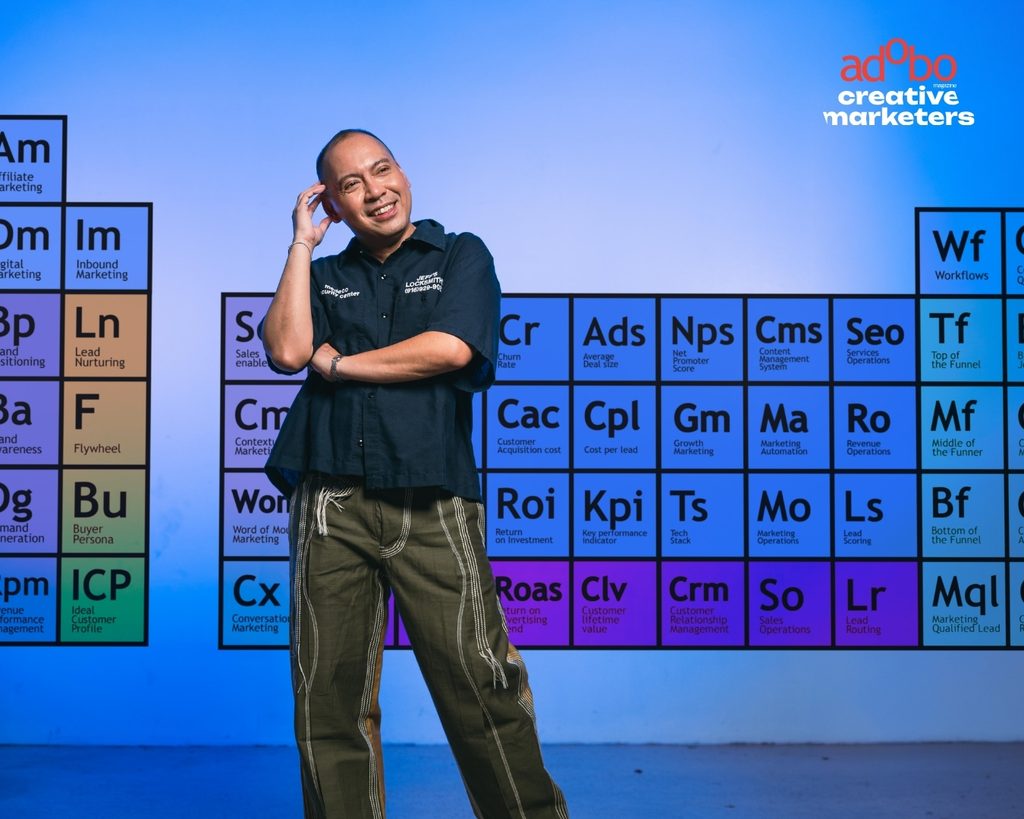
Dennis the brave
With more accomplishments than one can fit in a lifetime, and over two decades of marketing know-how, there is only one thing Dennis wants to be remembered for. It’s neither a campaign, nor a brand he worked on.
It is—simply but pointedly—recognized as someone who is brave enough to be the first to try new things.
“In Unilever, part of our culture, part of our DNA, we’re kind of experimental. I’m not claiming that everything that we’re doing will work. Some may fail,” Dennis admitted. “Some, we’ll realize that maybe it was the wrong decision. But at least, I would like to be known as the first person to try it, and was brave enough to try it.”
He shared that he thinks we need thought leaders in the industry who will encourage people to be brave, to try things out and not be scared. And that’s the legacy he wants to leave.
“I would like to be known as the person [who] is not always right, but is the first to try.”
Dennis says he still hopes to fulfill his dream of directing a movie someday. And for someone who likes to bring light into others’ lives and smiles to people’s faces, his choice of genre is, quite literally, shocking:
“If I’m going to create a movie, I would choose horror because I think it’s the only genre where you see the instant reaction of people — whether they like it or not, whether they really get scared or not, or [whether] they just laugh in scenes that’s supposed to scare [them]. I think that instant feedback of whether you got it or you didn’t is actually something that’s both challenging but also rewarding for a filmmaker. Hopefully, I’ll be able to do a horror [movie] someday.”

Creative and Editorial Direction: Jill Tan Radovan
Art Direction: Dea Sangco
Interview and Story: Stephanie Ferrer
Styling: Rad Esguerrra
Video: Mark Jardinel
Photography: Ans Batan
The post The 4 Cs of Dennis Perez: Chemistry, Culture, Cinema, and the Court appeared first on adobo Magazine Online.

Popular Posts
Tags
Tags
- ’ arestado
- ’ calls for UN ideals to be upheld
- ’ itinuturo sa mga estudyante sa isang klase sa Tokyo
- ’ mabenta matapos bumagsak ang presyo sa Vigan City
- ’ nakunan ang pagbagsak sa isang garden sa Turkiye
- ’ says study
- ’ says US defense official
- ’ to top Vatican post
- ‘Decent but basic’: Britain’s new barge for asylum seekers
- ‘Defective’ bills at coins
- ‘di nakalusot sa Comelec
- ‘di pa nagsasampa ng reklamo
- ‘di pa rin nakikita
- ‘di pinauwi at pinagbantaan ng amo nang tumangging makipagtalik
- ‘di raw chismis ang totoong ipinapakalat
- ‘Flying sofa
- ‘Go bag
- ‘Heat storm” stretches into southern Europe
- ‘Hollywood smile
- ‘Househelp’ who stole from former employers nabbed after months in hiding
- ‘I”ve ruined my life
- ‘Incredible fear’ among women across Afghanistan – UN official
- ‘influence operations’ affected 2022 elections
- ‘Learning aides’ help bridge homeschool gaps amid COVID-19 pandemic
- ‘Like Chernobyl”: Wary Ukrainians return to ruined towns after Russian retreat
- ‘Many may die’ warns UN after end of Black Sea grain deal
- ‘Marites’ sa viral video
- ‘Minor incidents’ reported but Undas 2022 ‘generally peaceful’ –Azurin
- ‘Motorcycle ambulance’ pitched for medical emergencies
- ‘Mr. Ingrown’ ng Davao City at ang ‘Human Waze’ ng QC
- ‘now taking off”
- ‘Police asset” killed by motorcycle-riding suspects in Novaliches
- ‘Policeman” puts chili on 17-year-old complainant”s privates
- ‘Reborn doll
- ‘Shabu” worth P19M found in bag abandoned at NAIA
- ‘Sick of everything”: Beijing residents fed up with tightening restrictions
- ‘siningil’ ng batas
- ‘Ukraine will never be a victory for Russia – never’
- ‘Usis’ turn hostage drama into potential COVID-19 super spreader event
- ‘variant of concern’
- ‘War is not an option’
- ‘What ceasefire?’: Shells fly at Ukraine front despite Putin’s truce
- ” French pupil shouted after killing teacher
- ” inaruga na parang tunay na sanggol ng babaeng nagkaroon ng miscarriage
- ” police raid drills for Nobel laureate Maria Ressa
- ” says Imee
- 000
- 000 a day — UK research firm
- 000 aid from gov”t
- 000 and 13
- 000 as cold compounds misery
- 000 bill
- 000 bill with faces of three Philippine heroes will not be demonetized –Palace
- 000 classroom shortage -Pia Cayetano
- 000 Davao City locals -Paolo Duterte
- 000 doses of Merck’s COVID-19 antiviral pill molnupiravir
- 000 doses of Pfizer COVID-19 vaccine
- 000 families evacuated due to Mayon’s unrest –Gov. Lagman
- 000 foreign workers on COVID-19 frontline
- 000 gelati from pope during Rome’s long
- 000 if current conditions maintained
- 000 in shabu seized in Pasay City
- 000 Lubao college students receive P2
- 000 marine creatures in Chile
- 000 Moderna COVID-19 vaccine doses arrive in the Philippines
- 000 people affected by oil spill
- 000 Pfizer-BioNTech vaccine doses from COVAX arrive
- 000 POGO workers have sought police clearance so far –Azurin
- 000 police after riots over teen’s death
- 000 residents left homeless in Cebu City fire
- 000 service providers for Konsulta Package
- 000 soldiers in war — official
- 000 vaccine doses to suspects catering to VIPs
- 000 vaxxed in Bohol province
- 000 violators recorded amid Alert Level 4 in NCR
- 000 violators recorded in NCR amid Alert Level 3 — PNP
- 000 violators reported in NCR amid Alert Level 3
- 000 worth of unregistered cooking oil seized in Pampanga
- 000% sure Duterte not referring to him as cocaine user
- 004
- 031
- 038
- 047
- 048
- 063 new COVID-19 cases; active tally at 18
- 071 new COVID-19 cases; active tally rises to 19
- 1
- 1 mananaya
- 1 menor de edad at 2 senior citizen
- 1 patay
- 1 patay matapos salpukin ng nag-overtake na van ang tricycle sa Quezon
- 1 pulis
- 1 sugatan sa sunog sa Port Area
- 1 sundalo sugatan
- 10
- 10 arrested in QC for e-sabong
- 10 iba pa
- 10 na nasawi sa sunog sa Muntinlupa
- 10 sugatan
- 10-wheeler na nakipagkarerahan umano
- 100 ex-rebels received gov’t assistance under Marcos so far
- 102
- 107.46% of QC target population vaccinated for COVID-19
- 11.4-pounds ang timbang
- 117
- 119
- 12 arrested for illegal quarrying
- 12 Carmelite nuns in Rizal test positive for COVID-19
- 12 other deals
- 12-year-old told by mother not to report abuses by father
- 120K missing expected in possible 7.2 magnitude quake in NCR
- 126 na grupong sasali sa party-list elections
- 13 San Juan City public schools install free internet
- 13-anyos
- 13-anyos na estudyante
- 14 reported dead
- 14-anyos
- 145 more PNP personnel contract COVID-19
- 145 students in Occidental Mindoro hospitalized since March due to extreme heat
- 15-year-old girl raped
- 153 new COVID-19 cases
- 15K more doses of Sputnik V vaccine arrive in the Philippines
- 17 arrested in Cavite for alleged digital currency scam
- 18 wounded in Colorado LGBTQ nightclub shooting
- 18-anyos na tricycle driver na nakabangga ng nasawing rider sa Caloocan
- 181 kilos of shabu seized in Bacoor anti-drug op
- 186 NCR areas under granular lockdown –PNP
- 19 reported dead
- 19-anyos na rider
- 196 new COVID-19 cases logged; active tally at 18
- 197 cases from January to November
- 199
- 2
- 2 ‘kamote’ rider sa Zambales
- 2 ‘secret’ bars caught operating undercover amid MECQ in Makati
- 2 agents nabbed in Taguig buy-bust op
- 2 anak na babae ng inang OFW
- 2 bangkay ng lalaki
- 2 bata
- 2 brothers nabbed for possession of firearms
- 2 EDCA sites used in search ops for 4 missing people off Tubbataha –military
- 2 elderly Laguna women killed in separate attacks
- 2 estudyante
- 2 estudyanteng nag-abutan ng pinatuyong dahon ng marijuana sa paaralan
- 2 iba pa na ginawang online scammer sa Myanmar
- 2 katao
- 2 magkapatid
- 2 mananaya
- 2 minors nabbed for alleged sex trafficking; 12 victims rescued
- 2 nabbed in Panglao
- 2 Nigerians nabbed in online ‘love scam’ by anti-cybercrime unit
- 2 others guilty of graft
- 2 Pinoy
- 2 pulis na nagtangka umanong halayin ang babaeng grade 12 student
- 2 senators tell BFP
- 2 sundalo
- 2 suspected members of Daulah Islamiyah
- 2 suspects killed
- 2 suspek
- 2 Taiwanese fugitives among rescued workers in Las Piñas raid –police
- 2 talunan sa bilyar
- 2 Visayas-based medical graduates top Physicians Licensure Exams
- 2-in-5 shark species lurch towards extinction
- 2-year-old’s positive antigen result won’t affect NCR’s Alert Level 2 -DOH
- 20 bahay
- 20 million Filipinos ‘internet poor
- 20 persons rescued after boat capsizes off Zamboanga del Sur
- 20 reported dead
- 200 La Union students affected by Maring receive school supplies from Kapuso Foundation
- 200 people affected by Typhoon Betty –NDRRMC
- 2022 set to be UK’s hottest year on record
- 208
- 21-anyos na babae
- 22 dead as savage US blizzard cuts power
- 22 killed in fire at nursing home in Russia
- 229
- 234 new COVID-19 cases
- 25 dead following reported riot in women’s prison in Honduras
- 25 pamilya
- 25-year-old coffee shop owner shot and killed in Cabanatuan City
- 250 coronavirus cases and 274 COVID-19 deaths in 24 hours – ministry
- 262
- 271
- 275 new COVID-19 infections logged
- 28 fixers arrested
- 28-year-old architect found dead at banana farm raped
- 289 new COVID-19 cases logged; active tally at 10K
- 29 na paaralan
- 292 COVID-19 infections
- 295 pedestrians involved in traffic accidents in 2022
- 2nd COVID-19 boosters to be made available to general population — DOH
- 3
- 3 adults killed in Nashville school shooting
- 3 armed foreigners nabbed
- 3 convicted so far — ARTA
- 3 dead
- 3 katao
- 3 kids injured after playing with firecrackers in Camarines Sur
- 3 lalaki na gumahasa umano sa 13-anyos na babae
- 3 lalaking nagbabaklas ng mga piyesa mula sa mga nakaw na motor
- 3 Luzon dams open gates amid heavy rains from Kiko
- 3 missionaries released in Haiti following October kidnapping
- 3 more persons of interest in Salilig’s death expected to surrender –police
- 3 of 4 Cessna plane crash victims in Bicol retrieved –mayor
- 3 others wounded in Lanao del Sur shooting
- 3 suspek
- 3-buwang-gulang na sanggol
- 30 people evacuated in Eastern Visayas due to Lannie
- 32 Pinoy
- 34 new recoveries
- 345
- 348
- 35 missing due to Paeng
- 35-year-old found dead
- 354K people affected due to Jolina -NDRRMC
- 36-anyos na lalaki
- 361 pass October 2021 CPA licensure exams
- 382
- 4 arrested suspects in Degamo slay transferred to Crame –PNP spox
- 4 foreigners nabbed for lewd acts at Siargao resort
- 4 Kalinga barangays placed under a 14 day COVID-19 granular lockdown
- 4 na buwang sanggol sa Cavite
- 4 na divers
- 4 na lugar sa Pilipinas
- 4 new Delta variant cases detected in Bohol
- 4 other SUCs for not resuming full in-person classes
- 40 katao huli
- 41 passengers
- 44 other nations pledge to protect nature in climate change fight
- 46 katao
- 46 killed in 2021 — RSF
- 467
- 49 cops in alleged drug raid cover-up disarmed
- 4Ps beneficiary becomes a pilot
- 5 crew members rescued in Palawan boat mishap
- 5 fratmen linked to Salilig hazing file petition for bail — prosecutors
- 5 hurt
- 5 iba pa
- 5 killed
- 5 missing due to Jolina –NDRRMC
- 5 more ‘missing’ ROFs from South Africa located –DOH
- 5 Pasay City General Hospital wards reach full capacity
- 5-man committee on PNP resignations to meet next week — Magalong
- 5-year-old son killed in South Cotabato truck crash
- 50 million fully vaccinated individuals possible by yearend
- 500 Filipino Muslims travel to Saudi Arabia for hajj
- 541 cases of hand
- 554 new COVID-19 infections; active tally down to 25
- 56 residents evacuated as Betty brings strong winds
- 570 more doses of Pfizer-BioNTech vaccine
- 5M devotees expected to join Nazareno 2023 Walk of Faith — MPD
- 6 asong kakatayin sana
- 6 children injured in mass stabbing in French town Annecy –security source
- 6 family members dead in Navotas fire
- 6.5 quake hits off west coast of Nicaragua – USGS
- 600 households tagged as non-poor can be removed from 4Ps program
- 600 passengers
- 61 tourist sites affected by oil spill –DOT
- 63 missing due to Paeng –NDRRMC
- 634 mga lungsod at bayan sa Pilipinas
- 639 minors with comorbidities vaccinated for COVID-19 -DOH
- 647
- 66% of Pinoys concerned about rising prices of basic commodities –Pulse Asia
- 678
- 7
- 7 bodies recovered; 2 crew still missing in sunken fishing vessel off Iloilo
- 7 freelance models
- 7 missing due to Jolina –NDRRMC
- 7 prison officer sa Hong Kong
- 7 sugatan sa aksidente sa Ragay
- 7-anyos na babae
- 7-anyos na lalaki
- 7.8-magnitude quake hits southern Turkey; at least 53 dead
- 700 NBP prison guards relieved –Catapang
- 700 people affected by Typhoon Kiko –NDRRMC
- 720K doses of Sputnik V vaccine arrive in Philippines
- 75 PDLs with mild symptoms remain in isolation — BuCor
- 760
- 772 new Philippine COVID-19 cases recorded; active tally at 85
- 780 families affected by Typhoon Kiko –NDRRMC
- 783
- 79 Pinoy
- 8
- 8 countries
- 8 dead
- 8 passengers dead after jeepney swept away by flash flood in Tanay
- 800 cargoes stranded amid Typhoon Odette –PCG
- 800 doses of AstraZeneca COVID-19 vaccine
- 849
- 874 new COVID-19 infections logged
- 878 fresh cases in past week
- 894 new COVID-19 cases bring active tally to 29K
- 900 injured in massive train crash in Odisha
- 92
- 926 new COVID-19 cases; active cases at 28
- 934 new COVID-19 cases from Jan. 9-15
- 940
- 961
- 98 reported dead
- 997 new COVID-19 cases; active cases at 29
- A curtain divides male
- A partial lung and colon surgery: The Pope’s health issues
- a symbol of freedom
- A year after first COVID-19 shots in US
- aabot ng P20k
- Abalos believes cops did not torture Degamo slay suspects
- Abalos orders halting of deployment of police security detail to POGO operators
- Abalos warns against BFP personnel selling fire extinguishers as permit requirement
- Abogado ni Deniece Cornejo
- About 14M in US get first COVID-19 shot in August
- Abra
- Abu Dhabi eases tourist quarantines as UAE hits zero deaths
- Abu Sayyaf killed in Basilan
- Abu Sayyaf subleader nabbed in Batangas
- accepts OIC post in Office of Press Secretary
- accommodation and transportation allowance
- accountability –local execs
- Acorda: 2nd suspect in killing of Oriental Mindoro journo identified
- Acorda: PNP now vetting all police drug enforcement units
- ACT hopes Sara Duterte”s Basic Education Report will address issues
- ACT proposes 185 class days yearly for return of summer school break
- active tally at 26
- active tally at 53-day low
- active tally at 9
- active tally drops to 18
- active tally hits 18
- Activists condemn Malaysia”s ban on LGBTQ books
- Activists Kara Taggaoa
- Actor Dominic Roco
- additional COVID-19 shots
- Adobo News
- Afghan girls stuck at home
- Afghanistan and Britain
- Afghanistan commercial flights resume as UN warns of humanitarian crisis
- AFP
- AFP deploys 8 nurses to Lung Center
- AFP joins US in commemorating tragic 9/11 attacks 20 years ago
- AFP modernization
- AFP morale high
- Africa groups welcome Sudan ceasefire extension
- After Hurricane Ian’s deadly wrath
- After pizza and prayer
- After Russia-Ukraine plan
- after ship sinks near Japan
- Afternoon number coding improved EDSA traffic
- agaw-pansin dahil sa Spiderman costume
- Aid trickles in as Turkey-Syria quake toll passes 24K
- Airlines slam ‘ineffective’ COVID-19 tests for China travelers
- Aklan under state of calamity due to ASF
- Al Shabaab claims responsibility for attack on restaurant in Somali capital
- Alagang baboy
- Alagang mga aso
- Alagang unggoy
- alamin
- alamin kung bakit nabingi ang isang tainga
- alamin kung may masuwerteng nanalo
- alamin kung saan matatagpuan
- Albay needs P166.7 million to continue aid amid Mayon Volcano unrest
- Alert Level 2 in NCR possible next month if COVID-19 response maintained — DOH
- alerts sound in South Korea
- Alkalde ng Jomalig
- All regions now at minimal risk for COVID-19 — DOH
- Alleged CPP-NPA official shot dead in Sorsogon
- Alleged Daulah Islamiyah bomb maker surrendered in North Cotabato–military
- Ama
- Ama at dalawa niyang anak
- Amang nanghalay sa 2 niyang anak sa Antique noong 2019
- Amb. Carlson: US-funded fuel depot being built in Cebu belongs to PH
- Ambassador Beaufils: UK to act as observers in Balikatan exercise
- American Samoa declares measles emergency
- American wanted in US for child molestation nabbed in Mandaluyong
- Americans celebrate Thanksgiving under shadow of two more mass shootings
- Amerikanong pumatay sa misis niyang Pinay
- Amid Omicron fears
- Amid Senate’s Pharmally probe
- aminadong may malaking pagsubok sa paglikas ng mga Pinoy mula sa Sudan
- aminadong may tampo siya ngayon kay Ogie Diaz na dati niyang manager
- Ammonia leak in Navotas could be due to negligence –BFP
- Anak na kailangan ng dugo para sa amang kritikal ang lagay
- and Brunei
- ang bulag na pinagaling ni Hesus
- ang may sasakyan o wala?
- Angat Dam water level dips below 180-meter minimum operating level
- Año: Metro Manila mayors reviewing age restrictions for minors allowed in malls
- Antigong Bulul mula sa Ifugao
- Antipolo under granular lockdown due to COVID-19
- anywhere
- Apayao and Santa Ana
- apektado
- Apollo Quiboloy says Omicron variant due to allegations against him
- apostille services
- Arabo
- Areas with below 50% vax rate a priority during national vaccination drive –Dizon
- arestado
- arestado dahil sa kasong statutory rape sa SJDM
- arestado dahil sa paggamit umano sa 2 anak sa online kalaswaan
- arestado dahil sa pagkakabit umano ng spy camera sa CR ng mga babae
- arestado dahil sa pamemeke ng mga permit
- arestado dahil sa panggagahasa umano sa kanyang kasambahay sa Maynila
- arestado matapos halayin umano ang pasaherong menor de edad
- arestado matapos mahulihan umano ng mahigit P1-M droga
- arestado sa Cavite
- arestado sa Laguna
- arestado sa pag-gang-rape umano sa isang babae
- arestado sa pagnanakaw ng bakal sa ginagawang NLEX-SLEX connector road sa Maynila
- arestado sa QC
- arestado sa QC dahil sa pambubugaw umano online; 2 biktima
- arestado sa Taguig buy-bust operation
- arestado; ilang OFWs
- Army investigating alleged involvement of personnel in businesswoman slay — Brawner
- Arnie Teves asks for fairness
- Around 3
- Around P217M worth of aid given to Mindoro oil spill victims –DSWD
- Arrested UP prof says police violated her rights
- arrests smuggling network
- Artist
- Artist Bree Jonson s body found in La Union resort; companion faces drug charges
- as in London s Grenfell
- As more US states find Omicron cases
- asahan na makapapasok sa Pilipinas– Sec. Duque
- ASEAN states object as China lobbies for Myanmar junta to join summit –sources
- ASEAN tackles village to village development to improve rural communities — DSWD”s Gatchalian
- ASEAN to discuss excluding Myanmar leader from summit –sources
- Ash spewing volcano in Peru prompts state of emergency
- asks Indonesia to reexamine Veloso”s case
- Aso
- Aso na naipit sa bakal na bakod
- Asong laging sumasakay sa jeep sa Mandaluyong
- Asong nakunang sinaktan sa Davao City
- Asong pagala-gala sa SLEX
- Aspirants ready for presidential debate for Eleksyon 2022
- asymptomatic in last infection thanks to vaccine
- At COP 26
- At least 1
- At least 11 killed in Pakistan Ramadan donation stampede
- At least 13 dead in India accident after pick-up falls into gorge
- at least 18 die
- At least 19 die in school dormitory fire in Guyana
- At least 207 dead
- At least 23 holes found on sunken MT Princess Empress
- At least 48 killed in road accident in western Kenya — police
- At least 51 killed in twin Pakistan transport tragedies
- At least 64 killed in Nepal”s worst air crash in 30 years
- At least two dead in Uganda building collapse –rescuers
- Ataul
- Ateneo de Davao grad tops Civil Engineer Licensure exams
- Attack helicopter from Jordan arrives in Sangley Point
- Attack on Ukraine would be costly
- Attack on Vienna”s pride parade prevented
- Atty. Garafil
- Audit shows Pharmally deliveries to PS-DBM always short
- Aurora due to Paeng
- Aussie sentenced 129 years in PHL child sex abuse case –prosecutor
- Austin concerned about China’s ‘risky’ behavior vs PH vessels in Ayungin Shoal
- Austin says after hypersonic missile report
- Australia
- Australia imposes sanctions on Iran
- Australia to buy 300
- Australia’s medicine regulator approves Pfizer vaccine for children 5-11
- Austrians turn on ex-chancellor s party after corruption claims
- author of ‘kissing book
- Authorities probe possible ‘scam hub’ condos
- Authorities seize P100 million in allegedly smuggled agricultural products
- AWOL na pulis na sangkot sa pagnanakaw
- Awra Briguela released from police custody after posting bail
- ayaw umuwi dahil nangangamba sa kaligtasan
- ayon sa local government
- ayon sa PNP-Makati
- Babae
- Babaeng bumahing nang matindi
- Babaeng modus umano na magbenta ng pekeng bahay at lupa
- Babaeng nagpapahinga
- Babaeng namasukan
- Babaeng negosyante
- Babaeng pumanaw
- Babaeng sanggol na putol ang kanang paa at bali ang kaliwang tuhod
- Babala kontra ‘cash-in’ scam’; paraan ng modus
- Babuyan Islands -PAGASA
- Baclaran amid surge in COVID-19 cases
- Bacolod cities
- bagong gumaling sa COVID-19; active cases
- Bagong laro sa Pilipinas na cornhole
- Bagong Taon
- Baguio
- BAI to help farmers vs. ASF
- bakit hindi dapat tirisin?
- Bakit nagkaka-hangover sa sobrang kalasingan at paano ito mawawala?
- Bangkay ng lalaki na may tama ng bala
- Bangkay ng lalaki na nakatali ang kamay
- Bangkay ng lalaking nakaposas at may tama ng baril sa ulo
- Bangkay ng pedicab driver
- Bank denies certifying PAGCOR’s third-party auditor -Gatchalian
- Bantag blames PNP for late coordination to protect ‘middleman’
- Barangay captain in Lipa
- Barangay captain shot dead in Norzagaray
- Barangay kagawad shot dead in front of barangay hall in Cavite
- Barbers to renew call to reinstate death penalty for drug offenders
- BARMM Indigenous affairs head killed in Cotabato ambush
- Bata na biglang nawala
- Bata sa Bulacan
- Bataan cop
- Batanes
- Batanes governor orders tuna removed from Betty relief packs after Mindoro issue
- Batanes reports first COVID-19 community transmission
- Batang lalaki
- Batang naligaw noon at dinala sa Australia ng mga umampon
- Batang negosyante
- Batangas
- Batangas shot dead
- Batangueña
- Bato assures Teves: Senate hearing on Degamo case won’t be a ‘kangaroo court’
- Bato pushes for creation of ‘Nat”l Agricultural Crop Program’
- Bato says Lorenzana
- Bato suggests no patrolman
- Bato tells Pimentel s camp: I am the legal standard bearer of PDP-Laban
- Bato to withdraw COC for president in Eleksyon 2022
- Battle for abortion rights hits America’s streets
- bawal sa lugar ng botohan sa Eleksyon 2022– Comelec
- Bayan Muna
- Bayan Muna laments plight of political prisoners after 67-year-old detainee dies of cancer
- Bayan Muna lawmakers want probe into alleged online banking fraud
- be dutiful
- Bear kills jogger in Italy
- Belarus strongman urges unity with Moscow in ‘difficult times”
- Belarus to get Russian tactical nuclear weapons ‘in several days” –Lukashenko
- Benedict XVI will be remembered as ‘pope of charity” — CBCP
- Bersamin
- BFAR to keep fishing bans in oil spill-hit municipalities in Oriental Mindoro
- BFAR vessels monitoring order ‘inextricably linked” to project in graft case
- BI arrests two more ‘Luffy” suspects
- BI deactivates port operations division
- BI ready for influx of holiday season travelers –spokesperson
- BI rotates 341 NAIA personnel to curb corruption
- BI to deport 372 foreigners arrested by PNP
- BI: Yearbook
- BI’s e-Travel System to roll out on April 15
- Biden announces US-Canada deal to curb illegal migration
- Biden asks for early talks with Macron amid submarine row
- Biden convenes over 100 nations for world ‘democracy’ summit
- Biden declares disaster as California takes another storm-pounding
- Biden due to meet King Charles
- Biden eyes Indo-Pacific in summit with Australia
- Biden look forward to ‘trilateral modes of cooperation’ with other countries
- Biden orders release of secret 9/11 documents
- Biden pays respects to Queen Elizabeth II before funeral
- Biden ramps up vaccine mandates for millions in COVID-19 battle
- Biden says US
- Biden says US will meet its climate goals
- Biden tells Macron US was ‘clumsy’ in submarines deal
- Biden to Marcos: Amid challenges
- Biden to meet Pope amid pressure from anti-abortion US bishops
- Biden to meet with Argentina president during democracy summit
- Biden to seek red lines in talks with Xi
- Biden to travel to UK
- Biden visits all three attack sites on 20th anniversary of 9/11
- Biden visits Congress to rally votes for his agenda
- Biden vow to expand collaboration on renewable energy production
- Biden vows to stand with Southeast Asia in defending freedom of seas
- Biden-Putin talks set for Tuesday amid Ukraine tension
- Biden’s climate plan strains ties with European allies
- Bigatin na sanggol na bagong silang
- bigla umanong nawala habang naglalayag patungong Norway
- Bill establishing national sex offender registry filed in Senate
- bill me
- binangungot nga ba?
- binaril at napatay dahil umano sa away sa isinanglang relo; suspek
- Binatilyo
- Binatilyo na nagka-impeksiyon sa private part
- binulabog daw ng mga multo
- bird flu
- Bird flu fells nearly 9
- bistadong pinapalitan ng bato ang cellphone pero ‘di raw para sa kostumer
- Bitay sa mga sangkot sa ilegal na droga
- BJMP suspends Malabon City Jail visits due to protest damage
- Black Nazarene devotees flock to Quiapo church
- black oil spotted in area where motor tanker sank off Mindoro –PCG
- Blast at BBQ shop in northwest China kills 31
- Blast occurs at Army checkpoint in Maguindanao
- Blessed Sacrament stolen from Sorsogon church
- Blinken discussed US-China relationship in call with China’s Qin
- Blinken in China for rare trip amid frosty ties and dim hopes for progress
- Blinken says
- Blinken says Ukraine has taken back 50% of territory that Russia seized
- Blinken to Turkey: ‘The United States is here” with aid
- Blogger convicted of cyberlibel over remarks vs. Tito Sotto
- Blue Ribbon probe on ‘long delayed” release of national IDs sought
- BOC
- BOC begins destruction of P7 billion worth of seized counterfeit goods
- BOC Davao sub-port
- BOC foils attempt to smuggle P240M worth of Thai sugar
- BOC na ang maghahatid sa pamilya ng mga OFW
- BOC seizes P240M worth of counterfeit goods in Subic port
- BOC: P1-B worth of smuggled agricultural products seized under Marcos admin so far
- BOC: P24.28 billion worth of smuggled products seized as of early January
- Bohol
- Bohol buy bust
- Bohol COVID-19 death toll breach 300 mark
- Bohol COVID-19 vaccination reaches 35% of target population
- Bohol gov’t to lift ban on air
- Bohol hospital to accept only COVID-19 cases
- Bohol no longer requires 5-day quarantine
- Bohol placed under GCQ with heightened restrictions; Ilocos Norte under GCQ
- Bong Go on drug test: Anytime
- Bongbong Marcos files COC for president in Eleksyon 2022
- Bongbong-Sara tandem includes ex-DPWH chief Villar in Senate slate
- Bongo truck na may sakay na mga kabataan
- boost collab in agri
- Boosting Taiwan’s defenses an ‘urgent task
- Boris Johnson severs ties with lawyers after police referral
- Botika sa QC
- Bouncer at staff ng bar sa Makati
- Brazil reports 10
- Brazil s Bolsonaro accused of crimes against humanity at ICC
- Brazil sinks rusting old aircraft carrier in the Atlantic Ocean
- Brazil’s Lula discuss peace
- Brazil’s Lula to meet Xi in Beijing after lashing out at US dollar
- Brazilian teen stabs teacher to death
- Bride
- bringing total to 40
- bringing total to three
- Britain outlines new workforce plan for strained health service
- British health officials warn of difficult winter with flu and COVID-19
- British man detained climbing South Korean skyscraper
- Brittney Griner expresses concern for reporter detained in Russia
- Buhay na bagong silang na sanggol
- Build
- Build’
- Bulacan
- Bulacan high school teacher accused of molesting
- bumaba sa higit 68K
- bumaliktad dahil sa parang ‘tao’ na iniwasan ng driver
- bumangga at pumasok sa doughnut shop sa isang mall sa San Juan
- bumangga sa poste sa Cebu
- Bus
- Bus attack kills 10 oil workers in east Syria –state media
- Bus carrying North Macedonian tourists crashes in flames in Bulgaria
- Bus rams concrete barriers on EDSA-Trinoma northbound lane
- business can’t be separated
- Bustos
- but Comelec says its hands tied
- but COVID-19 hampers fight
- but robbery
- but want lower oil price
- Butlig na may tubig
- CA panel approves Solidum as DOST secretary
- CA panel defers confirmation hearing for Tejano as ambassador to PNG
- Cabinet members to discuss ‘transitional’ matters
- Cagayan
- Cagayan –OCTA
- Cagayan governor opposes possible hosting of EDCA sites
- Cagayan Valley
- Cairo hospital fire kills three
- Call center workers na naka-staycation sa hotel
- Calling someone fat is bullying
- calls for protests
- calls out China for ‘provocative and unsafe conduct’ in South China Sea
- Camarines Sur
- Cambodian activist made gov”t official after apology to Hun Sen
- Cameroonian na lider umano ng grupong sangkot sa ‘black and white powder scam
- Cameroonian na may modus na pagpaparami ng pera gamit ang mga kemikal
- Canada
- Canada asks for PH support in free trade talks with ASEAN
- Canada clamps down on cruise liners dumping sewage
- Canada launches new Indo-Pacific strategy
- Canada reports 12 cases of Omicron variant
- Canada to drop COVID vaccine requirement to enter country on Sept 30 — source
- Canada to pay Indigenous abuse survivors more than $2 billion
- Canada’s drought-stricken British Columbia bracing for floods when rains return
- Canadian vlogger Kulas” Filipino citizenship endorsed to Senate plenary
- cancellation
- Candijay town in Bohol conducts preemptive evacuation due to Paeng
- Canned tuna sa food packs ng DSWD
- CAR
- carbon-negative club
- Cardinal accused of sex assault retires from Vatican job
- Cardinal Advincula says he has recovered from COVID-19
- Carolinas begin recovery
- Casino scam suspect nabbed after 3 years in hiding
- Catanduanes coastal barangays on alert for Mawar
- Catapang wants a ‘Global City” BuCor headquarters
- catches fire
- Catholic nuns lift veil on abuse in convents
- Cave-in during training traps 15 Brazil firefighters –officials
- Cavite
- Cavite to have water service interruption until Feb. 14
- Cavite; two dead
- CBCP exec urges churchgoers to follow IATF guidelines during Simbang Gabi
- CDRRMO: 22 students in Bacolod City fainted
- Cebu
- Cebu archdiocese supports Dumaguete church in opposing reclamation project
- Cebu councilor
- Cebu councilor cheats death in road accident
- Cebu dev”t worker told father abductors identified themselves as police
- Cebu governor to extend ban on pork from Iloilo
- Cebu Mayor tests positive for COVID-19
- Cebu Pacific flights for essential travel only as NCR stays under MECQ
- Centino have disowned Parlade s statement
- Cessna with 6 on board goes missing after taking off from Cauayan
- Chavit Singson backs out from vice gubernatorial race for the sake of family
- Cheating husband sentenced to 8 years in prison — SC
- Chel Diokno likens Martial Law to modern-day Game of Thrones
- child abuse
- children
- China
- China ‘interference”
- China ‘monster ship” seen at Ayungin Shoal -US maritime expert
- China ‘shocked” at Kabul attack
- China abstains
- China aircraft monitored US
- China coast guard ‘drove off” Filipino fishers from Ayungin
- China conducts drills near Taiwan Strait after US lawmakers’ visit
- China COVID deaths accelerate to 9
- China COVID-19 curbs disrupt production at world’s biggest iPhone factory
- China defense chiefs speak ‘briefly’ at Singapore summit
- China Desks in Philippines eyed anew in PNP
- China donates rice
- China expresses support for Russia after aborted mutiny
- China FM warns of ‘dangerous consequences’ of Taiwan criticism
- China ink MOU on agriculture
- China on Ayungin Shoal incident: Our vessels” maneuvers were professional and restrained
- China rejects US request for a meeting between defense chiefs – report
- China s birth rate plummets to lowest figure in decades
- China says armed forces should boost combat preparedness
- China says it does not accept Philippines” 2016 South China Sea arbitration win
- China says US democracy ‘weapon of mass destruction’
- China should see a ‘thaw very shortly”
- China suspends short-term visas for South Koreans over COVID-19 travel curbs
- China vessels off Spratlys with Chinese gov’t
- China vows ‘resolute’ response to high-level US meet with Taiwan leader
- China-manufactured tocilizumab to arrive this week –FDA
- China’s COVID-19 outbreak developing rapidly
- China”s Xi meets ex-President Duterte in Beijing
- Chinese jets in close encounter over South China Sea
- Chinese military flights near Taiwan look like ‘rehearsals’ –Pentagon chief
- Chinese police talks
- Chinese spy balloon did not collect information over US – Pentagon
- Chito Gascon’s ashes brought to CHR; Mass
- Chiz reject China”s statement vs. new EDCA sites in Philippines
- CHR chairman Chito Gascon passes away
- CHR launches Human Rights Institute to boost education
- CHR probes death of Grade 10 student due to alleged hazing
- Christmas reborn in Bethlehem after pandemic years
- Christmas tree sa Tagoloan Municipal Police Station
- Church assistant killed
- City loses 4
- CJ Gesmundo: SC disposed 3
- claimant nabbed in Subic
- classes
- Climate activists occupy Gordon Ramsay restaurant
- climate change
- close contact exposure will have paid leaves
- close-contact
- Cloudy skies
- CNN fires anchor Chris Cuomo over role in brother ex-governor’s sex scandal
- COA chair: We didn’t say PS-DBM procurement of COVID-19 supplies was ‘overpriced’
- COA: 48 Dalian trains for MRT3 remain unused
- Coast Guard rescues 4 fishermen after boat submerges
- Cold brew para sa mga mahilig magkape
- Colin Powell dies of COVID-19 complications –family
- College students weigh in on CHED order nixing fully online classes for 2nd semester
- Colmenares to Bato: Prepare defense in ICC instead of evading liability
- Colmenares: Foreign ownership of industries
- Comelec
- Comelec en banc to discuss possible suspension of COC filing for barangay
- Comelec eyes completion of printing of over 91M ballots for 2023 BSKE by mid-February
- Comelec refutes ‘spurious” document on party-list representatives proclamation
- Comelec registers over 1M new voters for 2023 barangay
- Comelec releases guidelines in Eleksyon 2022 voting simulation on Oct. 23
- Comelec spox: ‘Register Anywhere Project” to pilot in 5 NCR malls on December 17
- Comelec starts accepting local absentee voting applicants for Eleksyon 2022
- Comelec to issue decision on voter registration extension on September 29
- Comelec to organize hybrid debates for Eleksyon 2022 presidential
- Comelec to work with Facebook
- Comelec wants ‘nuisance candidates’ criminalized
- Comelec: All systems go for start of COC filing
- Comelec: No hike in teachers’ honoraria for 2023 barangay
- Comelec: Ormoc plebiscite to merge barangays off to a good start
- Comelec: Over 100 party-list groups denied registration for Eleksyon 2022
- Comelec: Petition filed vs. Raffy Tulfo’s senatorial candidacy
- Comelec’s 2nd division to handle 2 more petitions vs. Marcos Jr.’s candidacy
- Comelec”s Garcia on proposed 6-year term for barangay
- Community journalist slain in Davao del Sur — NUJP
- Company involved in excavation at NBP withdraws from deal
- Complaints filed vs. suspects in Lanao del Sur Gov. Adiong ambush –Azurin
- Compulsory jabs: Pressure mounts on anti-vaxxers
- condemns mutilation
- Condo developer in Manila’s ‘heritage zone’ says it has permits
- confusion grip Burkina Faso day after coup
- Construction worker finds 45 rounds of a grenade launcher in Cavite
- contraceptive use still low –Lagman
- Cop faces murder complaint over fatal shooting of QC traffic enforcer
- Cop tagged as suspect in Butuan couple slay
- Cops nab 1 of 2 suspects behind robbery incidents in Pasig City
- Cops nab 3 suspects in police asset”s ambush in Antipolo
- Cops nab alleged pusher of prescriptive drugs in Laguna buy-bust op
- Cops nab illegal carpool drivers
- Cops nab man in NYC after Fox News Christmas tree torching
- COS ni Mayor Isko na si Cesar Chavez
- Cotabato bus conductor shot dead by armed robbers
- Couple nabbed for taking out almost P3 million in loans using fake IDs
- Court rules for Florida governor
- COVID-19 Alert Level 4 over NCR could be extended 2 weeks after September -NTF
- COVID-19 cases ‘plateauing” nationally
- COVID-19 cases in NCR
- COVID-19 daily new average up by 42% –DOH
- COVID-19 deaths in Bohol breach 400-mark
- COVID-19 deaths top 1.5 million across Europe
- COVID-19 mom goes through five hours of labor in car
- COVID-19 positivity rates decreasing in ‘most” Luzon areas — OCTA
- COVID-19 reproduction rate critical in Pudtol
- COVID-19 vaccination slow in 5 regions due to access issues
- COVID-19 vaccinations should be intensified given BQ.1 detection -expert
- CPP top leader Ka Oris’ cremated remains turned over by gov’t to family
- crime solution improved in last 5 years
- Criminology grad student charged with murdering 4 University of Idaho students
- Critical stage of Arcturus wave in PH is ‘over’ –Solante
- Croatia adopts euro
- crocodiles
- crowded
- crowds gather for funeral of Constantine
- Cuba
- Cuba starts COVID-19 jabs for toddlers
- cured
- Cusi-faction files estafa
- cyclone rattle Vanuatu
- Cynthia Villar at Raffy Tulfo
- Cynthia Villar on viral video: We”re not doing anything bad
- Czech Republic reports record daily rise in COVID-19 cases
- DA maintains memo on biofertilizer use issued to increase yield
- DA preparing for possible El Niño effects — exec
- DA rules out option to sell seized white onions at Kadiwa stalls
- DA still negotiating for 2nd cycle of P170/kilo onions to be sold at Kadiwa stores
- DA: Confiscated white onions to be sold at Kadiwa stalls
- Dad
- dadalhin sa kalawakan para sa ‘space burial”
- Dalagita
- Dalagitang maysakit sa balat
- Dambuhalang bluefin tuna
- Danish man arrested in France after woman”s body found in fridge
- dapat hinay-hinay sa pagkain ng castañas
- Darwin microscope to be sold at auction
- Dating kargador sa palengke
- Dating palaboy na mapagmahal sa kuting
- dating pulis
- Dating tauhan ng anti-crime group
- Davao Oriental Governor Corazon Malanyaon passes away
- DBM
- DBM releases additional P1.04B for COVID-19 special risk allowance of health workers
- De Lima feeling ‘much better” despite COVID-19
- De Lima files bill exempting poll workers from income tax
- De Lima to attend hearing on drug charges a day after hostage-taking incident
- De Lima: Gov t accepted ICC jurisdiction by seeking procedural remedy
- death row cases on Friday
- death toll at 22
- Death toll due to shear line floods
- Death toll from Afghanistan tunnel fire rises to 31
- Death toll from Philippine flash floods rises to 67 — official tally
- Death toll in apartment building collapse in Brazil rises to 14
- Death toll in India massive 3-train collision rises to 288
- Deathrow Pares na napagkakamalang bulalo
- deaths
- Deaths attributed to shear line rains
- Declaration of HFMD outbreak possible if cases increase in more regions — Solante
- defends anti-drug campaign
- defense
- Deforestation in Brazil’s Amazon rises in March
- defying outcry
- Defying Russia
- Degamo case submitted for resolution; Teves files motion to dismiss
- Degamo slay task group created
- Degamo’s wife dismayed over Bato’s decision to allow Teves to virtually attend Senate probe
- Degamos linked to shooting at home of ex-governor’s staff
- Deja vu: Sweden s Andersson elected PM for second time
- Dela Rosa to drug war probe –Chel Diokno
- Dela Rosa: We pursued drugs campaign to save humanity from drug crisis
- delayed –Imee Marcos
- Delayed PhilHealth reimbursements partly due to IT system — Duque
- delays
- Delivery rider sa Leyte
- Delta remains nation’s top coronavirus threat
- democracy
- dengue outbreak during El Niño possible -DOH
- denies Marcos family bid to retake seized properties
- DENR forms task force to protect marine ecosystems after oil tanker sinks off Oriental Mindoro
- DENR moves vs. structures in protected areas along Marilaque Highway
- DepEd
- DepEd exec says around P33B needed to provide laptops to all teachers
- DepEd exec wants NBI to probe maternity pay scam
- DepEd extends enrollment until September 30
- DepEd optimistic on expanding face-to-face classes by January 2022
- DepEd probing food poisoning incident in Iloilo school
- DepEd QC: Teachers” ‘borrowed” laptops
- DepEd releases order on optional face mask use in schools
- DepEd: Christmas parties in schools voluntary
- DepEd: Memo not intended to profile ACT members
- DepEd: Teachers may receive 2021 performance-based bonus in two to three weeks
- DepEd: Teachers with COVID-19
- Depositor loses P1 million in bank account
- Despite crackdown
- despite transport strike –MMDA
- Despite Trump ire
- detention raps vs. 6 over missing sabungeros
- DFA reminds public appointments required for passport
- DFA slams ‘venting” for Marcos-Zelenskiy call by Ukraine envoy
- Diarrhea
- Diarrhea outbreak reported in 3 barangays in Tanza
- Diesel prices to roll back P2-P2.20/liter next week -Unioil
- Digos City worker killed after bridge being demolished collapses
- DILG
- DILG chief eyes intensified crackdown vs. private armies
- DILG eyes designating ‘fishing areas’ in oil spill-hit Oriental Mindoro
- DILG urges LGUs to make rules for caroling
- DILG wants ‘no vaccine
- DILG: 1
- DILG: Emergency hotline now accepts VAWC
- DILG: Malls should refuse entry to unvaccinated who wish to dine in
- DILG’s Abalos: De Lima feels safe in her custodial cell after being held hostage
- dinagsa
- dinarayo sa Bulacan
- Diocese in New York state submits to sweeping oversight
- Dionardo Carlos assumes post as 27th PNP chief
- Disaster units on alert for Odette — NDRRMC
- Disinformation
- dismal economy
- Disneyland dragon catches fire in California
- DMW
- DND seeks to recover P1.9 billion deposit on Russian helicopters
- Doc gets COVID-19 four times
- Doc Willie Ong takes oath as Aksyon Demokratiko member
- Doctor hopeful PhilHealth package for heart attack patients will be available in 2022
- Doctor survives after train hits
- Doctors’ group president says Roque’s apology not sincere
- Dodong
- Dog tucked inside small plastic container rescued in Cavite
- DOH
- DOH allocates P1.8 million to Mayon Volcano victims contingency fund
- DOH cancels Monday PinasLakas activities in Karding-hit areas
- DOH coming up with position on COVID-19 booster shots soon –FDA
- DOH detects earliest Delta variant case from March sample
- DOH expands COVID-19 booster eligibility to senior citizens
- DOH gives go signal for booster
- DOH logs 1
- DOH logs 287 new COVID-19 cases; active tally dips to 11
- DOH logs 303 new COVID-19 cases
- DOH logs 823 new COVID-19 cases Wednesday
- DOH logs 9 new COVID-19 deaths; 1
- DOH on WHO ending public health emergency on mpox: It’s still important to stay alert
- DOH orders ‘heightened surveillance’ of travelers amid COVID-19 surge in China
- DOH predicts active COVID-19 cases down to 7
- DOH provides primary healthcare services to Pangasinan town residents
- DOH records 290 new COVID-19 cases; active cases at record low 5
- DOH registers 693 new COVID-19 cases; active tally lowest in 6 weeks
- DOH reports 1
- DOH reports 199 new COVID-19 cases; active tally drops to 10
- DOH says no confirmed human case of avian influenza yet in PH
- DOH seeks P27 billion from DBM for health workers’ COVID-19 allowance
- DOH to discuss with DBM reforms in paying delayed health workers” COVID-19 allowance
- DOH to hire nursing assistants
- DOH to present recommendation on face shield use to IATF on Thursday
- DOH warns public vs false hypertension cure
- DOH warns vs. eating
- DOH-procured ambulances overpriced by P1 million per unit –Lacson
- DOH: 1
- DOH: 104 healthcare workers have died due to COVID-19
- DOH: 3
- DOH: 426K health workers yet to receive meal
- DOH: 528 new COVID-19 cases
- DOH: 77% of ICU beds nationwide now occupied
- DOH: Asthma
- DOH: IATF agreed not to add more countries to red list for now
- DOH: ICU beds nationwide now 77% occupied
- DOH: Monitoring of highly transmissible prevalent Omicron subvariants continuous
- DOH: No reason to increase alert level system yet
- DOH: PGC laboratories in Visayas
- DOH: Problem of antimicrobial resistance increasing in Philippines
- DOH: ROTC curing mental health problems would vary for every learner
- DOJ eyes seeking of HDO vs. Bantag
- DOJ files kidnapping
- DOJ prosecutors ask Muntinlupa court judge to inhibit from De Lima drug case
- DOJ to file charges vs. Arnie Teves ‘very soon”
- DOJ to issue international lookout bulletin on Arnie Teves
- Donald Trump loses bid for new trial in E. Jean Carroll case
- DOT lifts face mask
- DOT orders probe over alleged stock footage in ‘Love the Philippines’ campaign
- DOT reports 3M visitors
- DOT says
- DOT targets to have 4.8 million tourists visiting Philippines in 2023
- DOT urged to review Nayong Pilipino projects amid looming fund depletion
- DOT: Philippines looks forward to return of Chinese tourists
- DOT: Revenue hits P100 billion as over 2 million tourists visit PH
- DOTr Asec. Hector Villacorta named LTO OIC
- DOTr awards civil works deals for Manila-Calamba railway
- DOTr insists on ‘coops’ for PUV drivers
- DOTr intends to complete 18 airport maintenance projects before Marcos’ SONA
- DOTr order limits admin functions of attached agencies
- DOTr secures over $6M fund for feasibility studies of railway projects
- DOTr to fast-track NAIA privatization
- DOTr to LRT systems passengers: Observe ‘7 commandments’
- DOTr wants budget for service contracting program restored in 2022
- DOTr: Mitigating measures will be placed in case EDSA-North Avenue station temporarily closes
- DOTr’s Tugade: I dropped plan to run for senator in Eleksyon 2022
- DPWH answers criticisms on grabbing credit for Iloilo Esplanade project
- drags her SUV in Manila
- Drilon laments NEDA s lost voice in IATF resulted in erroneous COVID-19 policies
- Drilon: DBM-PS staff could be charged over inspection reports signing issue
- drinking too much over Christmas holidays
- driver hurt
- Drone attack targets Iran defense site
- drugs control after nursery massacre
- DSWD
- DSWD considers postponing ayuda distribution during bad weather
- DSWD give cash aid to kin of slain Oriental Mindoro broadcaster
- DSWD urged to investigate questioned P6.7-billion cash aid distribution
- DSWD warns vs. scammers preying on seniors
- DSWD: 50 families evacuated from Mayon Volcano PDZ
- DSWD: 93
- DSWD: Cash-for-work program to benefit 14
- DSWD: Food stamps program beneficiaries required to enroll in DOLE
- DSWD’s ‘ID for street dwellers’ to help fight exploitation –Gatchalian
- DTI job programs –DSWD
- DTI on China laser-pointing: Geopolitics
- DTI seizes banned vape products
- Dubai apartment block fire kills 16 people –reports
- Duktora
- Dumagat-Remontados end march
- dumagsa sa Quiapo sa nalalapit na Valentine”s Day
- Dumaguete bishop leads penitential walk vs. reclamation project
- dumating na; isasailalim ng NBI sa awtopsiya
- Duque denies gov t passed up 50M syringes
- Duque: Downgrading NCR status from Alert Level 4 to 3 depends on COVID-19 cases trend
- Duque: Gov t eyes giving booster shots 3 months after 2nd dose
- Dutch authorities isolate South Africa cases as world confronts new variant
- Dutch boy wins right to COVID-19 jab despite dad s refusal
- Dutch COVID-19 patients transferred to Germany as hospitals struggle
- Dutch Crown Princess Amalia receiving heightened security –report
- Dutch find 13 air passengers with Omicron variant
- Dutch king says slavery apology start of ‘long journey”
- Dutch PM Rutte orders nighttime lockdown to fight COVID-19 surge
- Dutch police arrest 19 over new COVID-19 riots
- Duterte accuses Gordon of using Red Cross as milking cow
- Duterte adviser wants NCR alert level down to 1 by December
- Duterte approves nationwide adoption of Alert Level System amid COVID-19 pandemic
- Duterte asks Drilon to explain ties with Napoles
- Duterte asks SolGen to tell COA to collect P140 million from Gordon
- Duterte claims Marcos Jr. ‘decided’ for Sara to run for VP
- Duterte claims presidential candidate is a cocaine user
- Duterte defends Pharmally
- Duterte endorses Go for 2022 presidential race
- Duterte given wrong info
- Duterte goes into tirade vs. human rights advocates anew
- Duterte promotes Naga as National Privacy Commission Commissioner
- Duterte remains Lakas-CMD s top bet for senator despite rejecting alliance
- Duterte stands by face shield order
- Duterte still has control over Cabinet –ex-UP Law dean
- Duterte tells governors: Feed those getting vaxxed
- Duterte tells Pinoys: Don’t get more than 2 vaccine doses
- Duterte to attend ASEAN-China Special Summit following Ayungin incident
- Duterte unfazed by human rights cases
- Duterte wants quarantine for incoming travelers shortened to 7 days
- Duterte wants to read COA audits for Red Cross
- Duterte warns of trouble in government if officials detained by Gordon
- Duterte welcomes 8 new envoys
- Duterte welcomes legal challenge to memo before SC
- Duterte: Face shields now required only for 3Cs — closed
- Duterte: Gov t expediting Marawi rehab
- Duterte: I will stop members of executive from obeying Gordon s summons
- Duterte: More than 3 million minors now vaccinated vs. COVID-19
- Duterte: Sara running for president
- Duterte’s popularity doesn’t translate to anointed candidate’s win -analyst
- Early dismissal of cases creates higher standard
- Earthquake of magnitude of 6.3 hits western Japan
- Ebola deaths in Uganda climb to four
- economic recovery
- Ecuador volcano releases ash cloud affecting parts of capital
- Ed Caluag
- Effects of Japan visit to be felt very soon
- Eid’l Fitr to be celebrated on April 22
- Eight dead on Italian island after landslide: reports
- Eleazar orders police chiefs to update priority targets in anti-drug campaign
- Eleazar to cops: Undertake patrols for Christmas caroling
- Eleazar: Crime index declined
- Eleksyon 2022 caravans only allowed on weekend
- Elon Musk offers proposal to resolve China-Taiwan tensions
- emosyonal sa regalo ni Small Laude para sa kaniyang lola
- Empleyado
- Empleyado ng isang cafe
- employees using Maharlika for corruption
- engaged for fifth time
- enters borderless Europe club
- Environment scientist: Oriental Mindoro oil spill effects may last years
- ERC to review full cost recovery under electrification EO –CEO
- Estudyanteng babae
- EU agency vow closer coordination vs. transnational crimes
- EU approves effective ban on new fossil fuel cars from 2035
- EU could approve shot against Omicron variant in 3-4 months
- EU needs to buy time on Omicron variant –von der Leyen
- EU parliament declares Russia ‘state sponsor of terrorism’
- EU says
- EU urges more checks for COVID variants given surge in China
- EU warns antibody drugs poor against new COVID strains
- Europe surpasses 75 million COVID-19 cases amid spread of Omicron
- Even as Singapore lifts gay sex ban
- Ex-beauty queen arrested for estafa
- Ex-boxing champ Luisito Espinosa
- ex-CAFGU na nangholdap umano ng gasolinahan sa Eastern Samar
- Ex-DBM exec insists no ‘overpriced’ purchase of COVID-19 supplies
- Ex-DBM exec Lao told to explain P5-million net worth hike in 2020
- Ex-Health chiefs
- ex-Iloilo Mayor Mabilog
- Ex-PNP spox Dionardo Carlos named next PNP chief
- ex-PSC chair Ramirez
- Ex-VP Binay files COC for senator in Eleksyon 2022
- Ex-VP Noli de Castro to run for senator in Eleksyon 2022
- Ex-Wagner commander witnessed comrades shot for fleeing
- Expanded eligibility boosts US COVID-19 booster shots ahead of holidays
- Expert backs DOH bid to redefine ‘full vaccination’ vs. COVID-19
- explosives
- expresses concern over North Korea’s missile testing
- extinct
- Extravagant campaigning amid pandemic might turn off voters –analyst
- Face shields no longer mandatory in Davao City
- FACTBOX: What will the royal family do at King Charles’ coronation?
- Fake dentist doing drive-thru dental procedure nabbed in Batangas
- False sense of security around vaccines as Europe again COVID epicenter –WHO
- Family driver na tumangay ng P1M at sasakyan ng amo
- Farmers in Isabela hit by El Niño get aid from GMA Kapuso Foundation
- Father in Cebu faces raps for punching daughter’s date
- Father of slain ‘middleman” in Percy Lapid slay seeks Marcos’ help for justice
- Fauci says
- FBI files uncover plot to kill Queen Elizabeth II in 1983
- FBI releases declassified 9/11 document after Biden order
- FDA advisors to review COVID-19 shots for young kids
- FDA approves mix-and-match trial of COVID-19 vaccines
- FDA on boosters after 3 months: As of now
- FDA sees Pfizer applying for commercial launch of COVID-19 vaccine next year
- FDA: Pfizer submitted EUA application for COVID-19 vaccine for 5-11 years old
- federal workers
- felt dizzy after exposure to color smoke bomb
- Female lawmakers vow continued fight vs women
- female students as Afghan universities reopen
- Fewer walk-in voter applicants seen in Malabon mall than in last week of Sept.
- FFW supports workplace bullying legislation
- Fighting heard in Khartoum as mediators seek end to Sudan conflict
- Fighting resumes in Sudan”s capital after 24-hour truce expires
- Finding COVID-19″s origins is a moral imperative –WHO”s Tedros
- Finland from July 9 –White House
- fire breaks out at French embassy
- Fire breaks out in part of Manila Hotel
- Fire in Milan retirement home kills 6 people
- Fire in North Macedonian COVID-19 hospital kills at least 10
- Firefighters battle dozens of wildfires in Chile
- firmly opposes all terrorism
- First case of Omicron confirmed in Mexico
- First COVID-19 Omicron infection confirmed in Spain
- First US official visits China since Blinken cancellation
- Fish price increase seen ahead of Holy Week –BFAR
- FLAG asks ILC to disregard Roque’s nomination
- flies fighter jets near border
- Flight instructor dead
- Flights delayed in Florida due to computer problem
- floods hit 48 – NDRRMC
- floods now 51 –NDRRMC
- Florida
- Florida brace for Hurricane Ian
- Florida jury says Parkland school shooter should be sentenced to life
- Flower sellers in Dangwa hope for brisk sales ahead of Undas
- focus on ‘disruptive” China
- following Amess stabbing
- food items to Mayon Volcano evacuees
- Food stamps program beneficiaries to also be linked in DA
- foot and mouth disease reported in Albay
- Foreigner nabbed in NAIA after almost P20M worth of alleged cocaine found in luggage
- Forget net-zero: Meet the small-nation
- Former Cambodian premier Prince Norodom Ranariddh dies at 77
- Former Italian PM Silvio Berlusconi has died –media
- Former Minnesota police officer pleads guilty in George Floyd case
- Former NZ PM Jacinda Ardern accepts Harvard fellowships
- Former US Cardinal McCarrick pleads not guilty to sexually abusing teenage boy
- Former US President Clinton tests positive for COVID
- Former US President Trump arrives at Trump Tower on eve of historic arraignment
- Former US senator
- Former Wagner commander faces deportation from Norway –Russian rights group
- Former Wagner commander seeks asylum in Norway after fleeing Russia
- Four children killed in Australia bouncy castle tragedy
- Four dead in Chile as fires blaze through area south of capital
- four others arrested in drug buy-bust operation in QC
- Four passengers injured after train activates ’emergency break’ system
- Four-year-old Australian girl missing from campsite found alive after two weeks
- Four-year-old girl raped in cornfield by suspect who offered her candies
- Fourth student dies in Michigan high school shooting
- France
- France denies canceling meeting with Swiss president over jet snub
- France deploys 45
- France grants citizenship to 12
- France knife attack suspect charged with attempted murder
- Frat neophyte identifies 6 suspects in Adamson student’s death
- French boy found living as recluse with mother
- French senators visit Taiwan despite China protests
- Gabriela: Chinese ambassador ‘crossed the line” with Taiwan OFWs remark
- gadgets have to be returned
- Galvez claims
- Galvez defends pandemic response after Philippines ranked last in Nikkei report
- Galvez mulls vaccination of 4Ps recipients to address hesitancy
- Galvez: Philippines has so far received 85.5-M COVID-19 vaccine doses
- Galvez: Priority list to remain amid vax to the max campaign
- Garcia wants building for every Comelec office to ensure independence from LGUs
- Gatchalian: Let LGUs construct classrooms to address shortage
- Gatchalian: We don”t need POGOs
- gawa sa mga na-impound na motorsiklo
- Gay at lesbian couple
- gender-based violence calls
- General population not yet eligible for COVID-19 booster shots — DOH
- GenSan residents file complaint vs. IATF over mandatory COVID-19 vaccination
- German military honors Merkel
- German president asks forgiveness on anniversary of WWII”s Warsaw ghetto
- Germany announces first suspected Omicron case
- Germany confirms suspected Omicron case
- Germany debates compulsory vaccination as 4th COVID-19 wave rages
- Germany discourages non-essential travel to COVID-hit China
- Germany ends nuclear era as last reactors power down
- Germany firm up ties as European ‘driving force”
- Germany warns as Europe battles COVID-19 surge
- Germany’s Scholz arrives in China to boost economic ties
- Germany’s Scholz set to make controversial China visit
- Germany”s Scholz publicly backs Biden over Trump for re-election
- gets suspended
- ginahasa umano ng sariling ama at namatay
- Ginang
- Ginang na mamamalengke
- ginawang drones para pag-aralan ang migratory birds
- ginawang machine para makatipid sa paggawa ng tunay na balat ng tao
- Girls excluded from returning to secondary school in Afghanistan
- gives movie PG rating
- Global shortage of nurses set to grow as pandemic enters third year – group
- Gloria Arroyo preferred to sit in VIP gallery for SONA 2023
- Google’s news-blocking test in Canada a ‘terrible mistake’
- Gordon says after Bong Go tirades
- Gordon tells Medialdea: Don’t blame Senate probe for rising COVID-19 cases
- Gordon: Duterte willing to provoke crisis to protect corrupt people
- Gordon: One of Dargani siblings’ lawyers worked for Malacañang
- got COVID-19
- Gov’t
- Gov’t adviser pushes for 5-day quarantine for North America travelers
- Gov’t eyeing extending shelf life of expired
- Gov’t eyes three-day ‘national vaccination’ drive vs. COVID-19
- Gov’t now discussing possibility of mandatory COVID-19 vaccination –NTF spox
- Gov’t program for displaced workers aids 11
- Gov’t taps PDLs for food security project
- Governor
- governors appeal to restore P24-billion slashed from NTF-ELCAC budget
- GrabPay now accepted as modes of payment to JePS
- grad photo not requirements for international travel
- Graduating hospitality management student found dead in rice paddy
- Grand Mosque in Mecca drops social distancing
- Grandmother of dead French teen urges calm as mayor”s home attacked
- Greece calls up private doctors as COVID-19 cases surge
- Greece takes measures to tackle medicine shortages
- Greece”s last king
- Green Comet
- green groups want more
- Greenhouse sa Benguet
- Group urges gov’t to investigate ‘smuggled’ poultry products
- growth rate at 19% –OCTA
- Grupo ng kabataan sa Quezon
- GSK-Medicago announce positive results for trial COVID-19 vaccine
- Guam braces for direct hit from Super Typhoon Mawar
- Guinness World Records 2022 title holders
- gumagawa ng videos tungkol sa mga eksena sa opisina
- gumawa ng mobile library sa riles
- gumuguhit ng mga portrait gamit ang kaniyang mga paa
- Gunfire
- Gunfire in Guinea capital; soldiers say they have taken over
- gunman on run in US state of Washington — police
- Gunman used ambulance in Marawi City attack –police
- Gunmen kidnap five Chinese mine workers in DR Congo
- Gunmen kill 6 in Ecuador tourist town
- guns
- Habagat
- habagat cause flooding in parts of Luzon
- Halos 20K pasyente
- Halos P166M jackpot prize sa Ultra Lotto 6/58
- hate ‘must stop’ — UN conference
- Hate crimes hit 12-year high in United States in 2020 – FBI
- Hatol ng SC: Taksil na mister
- headaches recorded due to Mindoro oil spill
- health alerts issued
- health official says
- health protocols for observance of Undas
- Health workers will not abandon patients during protest
- Helper found dead in Davao
- Herbosa: Mask mandate technically ‘rescinded’
- Higit P12-M Mega Lotto 6/45 jackpot prize
- Higit P309-M jackpot prize sa Ultra Lotto 6/58
- higit P319M na; at wala pa ring tumama
- Hijacked Singapore-registered oil tanker recovered in Ivory Coast
- himalang may sumisirit na tubig?
- himalang nakaligtas; bala
- hinalay
- hinangaan ng netizens
- hinarang sa checkpoint dahil sa imahen ng santo na tila katawan ng tao
- hinarang sa Ilocos Sur dahil sa banta ng bird flu
- hinatak ng MMDA
- hindi raw dahil sa ‘sanib’
- hindi tuluyang bumaon
- hinuhuli at ibinebenta
- Historic crown to be modified for King Charles’ coronation
- hits presidential scion in Eleksyon 2022 race
- HIV infections drop
- HK
- HNP exec says Sara Duterte-Bong Go tandem not likely in Eleksyon 2022
- Holdaper
- holiday mornings -MMDA
- homicide up
- Honduras imposes curfews in 2 cities after 22 dead in night of violence
- Hong Kong elite selects powerful new patriots only committee
- Hong Kong eyes reopening border with China by mid-January: leader
- Hong Kong on yellow list amid Omicron variant threat –Palace
- Hong Kong police issue arrest warrants for eight overseas activists
- Hong Kong tycoon Jimmy Lai jailed over five years on fraud charge
- Honor student
- Hontiveros files bill decriminalizing libel
- Hontiveros resolution urges gov”t to pay ‘comfort women” reparations
- Hontiveros wants China envoy recalled over anti-Taiwan advice
- hopeful beginnings’
- Horse gallops down NLEX
- hospital buildings in Ilocos Norte damaged by earthquake
- Hot noodles soup sa Russia
- hot summer
- House approves on 2nd reading bill on media workers’ security of tenure
- House bill providing mental health services in SUCs OK”d on final reading
- House bill seeks heterosexual rights for free expression of thoughts on LGBTQI
- House bill seeks to penalize funeral homes withholding remains due to non-payment
- House committee cites cold storage facility officials for contempt
- House OKs bill amending Customs modernization law on second reading
- House OKs bill deeming tobacco smuggling as economic sabotage
- House OKs on final reading bill institutionalizing UP-DND accord
- House panel okays bill amending law to include online violence vs. women
- House panel OKs bill fixing validity of firearm license
- House panel OKs DPWH s proposed P686.11-B budget for 2022
- House panel OKs measures on jabs vs. some diseases for elderly
- House reso seeks lifting of terrorist tag on CPP-NPA-NDF
- House to resume sessions on Monday
- House urged to probe removal of heroes portraits from P1
- How 1734 Murillo Velarde map serves as living document of Philippine territory
- How Comelec will monitor Facebook
- How did TESDA utilize P7 billion in 89 days
- How fraud happens during procurement
- How some LGUs choose communities for granular lockdowns
- hug mom after Abra earthquake
- huli
- huli rin dahil sa homicide
- huli sa Maynila
- huli sa pagbebenta ng ilegal na male enhancement cream
- huli sa pagbebenta umano ng P136K halaga ng shabu sa Bulacan
- Human Rights Watch: Gascon s death comes at crucial time
- human trafficking
- humirit ng 2-month leave sa Kamara
- Hundreds of health centers at risk of closure in Afghanistan – WHO
- Hungary most corrupt EU member in 2022 — watchdog
- Hungary reports record daily COVID-19 cases
- hunger among students through food trucks
- Hurricane Fiona blows toward Puerto Rico
- Hurricane Ian sows ‘destruction’ in Cuba
- Hurricane Ian strikes South Carolina as Florida counts cost of destruction
- Hurricane Ida death toll in US Northeast rises to at least 50 victims
- Hurricane Nicole leaves ‘unprecedented’ building damage along part of Florida coast
- I can’t think of better partner than you
- IATF checking lowering of alert level in NCR amid threat of Omicron — DOH
- IATF guidelines on testing
- IATF OKs Comelec request to simulate voting amid pandemic
- IATF recommends face shield use for particular alert level
- ibinida
- ICC can summon Duterte
- ICC grants new inquiry into Manila’s deadly ‘war on drugs’
- ICC probe during retirement –Panelo
- ICC prosecutor says he will open investigation into Venezuela
- ICT
- ICU beds to AFP
- If Duterte wants Sara-Go tandem
- If elected
- iginiit na nilooban sila
- ikinuwento ang modus ng suspek
- Ilang barangay sa Zamboanga City
- ilang beses daw nalampasan ng mga rescuer bago nasagip
- Ilang estudyanteng nanginig ang katawan habang nagkaklase
- Ilang namamalimos sa kalye
- Ilang OFWs na pa-Kuwait pero hindi natuloy
- Ilang OFWs sa Sudan
- Ilang paninda ng mga sidewalk vendors sa Novaliches
- Ilang Pinoy na lumikas mula sa Sudan
- Ilang sasakyang ilegal na nakaparada kabilang ang volunteer firetrucks
- Illegal recruitment agency umano sa Makati
- Ilocos Norte
- Imee abstains in Senate RCEP vote
- Imee seeks Senate probe on US ‘request’ for PH to house Afghans
- Imelda Marcos recovering after ‘successful angioplasty
- IMF
- IMF chief calls on central banks to continue inflation fight
- IMF warns Lebanon at ‘very dangerous moment”
- In symbolic Hiroshima
- In world first
- Ina
- Ina na 15 taon na naging palaboy sa Metro Manila
- Ina na dating OFW
- Ina ng batang natusok ng lapis ang mata
- inaasahang iikli ngayong taon
- Inabandonang mga balikbayan box
- inararo ang 10 sasakyan sa Cebu
- inararo ng pick-up truck sa Eastern Samar; 2 patay
- inaresto
- inaresto matapos umanong mabangga ng kanyang SUV ang sasakyan ng mga pulis
- inaresto sa Pasig
- inatake rin
- including 6 Chinese nationals
- including children
- including ivory-billed woodpecker
- including suspect
- India
- India announces first two cases of Omicron variant
- India floods block roads
- India suspends cough syrup maker’s production after Uzbekistan deaths
- Indian families found dead crossing into US from Canada
- Indian landslide kills 16
- Indian man found alive in morgue now cremated
- Indian tax inspectors examine mobiles
- Individuals rush to buy firecrackers on New Year’s Eve in Lapu-Lapu City
- Indonesia evacuates villagers as volcano erupts on Java island
- Indonesia is first to approve Novavax COVID-19 vaccine
- Indonesia lifts COVID-19 curbs as cases ease
- Indonesia moves site of ASEAN military drills away from South China Sea
- Indonesia’s Semeru volcano spews ash into sky
- Indonesian Army conclude two-week virtual training
- Indonesian teenager rescued in Basilan ops vs. Daulah Islamiyah –military
- Infectious disease expert welcomes DOH s approval of COVID-19 vaccine booster shots
- inialok niya kay Sara Duterte
- inihanda ang inflatable pool para makatulog ang mga anak kahit bumaha sa bahay
- inilagay pa sa compartment ng sasakyan
- inilagay sa styro box para mailigtas sa lampas-taong baha
- inilahad kung gaano katindi ang hagupit ni Supertyphoon ‘Mawar’
- iniligtas mula sa lumubog na bangka sa Ilocos Sur
- inilikas
- inirereklamo ang kooperatiba na pinasukan niya ng pera bilang investment sana
- inisnab muli ng China kaugnay sa pinag-aagawang teritoryo
- iniurong ng mga magulang
- injures around 80
- Inmates sa Sorsogon City Jail
- intimidation by China in WPS
- inutusan ng korte na bumaba sa pwesto
- ipinaaayos ng Valenzuela-LGU sa mga telco
- ipinagluluksa ng kanilang pamilya
- ipinakandado ng DMW
- ipinatawag ang Chinese envoy
- Ipo Dams in Bulacan release water due to heavy rains
- Ipo Dams now closed after release of water
- Iran bans film festival over poster of actress without hijab
- Iran calls on US to stop its addiction to sanctions
- Iran conduct four-day naval exercises in Gulf of Oman
- Iran has uranium particles enriched to nearly bomb grade — IAEA
- Iran protesters still challenging regime
- Iran publicly executes second man over protests
- Iran pushes global list of imprisoned journalists to record high
- Iran says it has developed long-range cruise missile
- Iran”s Raisi vows ‘no mercy” for ‘hostile” protest movement
- Iraq lawmakers approve government of Prime Minister-designate Sudani
- Ireland to give COVID-19 vaccine booster shot to over-80s
- Is Duterte backing Go-Sara tandem? Solons give different accounts
- isa na ngayong ballet dancer
- isasara simula July 2 para sa commuter railway project
- Isdang ‘Ipon
- isinalang na sa NBA Summer League; pero Magic bigo pa rin kontra Trail Blazers
- Isko appeals to BSP to reconsider new design of P1
- Isko Moreno vows to curb elitist politics
- Isko says Duterte allowed to run for senator
- Isko to push for moratorium on agriculture land conversion
- Isko vows more of ‘Build
- Isko vows to prioritize infra development in Visayas
- Isko vows to tap indigenous people to protect forests if elected as president
- Islamic State fighters kill five in attack near northern Iraqi village –sources
- Israel opposes Biden plan to reopen US Palestinian mission in Jerusalem
- Israel s Netanyahu faces key witness in court
- Israel strikes Gaza after rocket salvo from Lebanese soil
- Israel strikes Gaza in retaliation for rocket fire
- Israel strikes Syria ‘in response to’ new rocket attacks –Israeli army
- Israel’s Iron Dome intercepts volley of rockets from Gaza
- Israel”s nationalist ‘Flag March” in Jerusalem rattles Palestinians
- Israel”s Netanyahu discharged from hospital after doctors give all-clear
- Israelis
- it will be PDP-Laban s direction — Cusi
- Italian anti-vaxxer tries to get COVID-19 jab in fake arm
- Italy approves booster COVID-19 shots for vulnerable groups
- Italy mayor says cladding melted in tower block blaze
- Italy takes in National Geographic’s green-eyed ‘Afghan Girl’
- itinangging nahipuan ang isang kaibigan ni Awra Briguela
- itinaya daw sa pasugalan na ginagawa sa sementeryo
- itinigil sandali dahil sa isang tao sa riles
- itinumba ang isang ginang nang hindi nila nakita ang target na anak nito
- itinumba ng riding-in-tandem sa Cabanatuan City
- Itinuturing oldest Filipino
- itutulak muli ni Rep. Barbers
- Jabbed
- Jackpot sa Grand Lotto 6/58
- Jake Cuenca
- Jamaica
- Janitor na naging school principal
- Japan
- Japan approves abortion pill for the first time
- Japan coast guards hold joint anti-piracy drills in Sibutu Passage
- Japan constitutional
- Japan launch task force on rights and labor standards in supply chains
- Japan lifts 20-year-old restrictions on Canadian processed beef — Canada farm ministry
- Japan mourns 2011 disaster as nuclear support grows
- Japan navy drill near Taiwan –media
- Japan PM Kishida visits Seoul to forge closer ties amid North Korea threats
- Japan protests to South Korea over military drills on disputed islands
- Japan raises age of consent from 13 to 16 years old
- Japan says Russian warships spotted near Taiwan
- Japan slammed by torrential rain as Tropical Storm Mawar nears
- Japan tells China peace
- Japan to boost security ties for Indo-Pacific peace
- Japan to buy 400 Tomahawk missiles from US — PM Kishida
- Japan to prepare for August start of Fukushima water release — report
- Japan’s struggling PM Suga steps down
- Japanese ship begin ‘bagging’ ops to stop leaks from MT Princess Empress
- JO gov’t workers
- Johannesburg
- John Amores
- joins Mayor Isko’s party
- Jokowi condemns attack on ASEAN officials delivering aid in Myanmar
- Jordan warns it will expel unvaccinated foreign workers
- Julian Ongpin claims he forcibly opened door of restroom to free Bree Jonson –police
- Julian Ongpin expected to show up at NBI next week
- JV
- K-10 instead of K-9? Cats keep guards company at Cebu mall
- K-pop star Joshua Hong says he was overcharged by taxi driver while on vacation in Philippines
- Ka Leody to other Eleksyon 2022 presidential aspirants: Bare platform on women
- Kabataan file CONA for Eleksyon 2022
- kabilang na sa mga bansang nasa COVID-19 ‘green’ list– IATF
- kabilang sa mga nasawi sa lindol sa Turkey
- Kai Sotto
- kailangang iwan sa kapitbahay ang anak para makapagtrabaho
- kakaiba raw ang lasa at hitsura; pati raw pusa
- Kakandidatong konsehal at 2 kasama
- Kaluluwa ng babaeng biktima ng krimen
- Kapitan at kagawad
- Karding infrastructure damage now at P304 million –NDRRMC
- Karera ng mga kalapati
- Karpinterong nakabisikleta
- Kasama ni Awra Briguela na hinipuan umano
- Kaso laban sa anak na sumunog sa bahay nila
- katumbas ng P86k kada araw ang kita
- Kerwin Espinosa’s camp accuses ex-warden of asking P1.5-million ‘welcome fee’
- Kiefer Ravena
- kilalanin
- killing 45
- killing wildlife
- Kim Atienza
- Kin of fatality in collapsed wall in Antipolo hopes for assistance from contractor
- Kin of missing sabungeros ask Atong Ang to help in investigation
- Kin of missing sabungeros call out Remulla over ‘dead” remark
- kinabibiliban sa kaniyang mga ‘obra’ na cake at pastries
- kinagiliwan
- King Charles hails UK public ‘solidarity” in first Christmas message
- kinumpirma na mga pulis
- kinumpiska
- kinuwestiyon ang pananatili ni Vhong Navarro sa NBI jail
- kinuyog nang magtangkang magnakaw
- knocking out power to many
- Koko Pimentel says non-cooperation of witnesses will result in longer Senate probe on Pharmally
- Koko urges Marcos to tackle El Niño
- Komodo dragon
- Konsehala
- Korean national
- Kotse
- Kremlin critic Navalny wins EU s Sakharov human rights award
- Kremlin denies that mobilization decree allows a million to be enlisted
- Kremlin says Putin and Biden to keep engaging despite no breakthrough in talks
- Kremlin slams US hysteria over Ukraine conflict
- Kremlin to annex more Ukraine territories on Friday’s ceremony
- KSA
- kulong ng 8 taon
- kulong ng habambuhay; biktima
- kumasa sa mga holdaper sa isang gas station sa Arizona
- Kumpanyang pinepeke ang mga resibo para mabawasan ang buwis ng kanilang mga kliyente
- kumpiskado
- Kuwait court nullifies 2022 parliamentary vote –state media
- Kuwait detects cholera in citizen arriving from neighboring country — health ministry
- Kyiv seeks Security Council meet to stop Russian ‘nuclear blackmail” in Belarus
- La Union to be placed under 2-week ECQ
- Labog say COVID-19 response measures are priority
- Labor leader Leody De Guzman bares 9 senatorial bets for Eleksyon 2022
- lack of vaccinators –Galvez
- Lacson
- Lacson 1
- Lacson backs West Philippine Sea joint exploration if China
- Lacson confident anti-terror law will remain largely constitutional
- Lacson eyes end to lockdowns
- Lacson questions P5-billion Bayanihan 2 funds spent on farm-to-market roads
- Lacson sees no issue with Pacquiao giving away money before campaign period
- Lacson to look into Smartmatic reports
- Lacson: DOH bought P4K cellphone at P15K each; dashcams 73% overpriced
- Lacson: Duterte can t order arrest of senators
- Lady rider
- Lakas-CMD
- Lakas-CMD looking to adopt a presidential aspirant to run with Sara — Revilla
- Lalaki
- Lalaki na ilang beses nakakuha ng ‘ayuda’ sa DSWD gamit ng pekeng pangalan at I.D.
- Lalaki sa Quezon City
- Lalaki sa viral video na biglang nagising at ‘di makahinga
- Lalaking 2 linggong nawawala
- Lalaking bagong promote sa trabaho
- Lalaking bumugbog sa isang Pinay sa New York
- Lalaking gumagamit umano noon ng ilegal na droga
- Lalaking gumahasa umano sa menor de edad na kapitbahay
- Lalaking inirereklamo ng pamboboso at panggugulo
- Lalaking itinuloy ang padyak sa riles kahit nakababa ang barrier
- Lalaking nag-iiba raw ang ugali kapag nalalasing
- Lalaking nagbanta umano na ikakalat ang pribadong larawan at video ng ex-gf
- Lalaking naglalakad sa gilid ng kalsada
- Lalaking nagpapahinga sa loob ng kotse sa Makati
- Lalaking nagtago ng ilang taon matapos kasuhan ng pananakit sa menor de edad
- Lalaking naligo sa ilog
- Lalaking nanggahasa umano sa dalawang yaya ng kaniyang anak
- Lalaking nasa ibabaw ng truck
- Lalaking pumasok sa manhole at gumapang ng 30 metro sa ilalim ng lupa sa Cebu
- Lalaking pusher at holdaper umano
- land a risk to national security
- lantern display
- Lao
- laptops of BBC employees
- Larry Valbuena released on bail
- Las Piñas court acquits Juanito Remulla in drug possession case
- later declared out
- Law writing off P58B land reform debts a ‘second chance” for farmers –DAR exec
- law-abiding
- lawmakers
- Lawmakers call for PNP probe into De Lima hostage incident
- lawmakers mourn CHR chair Gascon’s death
- Lawmakers want Senate probe into kidnappings
- Lawyer bares ways for ICC to reach witnesses in Philippine drug war probe
- Lawyer laments senators allegedly making fun of Michael Yang’s language problem
- Lawyers file petition for indirect contempt vs. Badoy before SC
- Leaders of ecumenical group calls for peace amid COVID-19 pandemic
- Lego
- Leni-Kiko tandem vows to reform
- Leody says he should face raps instead
- less gov t intervention in vaccine rollout
- Less than half of Philippine SIMs registered before Apr 26 deadline
- Leyte cops allegedly harass 3 reporters; police chief calls claims ‘disinformation”
- LGBT families feel little has changed
- LGUs need time to adjust to ramped-up COVID-19 vax drive
- LGUs prepared to address effects of El Niño
- LGUs to prepare for Maymay
- Li Qiang
- Libreng Sakay in EDSA Bus Carousel likely back by Q2 of 2023 –LTFRB
- Libya court sentences 23 jihadists to death
- lieutenant be assigned to PDEG
- Lithuania
- Lithuania says
- Little tremors cause girl to scamper
- live-in partner nabbed in Cavite for P8.5M jewelry heist in Manila
- Liwanag na tila UFO
- Liza Soberano
- local official say Indonesia quake death toll jumps to 162
- Locals recover corpse of missing 12-year-old along QC creek
- Lola
- Long queue for voter registration in Antipolo on last 2 days
- longest Jan. 6 sentence yet
- looks for more
- Lorenzana: Remote barangays benefitting from NTF-ELCAC s programs may suffer after budget cut
- Los Angeles school officials order vaccines for students 12 and over
- Louisiana without power
- low utilization
- lowest in 6 months
- LPP head tells gov’t
- LRT-1 suspends Baclaran-Roosevelt operations after train malfunction
- LRT1 Cavite extension on track to start operations in September 2024
- LRT2 resumes 20% student discount as Libreng Sakay ends
- LTFRB chair Garafil steps down
- LTFRB open to talk on opposition to more TNVS slots
- LTFRB reopens over 40 pre-pandemic PUJ routes in Metro Manila
- LTFRB sets new guidelines on passenger capacity for Christmas season
- LTFRB: Duterte OK d release of P3.3B for unpaid drivers under service contracting program
- LTO
- LTO asked to postpone cap on driving lesson fees
- LTO eyes standard driving school rates
- LTO to begin issuing driver’s license with 10-year validity on Oct. 28
- LTO to issue driver’s license on paper amid plastic card shortage
- lumaylay matapos sumabit ang dumaraang truck
- lumilikha ng mga obra gamit ang usok ng kandila
- maagang nagsimba para sa Feast of Immaculate Conception of Mary
- Mabalacat
- Mabini mayor
- Mabini Mayor to file quash motion after being nabbed for firearms possession
- Macron stands firm on pension bill as protests escalate in France
- Mag-amang nag-aabang ng masasakyan
- Mag-asawang sakay sa motorsiklo
- Mag-ina
- Mag-live in partner
- magandang pagkakitaan
- magkahiwalay na nakita sa gilid ng kalsada sa Quezon
- magkakasunod na pumanaw dahil sa COVID-19
- Magkasintahang namamasyal sa Caliraya hinoldap; lalaki binugbog
- Magnitude 5.3 earthquake strikes near coast of central Peru region — EMSC
- Magnitude 5.6 earthquake strikes Myanmar – EMSC
- Magnitude 6.2 earthquake hits Japan”s Hokkaido prefecture
- Magnitude 7.1 quake strikes Kermadec Islands region –USGS
- Magnitude 7.2 earthquake strikes New Guinea
- Maguindanao gov”t to decide whether to continue search
- Maharlika fund must adhere to transparency
- Mahigit 30 aso
- Mahigit P162-M premyo sa Grand Lotto 6/55
- Mahigit P378-M jackpot sa Ultra Lotto 6/58
- Maimbung
- Major oil spill washes ashore in California
- Makabayan bloc files bill seeking to protect rights of all workers orgs
- Makati LGU revives free movies for senior citizens
- Makati number coding scheme suspended on April 6
- makikita sa Cebu
- Mala-Maldives at mala-Venice na travel destinations
- Mala-spaghetti wires na peligroso
- Malabon Mayor Lenlen Oreta says he will return to being private citizen
- Malabon Mayor Sandoval draws flak for including photo in moving-up certificates
- Malaking sawa
- Malaysia PM Anwar to visit Philippines on March 1 -officials
- Malaysian arrested after receiving package allegedly containing illegal drugs
- Man accused of stealing unpublished books pleads guilty in New York
- Man arrested after car crashes into Downing Street gates –UK police
- Man charged with murder of British teacher
- Man dies after being gored at Spanish bull-running festival
- Man dies after tire explodes at vulcanizing shop in Tuao
- Man in Oriental Mindoro passes LET on 13th try
- Man nabbed for alleged ‘sextortion” attempt vs. ex
- Man s marriage to 12-year-old girl causes stir in Iraq
- Man shot dead inside SUV in Caloocan
- Mandatory face mask use back in Iloilo
- Mangingisda
- Manila
- Manila Archbishop urges faithful to start attending in-person masses
- Manila city engineers inspect fire-hit Central Post Office
- Manila dolomite beach closed on April 6 and 7
- Manila lifts mandatory use of face shields outside medical facilities
- Manila to close cemeteries again during Undas
- Manny Pacquiao top senatorial bet in commissioned SWS survey
- March 7
- Marcos
- Marcos advised DOH against redefining ‘fully vaccinated” persons –Vergeire
- Marcos arrives in Thailand for APEC Summit
- Marcos asks UN member-states’ support for Philippines’ bid for Security Council seat
- Marcos at Australian FM”s call: Partnerships extremely important
- Marcos back in PH after Brussels trip
- Marcos certifies bill limiting AFP officers with fixed terms as urgent
- Marcos cited by UN for youth
- Marcos cites media’s role in galvanizing public support for gov’t programs
- Marcos cites science’s role in battling pandemic
- Marcos departs for Japan to seek more investments
- Marcos eyes collaboration with Singapore”s Temasek Foundation on agri
- Marcos for Korea denuclearization
- Marcos gets ‘very good” net satisfaction rating in latest SWS survey
- Marcos greets visitors who went to see Palace Christmas tree
- Marcos Jr.’s party adopts Sara Duterte as VP bet in Eleksyon 2022
- Marcos Jr.’s party asks Comelec to dismiss all petitions vs. presidential bid
- Marcos meets Jokowi
- Marcos OKs creation of inter-agency body to look into labor cases
- Marcos on ‘Barbie’ movie: It’s a work of fiction
- Marcos on 6.1% inflation: Admin on the right track in lowering prices of goods
- Marcos on his Holy Week: Good time to take a breath
- Marcos on why he’s still DA chief: They can’t say no to the President
- Marcos order grants gratuity pay to COS
- Marcos orders creation of disaster response task force
- Marcos orders gov’t agencies
- Marcos orders government agencies to adopt new strategy vs. money laundering
- Marcos orders review of non-operating tourism zones under TIEZA
- Marcos orders whole-of-gov”t approach vs. poverty
- Marcos picks Carlito Galvez as Defense secretary
- Marcos renames complaint center to Presidential Action Center
- Marcos says stability in Asia ‘under threat
- Marcos says talks on Mutual Defense Treaty among his purposes for US visit
- Marcos says US trip ‘successful’
- Marcos signs law moving barangay
- Marcos signs New Agrarian Emancipation Act
- Marcos Sr. lied about Bongbong’s Oxford stint as early as 1978 –Vera Files report
- Marcos support for DepEd to benefit learners
- Marcos takes up near crash of PH
- Marcos talks to Pham about Vietnamese vessels in PH EEZ
- Marcos tasks DFA
- Marcos tasks DOJ to continue release of PDLs qualified of parole
- Marcos tasks gov’t agencies to boost efforts vs human trafficking
- Marcos to Arnie Teves: Come home
- Marcos to sign SIM Card Registration Act Monday
- Marcos urges affected residents
- Marcos urges North Korea to follow UN security council resolutions
- Marcos urges Pinoys to be vigilant vs. social ills
- Marcos urges speaking up vs. discrimination on Araw ng Kagitingan
- Marcos vows more responsible measures in addressing climate change
- Marcos wants agri expert to head DA
- Marcos wants pension system for war veterans fixed
- Marcos wants repair of infra in Antique prioritized for unhampered delivery of goods
- Marcos wishes everyone a Christmas ‘full of love
- Marcos yet to support BNPP revival
- Marcos: Calls for Remulla resignation have no basis
- Marcos: Easter is an opportunity for Filipinos” renewal
- Marcos: Ex-PMS chief Angping quit for personal reasons
- Marcos: Military”s capability still needs improvement to ‘cover our territory”
- Marcos: Oil spill cleanup efforts brought out ‘good” results so far
- Marcos: PH ready to work with ASEAN partners for food security
- Marcos: PH won”t be used as ‘staging post” for any military act
- Marcos: Resources in South Commuter Railway Project will be maximized
- Marcos: Talks with China’s Qin useful as recent statements may be misinterpreted
- Marcos: Tulfo did a good job as DSWD chief
- Marcos” US trip a good chance to discuss better EDCA terms –Imee
- Marian devotees
- Marijuana worth P3.7 million seized
- Marine killed
- Marine scientist
- Maring leaves 22 dead; 17 other reported fatalities being validated -NDRRMC
- Mark Villar sees swifter talks on Maharlika fund after meeting with economic managers
- Mark Villar: Safeguards in place vs. officials
- marshal face sexual assault charges
- mas gustong tumakbo si Mayor Sara sa pagka-pangulo sa Eleksyon 2022
- mas malaki nga ba ang halaga kapag ibinenta?
- Massive fire hits Hong Kong high-rise construction site
- Massive flooding from heavy rains hits areas in Mindanao
- Masungi needs ‘free prior and informed consent’ from IPs to operate–NCIP
- Matapang na kostumer
- Maternal deaths rise amid pandemic
- Math teacher in Lapu-Lapu City sells gowns to help 200 students
- may basbas na ni Pres. Marcos
- may nakuhang mga gintong alahas sa itinitindang bag na ukay-ukay?
- may nanalo na
- may QR code para sa mga motoristang walang barya
- Maynila; 150 pamilya
- Maynilad customers in parts of NCR
- Maynilad extends water service interruptions in several areas
- Mechanic in Tagum City shot dead at close range
- Medellin
- Media mogul Rupert Murdoch
- medical supplies procured via ADB loan project
- menor de edad
- mental health
- Mental health in spotlight in Hong Kong after violent attacks
- Mental health services in SUCs to get boost as House OKs bill on third reading
- Meta’s quarterly profit dives as tough economy hits tech
- Metro Manila sees shortage of bus drivers
- Metro mayors to decide travel restrictions for unvaccinated younger kids -DILG
- Mexico bus plunges off cliff
- Mga ‘higanteng’ daga
- Mga abo ng namayapa
- Mga baby
- Mga bakasyunista sa Boracay
- mga berdeng ilaw
- Mga bumibili ng gayuma
- Mga butanding
- Mga dambuhalang pusa na Maine Coon cats
- Mga estudyante at residente
- Mga estudyanteng naglalakad
- Mga face mask na kayang maka-detect ng COVID-19
- Mga inutangan na ‘di binabayaran
- Mga kabataang Pinoy na naninigarilyo
- Mga kable sa QC
- Mga labi ng pinaslang na OFW sa Kuwait
- Mga lamang-dagat na kakaiba ang hitsura
- Mga mister
- Mga nabiktima ng nagpapanggap na ride hailing app driver
- Mga patay na ibon
- Mga residente sa Tondo
- Mga suspek sa pagnanakaw sa isang gadget shop sa Pasig
- Mga taong may hypertension at monthly period
- MIAA looking to turn NAIA-2 into all-domestic terminal
- Michael Yang
- Michael Yang no-show in Senate probe after blood pressure ‘shot up’
- Milan
- MILF renew commitment to peace in Bangsamoro region
- Militant groups protest along Mendiola to mark Marcos’ 100 days in office
- Military
- military says
- Military to remain non-partisan in Eleksyon 2022 –spokesperson
- Mindanao
- Mindanao floods now at 17
- Mindanao may open as early as January 2022
- mining in Rizal
- minolestiya umano ng LGBTQ member
- Minors caught on CCTV stealing bike
- Minors in NCR now allowed outside homes -MMDA’s Abalos
- Missing college student found strangled to death in Tuguegarao
- Missing policeman found dead in Lanao del Sur river
- Mister
- Misteryosong sinkhole sa Samar
- mistulang nag-grocery sa basurahan dahil sa ‘dumpster diving’
- MMC
- MMC head Zamora eyes dry run for single ticketing system
- MMDA
- MMDA announces extended weekday mall hours in NCR starting November 15
- MMDA deploys team to Paeng-hit Maguindanao
- MMDA exec says
- MMDA eye integrated single ticketing system with provinces
- MMDA eyes expanding walkway at EDSA Busway
- MMDA to meet operators on extended mall hours as holiday season nears
- MMDA: Situation in bus terminals and along EDSA orderly after Holy Week
- Moderna lagging
- Moderna says tainted COVID-19 vaccines sent to Japan contained steel
- modernization of school
- modernize justice system
- Moldova says its ‘massive” blackouts result of Russian strikes on Ukraine
- Molnupiravir available in OVP’s Bayanihan teleconsultation service
- Mom accuses Gentle Hands of allegedly denying her custody of her child
- Monstrance
- Moon has not been sighted
- More countries extract nationals from Sudan as battles rage
- more countries hit
- More hearings needed on overpriced medical goods -Lacson
- More than 35
- More than 6 million’ Ukraine households hit by power cuts — Zelensky
- More time needed to determine if NCR can be placed under COVID-19 Alert Level 3 -DOH
- More volunteers needed for 3-day national vaccination drive
- Moscow says 14 killed in Ukraine strike on eastern hospital
- Moscow says Russian airliner diverted to avoid NATO spy plane
- Mother and baby reunited in Turkey nearly two months after earthquake
- motorcades
- Motorcycle rider
- MPD chief Dizon files resignation in compliance with Abalos” appeal
- MPD looking for ‘ex-cop”
- MTRCB finds no basis to ban ‘Barbie”
- MTRCB rejects proposed expansion of mandate to regulate video
- muntik sagasaan at dinuro-duro umano ang enforcer na nanita sa kaniya
- Muslims pray at Jerusalem’s Al-Aqsa at start of Ramadan
- Myanmar beauty queen lands in Canada after Thai airport limbo
- Myanmar junta chief says will hold ‘free and fair’ elections
- Myanmar junta not allowed in UN for now
- na-hulicam
- naabutan ng tren
- naaresto na
- nabalot ng andap o frost
- nabawasan umano
- nabentahan ng sasakyan na peke pala ang mga papeles; suspek
- nabiktima
- nabiktima pa ng scammer
- nabili sa Las Piñas City
- nabisto
- nabistong nag-operate pa rin
- nadakip na; 1 pulis
- nadakip sa sabungan
- nadakip sa tulong ng babaeng ‘asset’
- Nag-iisa umanong imahen ng La Santa Muerte o saint of death
- nag-pool party sa kalye ngayong tag-init
- nag-ugat sa baterya ng sasakyan
- Nag-viral na rider na nag-exhibition sa Davao City Coastal Road
- nagawang buhayin ang kapuwa niya aso na biglang namatay?
- nagawang iiwas ang ulo bago magulungan ng nakabanggang fuel tanker
- nagawang pasayawin ng ‘Singkil’ ang mga Lego toy character sa Denmark
- nagbabala sa mga OFW na may makukuhang backwages sa KSA na mag-ingat laban sa mga manloloko
- nagbanggaan sa laot sa Batangas City
- Nagbebenta raw ng slot para sa magre-renew ng passport
- nagbitiw sa LTFRB; lilipat sa Office of Press Secretary
- nagbitiw sa puwesto
- nagbubuhat ng sako-sakong uling kahit buntis para masuportahan ang pamilya
- nagdebate sa usapin ng lupang sakahin na ginagawang subdibisyon
- naghain ng COC para tumakbong senador sa Eleksyon 2022
- naghain ng guilty plea sa kasong hate crime
- naging biktima ng krimen sa Batangas
- naging daan sa pagtatayo niya ng negosyo
- naging tampulan ng tukso sa kanilang lugar
- nagkainitan sa sesyon ng isang barangay sa CDO
- nagkulay gatas naman ngayon
- Naglahong obra ni Juan Luna na itinuturing ‘holy grail’ ng Philippine Art
- naglalabas ng hanging nagliliyab kapag sinindihan
- nagmotorsiklo para hindi mahuli sa kaniyang kasal sa Cebu City
- nagnilay nitong Biyernes Santo
- nagpakasal sa simbahan sa Misamis Oriental
- Nagpanggap na engineer
- nagpaparamdam?
- Nagtahan Bridge s southbound lane to be closed for repairs starting this month
- nagutom at natulog sa gilid ng daan sa border ng Egypt
- nagyelo sa lamig bago pa makain
- nahablutan ng bag at nakaladkad
- naholdap; guwardiya nito
- nahuli sa Ilocos Sur
- nahuli sa Maynila
- nahulog sa mahigit 131 talampakan ang taas sa Spain; 6 patay
- naimbento sa Japan
- nais makita ang tunay na pamilya
- nais pagpaliwanagin ng solon sa malaking tapyas ng pondo ng Mindanao sa 2023 budget
- naisubasta sa abroad sa halagang katumbas ng P36-M
- naitala sa ilang bahagi ng Cordillera
- nakagawa ng life-size replica ng X-wing starfighter
- nakaharang sa kalsada sa Nueva Ecija
- nakaka-relate sa buhay-OFW bilang ‘import’ sa Japan B.League
- nakalabas ng piitan kasama ang 5 bantay para umano makipag-date
- nakapag-ipon ng halos P40K sa ‘Invisible P50 Ipon Challenge’
- nakapulot ng vintage watch sa Japan na aabot sa P300k ang halaga
- nakararanas din ng pagmamalupit mula sa kani-kanilang mga misis
- nakatakbo pa
- nakauwi na sa piling ng pamilya
- nakikipag-usap raw sa kaniyang amo?
- nakilala sa social media
- nakipagsabayan sa biritan sa kanilang fur parents
- nakita sa baybayin ng California at Scotland
- nakita sa gilid ng kalsada
- nakita sa isang creek sa Batangas
- nakita sa isang mababaw na hukay sa Cavite
- nakita sa kalangitan sa mga lugar sa Zamboanga
- nakita sa sasakyan sa Taal
- nakita sa Tayabas City
- nakitang nakalubog sa creek sa CDO
- nakitang patay sa loob ng motel sa Manila; suspek
- nalubog sa baha dahil sa LPA; mga residente
- nalunod sa ilog sa Caloocan City
- nalunod sa irigasyon matapos tangkaing kunin ang nahulog na tsinelas
- nalunod sa palaisdaan
- nalunod umano sa baldeng may tubig
- namaril sa bilyaran sa Brazil; 6
- namataan sa ilang bahagi ng Europe
- namataan sa karagatan sa Camarines Sur
- Names of those who have filed COCs for national posts on Monday
- Names of those who have filed COCs for national posts on Sunday
- NAMFREL: Marawi plebiscite went smoothly
- nanaksak ng 2 kainuman; 1
- nanalo ng higit P41-M
- nanalo ng P120-M sa Grand Lotto draw
- Nanalo ng P125.6M sa lotto 6/49
- nananawagan na maiuwi na sana ang kaniyang mga labi
- nananawagan para sa donor at tulong
- Nanay na ginagamit umano sa online kalaswaan ang 3 menor de edad na anak
- Nancy Binay says NTF-ELCAC should present finished projects in 2023
- Nancy Binay says sister Anne to drop mayoral bid vs. Abby in Makati
- napagkakamalang aso sa Amerika
- napanalunanan ng isang mananaya mula Agusan del Sur
- napaso nang magliyab ang alcohol stove sa kanilang science experiment
- napatay ang lalaking nahuli umano niyang kasiping ang kaniyang misis
- napatay sa police station sa Digos City
- napatigil
- napuntahan ang 1
- naputol umano habang isinisilang sa ospital
- Nasa 600 tindahan sa Pritil Market sa Maynila
- nasabat mula sa umano’y miyembro ng ‘Spaghetti Gang’
- nasagasaan ng truck nang balikan ang nalaglag niyang lagari
- nasagip
- nasagip matapos ipain sa sex trafficking; babaeng bugaw umano
- nasagip sa Bulacan
- nasakote
- nasaksihan ng ibang bata
- nasawi matapos na sagipin ang 2 muntik nang malunod sa ilog sa Sorsogon
- nasawi sa aksidente sa La Union
- Nashville school shooter had ’emotional disorder’ and small arsenal
- nasira sa pananalasa ng buhawi sa Iloilo
- nasuka
- nasunog; lalaki
- Nat’l Privacy Commission warns vs. online exploitation of kids
- natagpuan
- natagpuan na
- natagpuan sa Capiz
- natagpuang kinatay ng 2 mangingisda sa Quezon
- natagpuang patay sa isang ilog sa Agusan del Norte
- natagpuang patay sa kulungan
- Natanggap na ayuda
- natapyasan
- natigil sa pag-aaral matapos masunog at malapnos ang katawan
- National Vaccination Days set for last week of November — NTF
- NATO head eyes ‘strong message” on Ukraine”s membership bid at summit
- NATO to keep close eye on Russia”s upcoming nuclear exercise –Stoltenberg
- NATO warns Moscow
- natukoy na
- natunton dahil sa social media posts
- natunton ng mga pulis sa tulong ng GPS sa cellphone ng biktima
- natunton sa Bulacan matapos ang 4 taong pagtatago
- natupok ng sunog sa Las Piñas; fire volunteer
- nauwi sa totohanan sa Maryland
- Naval drills with China response to ‘aggressive” US –Russian army chief
- nawalan ng tirahan; 1 residente
- Nawawalang aso ng bakasyunista
- NBI
- NBI conducts autopsy on slain OFW Jullebee Ranara
- NBI detainee
- NBI nabs 4 suspects in fake gov’t projects scam
- NBI nabs couple for faking swab test results in Quezon
- NBI nabs sellers of SIM cards with verified e-wallet accounts
- NBI to file more cases vs people involved in Percy Lapid case –DOJ’s Remulla
- NCR areas under granular lockdown down to 192 from 233 –PNP
- NCR COVID-19 reproduction rate at 0.35; nearly all other indicators down –OCTA
- NCR COVID-19 reproduction rate down to 0.61 –OCTA
- NCR mayors agree to restrict access to cemeteries from Oct. 29 to Nov. 2 -MMDA
- NCR mayors back allowing fully vaxxed residents in sports events
- NCR mayors to discuss single policy on allowing minors
- NCR mayors to issue guidelines on children mobility by Monday
- NCR s COVID-19 Alert level 4 to be assessed after 1 week -Abalos
- NCR starts pilot face-to-face classes amid COVID-19 pandemic
- NCR virus reproduction number now 1.42
- NCR’s descent to Alert Level 1 depends on metrics –DOH
- NCRPO says heightened alert to stay until second week of May
- NCSC wants database on health profiles
- NDRRMC activates ‘high-risk” emergency preparedness protocol for Amang
- NDRRMC: 154 reported dead
- NDRRMC: Over 60K fatalities
- NDRRMC: Reported death toll from Visayas
- near expiry COVID-19 vaccines –DOH
- near Turkey
- Nearly 26 million people affected by Turkey-Syria quake –WHO
- Nearly 37
- Nearly 70 ICU medics at Spanish hospital COVID-19 positive after Christmas party
- necrological service to be held
- NEDA
- Negros Oriental Rep. Teves
- Negros Rep. Teves asks House to extend travel authority
- New AFP chief Centino eyes professionalization
- new appropriations — Pangilinan
- new boosters
- New COVID-19 variant triggers global alarm
- New DOH chief not keen on Dengvaxia revival
- New fissure opens in Canary Islands volcano
- New press secretary to be named next week – Marcos
- New prison riot in Ecuador leaves 68 dead
- New Zealand sees small increase in daily COVID-19 cases over weekend
- New Zealand”s Ardern recalls Queen”s advice as leader and mother
- Newlywed couple gives ‘gold bars’ as wedding souvenirs
- Newlyweds in Cebu find out their were scammed on wedding day
- NFA failed to meet rice buffer requirement in 2022 –COA
- NGCP sees power supply in Nueva Ecija electric coop NEECO I back this week
- NGCP: Transmission lines still down in Quezon
- Nightclub sa Baguio City
- nilason umano sa loob ng subdivision sa Naga
- nilipad ng malakas na hangin
- ninakawan ng P79K
- No apologies for offenses I’ve never committed -Bongbong
- No choice but to import as Marcos’ hands ‘tied’ due to inflation — Zubiri
- No constitutional crisis amid Duterte s control of Cabinet exec in Senate probe
- No COVID case reported during 4-week pilot in-person classes
- no cuts on budget of departments –Sotto
- No end in sight to volcanic eruption on Spain s La Palma –Canaries president
- No evidence that Ivory Coast patient had Ebola
- No fishing gear found on Chinese vessel rescued in Eastern Samar – PCG
- no injuries reported
- no longer accept COVID-19 cases
- No major untoward incident reported after Batangas quake — NDRRMC
- No more rummaging in your bag: London City Airport scraps 100ml liquid rule
- no need for loyalty check –DND exec
- No reason to expect existing vaccines will fail against Omicron – WHO official
- no subsidy’ for unvaccinated 4Ps beneficiaries
- No survivors from missing Titanic sub – OceanGate
- No terror threat monitored in Philippines
- no tsunami warning
- North Korea appears to lift COVID mask mandate — reports
- North Korea appears to stage night-time military parade – report
- North Korea fired artillery barrage overnight
- North Korea fires ballistic missiles
- North Korea fires missile
- North Korea fires missiles; South issues air raid warning on island
- North Korea fires multiple ballistic missiles; residents in Japan told to shelter
- North Korea fires new anti-aircraft missile in latest test
- North Korea launched new type of ballistic missile
- North Korea launches space satellite
- North Korea missile tests endanger shipping
- North Korea says it carried out underwater strategic weapon system test — KCNA
- North Korea says it test-fired new hypersonic missile – report
- North Korea slams US for protecting raiders of Spain embassy in 2019 case
- North Korea’s Kim calls for ‘absolutely loyal’ military officers
- North Korea’s Kim opens key meeting on agriculture
- North Korea’s Kim Yo Jong vows more spy satellite launches – report
- Northern Ireland reports first Omicron cases
- Norway attacker used sharp object to kill
- Norway detects its first two Omicron coronavirus cases
- not bow and arrows –police
- not peace plan
- NTF spox cites 3 reasons for vax hesitancy among Filipinos
- Number coding back on Tuesday
- NWRB keeps increased Angat water allocation for June
- NWRB raises MWSS water allocation anew
- NZ mark King Charles” coronation with 21-gun salutes
- Oath Keepers founder gets 18 years in prison
- Oct. 3
- Oct. 4
- OCTA after WHO declaration of end to COVID global health emergency: Continue advisories
- OCTA expects new COVID-19 cases in NCR to continue decreasing
- OCTA fellow warns of Delta ‘resurge’ if boosters are not given
- OCTA: Capiz logged 0% COVID-19 positivity rate on year end
- OCTA: NCR COVID-19 positivity rate increases to 19%
- OCTA: NCR now at moderate risk for COVID-19
- official says
- officials
- officials say
- officials say amid Japan warning
- officials urge calm
- OFW
- OFWs affected by visa suspension in Kuwait to get aid –DMW
- Oil spill damage to Pola has reached around P130M
- Okinawa islands
- Oldest Filipino dies at 124
- Oman seizes 6 million captagon pills
- Ombudsman junks graft case vs. ex-PNP chief Albayalde on 2013 drug raid
- Omicron
- Omicron ‘ultimate evidence’ of danger from vaccine inequity – Red Cross
- Omicron variant
- Omicron variant found in at least 15 US states –CDC chief
- One billion threatened by cholera –UN
- One dead
- One Hospital Command says majority of 200 callers this week from working age group
- One killed as heavy rain triggers landslides in Japan
- One killed in bridge collapse in Greek city of Patras
- one of the last US Marines killed in Afghanistan comes home
- One winner bags Megalotto 6/45 jackpot prize worth P42.9 million
- One winner hits Mega Lotto jackpot prize of over P35.5 million
- online games
- Online influencer
- Online manipulation
- Online seller
- Only 12% of 4Ps households are vaccinated –DILG
- Only 6% of PUVs obtained new fare matrix –LTFRB exec
- only those given Jansenn
- OP
- OP clears ex-DA
- Operasyon ng MRT3
- Opisyal at 2 operatiba ng PDEA
- optimal resources use in military
- or dead
- organizations sign MOA for election summit
- Orthodox priest shouts ‘Pope
- OSG should”ve been on COVID-19 vax negotiating team –Tolentino
- other calamities -LPP
- other countries agree to 60-40 split
- other social media platforms ahead of Eleksyon 2022
- others: Hopefully it’ll pave way for justice to be served
- Over 1
- Over 11
- Over 180
- Over 2 million Pfizer-BioNTech COVID-19 vaccine doses arrive
- Over 20 million COVID-19 vaccine doses
- Over 23
- Over 3
- Over 37.6K people affected by Typhoon Kiko –NDRRMC
- Over 50 million national IDs issued so far –PSA
- Over 60K passengers monitored on Good Friday morning –PCG
- Over 970K doses of Pfizer COVID-19 vaccine arrive in the Philippines
- OVP launches program aimed at providing 1M school bags
- OVP lists Sara Duterte”s achievements in first 100 days
- OVP says P125-M confidential expenses in 2022 ‘utilized appropriately”
- OVP seeks to address malnutrition
- OVP: P156M worth of aid under medical assistance program distributed so far
- Owner of Vietnam bar arrested after blaze that killed 32
- P1
- P126 million spent on Philippine election
- P20K bonus awaits Cebu City Hall employees but only if all them are vaccinated vs. COVID-19
- P212-M tourism revenue for 2023
- P3.4M worth of suspected shabu seized in buy-bust operation in Cavite
- P343-M na!
- P36.8-M worth of suspected shabu seized in Quezon City
- P36.8M suspected shabu in tea bags or ‘tsaa-bu’ seized in QC
- P419 billion needed to address 167
- P54 million worth of smuggled diesel seized in Pangasinan
- P600
- P78
- paano aalagaan?
- Paano maiiwasan na magkaroon ng colon cancer?
- paano nilalaro?
- pabirong itinangging siya si Dave Ildefonso
- Paco Church cancels public masses
- Pacquiao alarmed over ballooning national budget
- Pacquiao for unity ticket in Eleksyon 2022
- Pacquiao receives support for presidential run from Promdi party
- Pacquiao: No supporter got paid to join rallies
- Padilla vexed by use of ‘Muslim” to describe those involved in de Lima hostage-taking
- Paeng damage to infrastructure now at P4.3 billion –NDRRMC
- PAGASA: All gates of Angat
- Pagawaan ng taho na ipinasara dahil sa kadugyutan
- Pagbubukas ng mala-Singapore na Christmas lights display sa Aklan
- Pagda-diaper umano ng ilang nurse sa isang ospital para tipid sa PPEs sa GenSan
- Pagguho ng lupa at mga bato
- Paghihintay sa pagkuha ng US Visa appointment
- Pagnanakaw sa motorsiklo nahuli-cam; isa sa mga suspek
- Pagtangay sa cellphone ng lalaking kilala bilang ‘Otlum’ sa Maynila
- pagtitinda ng kutsinta sa Marilaque highway para masuportahan ang pag-aaral niya
- Pakistan
- Palace announces COVID-19 alert levels for rest of country from Nov. 22 to 30
- Palace cheers for Ressa’s Nobel Prize but insists press freedom not under attack
- Palace confident of hitting target of 54M fully vaccinated Pinoys vs. COVID-19 by end of 2021
- Palace extends aid
- Palace mourns death of CHR chairperson Gascon
- Palace on murder raps vs. Bantag
- Palace says Duterte consistent that Pharmally is not untouchable
- Palace says gov t enhancing readiness against any terror attack
- Palace: 3-day nat’l vax event may be declared non-working days
- Palace: COVID-19 booster shots won t be given to health workers just yet
- Palace: Mandating COVID-19 vaccination among 4Ps beneficiaries needs amendment of law
- Palace: Series of substitutions
- Palace: State of calamity due to COVID-19 ‘possibly” extended for three months
- Palestinian state best way to resolve conflict with Israel –Biden
- Palestinians pledge to curb violence
- Pamaskong pailaw sa lalawigan ng Quezon
- Pamilya ng 1 sa 4 na OFW na nasawi sa Taiwan
- Pamilya ng mga albularyo
- Pampanga records zero COVID-19 cases for 2 days
- panalo ng jackpot sa Grand Lotto 6/55
- panalo sa Megalotto 6/45 na higit P73-M ang premyo
- Panay due to ASF
- Pandemic ‘far from finished’ – WHO
- pandemic hallmarks re-emerge
- Panelo: Gov’t can go to court if Philippine Red Cross withholds financial reports
- Panghahalay umano ng 58-anyos na lalaki sa 12-anyos na biktima
- Pangungulila ng babae sa namatay na alaga
- Panic as Turkey
- PAO chief apologizes to SC over lawyers’ code remark
- Papal envoy says Moscow visit focused on humanitarian issues
- Papua New Guinea region –EMSC
- Parents of Michigan teen in school shooting charged with manslaughter
- Pari
- Parlade to Robredo: Take NTF-ELCAC or leave it
- Parol na gawa sa mga pinagtagpi-tagping tela
- part of Mississippi highway collapses in Hurricane Ida s wake
- Partido Reporma senatorial bet withdraws intent to run in Eleksyon 2022
- Party pressure mounts on Netanyahu to pause judicial overhaul
- Pasig City cops help mom give birth in car after vehicle stalls
- Pasig City launches tricycle franchising system to stop colorum ops
- Passengers caught off guard by PAL terminal reassignment
- passengers crossing checkpoints in Zambales
- Passengers flock to Batangas Port during Undas weekend
- Passengers safe as fastcraft runs aground in Bohol
- patay
- patay matapos barilin ng malapitan
- patay matapos barilin ng sundalo sa Surigao del Sur
- patay matapos mabangga ng police mobile sa Negros Occidental
- patay matapos makursunadahang bugbugin ng 4 na teenager sa QC
- patay matapos masalpok ng ambulansiya; 2 pa
- patay matapos masunog ang isang gusali sa Taiwan
- patay matapos matuklaw umano ng king cobra sa Catanduanes
- patay matapos pagbabarilin
- patay matapos pagbabarilin sa garahe ng kaniyang bahay
- patay matapos pagbabarilin sa Laguna
- patay matapos pagsasaksakin ng kinakasama ng anak sa Hagonoy
- patay matapos pagtatagain sa loob ng kanilang bahay sa Cotabato
- patay matapos paluin sa ulo ng isang palaboy
- patay matapos tadtadrin ng saksak
- patay matapos tambangan sa Pasay City
- Patay na sanggol
- patay nang barilin ng sariling kapatid sa Butuan
- patay nang bumangga sa e-bike ang sinasakyang motorsiklo sa Batangas
- patay nang magulungan ng 14-wheeler truck
- patay nang makapitan ng box jellyfish habang nagsu-swimming sa Bantayan Island
- patay nang malaglag matapos sumabit sa nakalaylay na kable
- patay nang sumabit sa linya ng kuryente ang boom truck at masunog
- patay nang sumalpok ang motorsiklo sa lumilikong SUV sa Ilocos Sur
- patay nang tamaan ng gulong na kumalas mula sa truck
- patay sa aksidente sa Pasuquin
- patay sa ambush sa Nueva Vizcaya
- patay sa ambush sa Pampanga
- patay sa banggaan ng motorsiklo at tricycle sa Bataan
- patay sa banggaan ng tricycle at truck sa Capiz
- patay sa buy-bust na nauwi sa engkwentro sa Bataan
- patay sa palo umano ng feeding bottle ng kaniyang ama
- patay sa pamamaril sa loob ng isang computer shop sa Caloocan
- patay sa pamamaril sa Nueva Ecija; suspek
- patay sa pananaksak ng kaniyang ka-live in; biktima
- patay sa pananaksak ng sariling anak; pero suspek
- patay sa pananaksak sa Tondo
- patay sa saksak ng 15-anyos na mag-aaral sa loob ng paaralan sa QC
- patay sa saksak ng kaniyang kinakasama sa Pangasinan
- patay sa sunog sa Plaridel
- Payo ng nutritionist
- PCG
- PCG apprehends 33 illegal fishermen off Cavite
- PCG assists woman giving birth at Southeastern Mindanao HQ
- PCG conduct joint maritime patrol in Southern Mindanao to combat smuggling
- PCG monitoring
- PCG on heightened alert for Christmas season –Abu
- PCG open to Chinese help in Mindoro oil spill cleanup
- PCG rescues 3 fishermen from distressed motorbanca off Benham Rise
- PCG rescues passengers of ship that ran aground off Siargao
- PCG says bad weather left 845 travelers stranded in Bicol
- PCG to intensify patrol to ensure Chinese vessels leave Iroquois Reef
- PCG to map out PH”s fishing grounds in West Philippine Sea
- PCG: Maritime patrol in WPS ‘non-provocative” after near-collision
- PCG: Navigational lanterns to be installed in 4 critical lighthouses in Batanes
- PCOO apologizes to Senate after printing office exec cited for ‘inappropriate behavior’
- PCSO Grand Lotto jackpot worth over P236 million won by 433 bettors
- PDEA denies issuing advisory vs milk tea product that allegedly contained marijuana
- PDEA destroy P6.7B worth of shabu seized from dismissed cop Mayo
- PDEA destroys confiscated illegal drugs
- PDEA official
- PDP-Laban Cusi faction starts issuing nomination certificates
- PDP-Laban Pacquiao faction forges alliance with 2 local parties
- PDP-Laban sign partnership agreement
- peace
- peacefully
- Pedia groups call for continued masking among students in classrooms
- Pelosi says we re almost there on huge US legislative bills
- Pentagon says after EDCA sites identified
- People flock to Quiapo church after Alert Level 2 takes effect
- People visit public places on first weekend of COVID-19 Alert Level 3
- people with comorbidities
- Percy Lapid’s brother wants to make sure no one is behind slay ‘masterminds’
- Peru to declare emergency status as Ubinas volcano rumbles
- Perwisyong Ahas-pagong
- Petition seeking to postpone Eleksyon 2022 ‘unlikely to prosper’ –Comelec spox
- Petitioners to continue pursuing remedies vs. Anti-Terror Law
- Pfizer already working on COVID-19 vaccine targeting Omicron – CEO
- Pfizer asks Brazil to authorize booster dose of its COVID-19 vaccine
- Pfizer on track for US vaccine boosters
- Pfizer syringes to arrive on December 2 -NVOC
- PH
- PH DOJ
- PH improves to 132nd place in 2023 Press Freedom Index
- PH Independence Day rallyists protest against US
- PH logs 468 new COVID-19 cases; active tally falls below 10K
- Pharmally contract 9 times more than OVP 2021 budget -Robredo
- Pharmally exec bares receiving death threats amid COVID-19 supplies issue
- Pharmally exec Ong maintains non-participation in Senate probe over purchase of COVID-19 items
- Pharmally execs placed on BI lookout list
- PhilHealth accredits 2
- PhilHealth ups initial payment for COVID-19 claims to 80%
- Philippine human rights advocates ask int”l community to help stop killings
- Philippines
- Philippines acquires two helicopters from Turkey
- Philippines among countries condemning Russian attack in latest APEC declaration
- Philippines gets over 1 million doses of government-procured Pfizer vaccine
- Philippines launches human rights tracking database
- Philippines logs 1
- Philippines logs 521 new COVID-19 cases
- Philippines news
- Philippines posts 144 new COVID-19 infections; active cases at 9
- Philippines posts 169 new COVID-19 cases
- Philippines posts 8
- Philippines protests over 200 ‘illegal’ radio challenges
- Philippines receives 609
- Philippines receives 844
- Philippines receives more than 201
- Philippines receives over 1M doses of Moderna COVID-19 vaccine from Germany
- Philippines records 1
- Philippines records 158 new COVID-19 cases
- Philippines records 184 new COVID-19 cases; active tally hits 9
- Philippines records 2
- Philippines registers 1
- Philippines reports below 10K new COVID-19 cases for 6th straight week
- Philippines should pursue gas drilling in Recto Bank
- Philippines still among worst countries in prosecuting killers of journalists –CPJ
- Philippines still open to talks with ICC
- Philippines to have cloudy skies with scattered rains due to ITCZ –PAGASA
- Philippines to inoculate 12.7M minors
- Philippines will produce its own ivermectin formula -DOST exec
- Philippines working on refund of P1.9-billion deposit for cancelled choppers deal with Russia
- PHIVOLCS: 3 short-lived phreatomagmatic bursts at Taal volcano
- PHIVOLCS: Taal Volcano s sulfur dioxide emission ‘anomalously high’
- PHL
- physical injury most prevalent crimes in last 6 months
- Pia Cayetano hits UP
- Pieces of shattered Titan submersible brought ashore in Canada
- Pigs called in to deep-clean Champagne vineyards
- Pilgrim bus crash in Saudi kills 20 — state media
- Pilot run of limited face-to-face classes to start Nov. 15 –DepEd
- Pimentel on Villanueva’s remark of ‘cleaning up’ MIF provisions: ‘Not OK’
- Pimentel questions DPWH’s P544-B lump sum budget for 2023
- Pimentel seeks assurance PNP not acting as security
- Pimentel: DOT should revisit ‘Love the Philippines’ tourism slogan
- Pimentel: Recent amendments to House-approved Maharlika fund bill show lack of research
- pinabulaanan
- pinagsamantalahan umano ng kaanak na miyembro ng LGBTQ community
- pinagtibay ang hatol at parusang kulong laban sa mister na nagtaksil sa kaniyang misis
- pinalad sa ‘lucky pick’; P360-M ng lotto 6/58
- pinangalanan ang pinakamatindi niyang nakalaban sa ring
- pinasok ng mga explorer; ano kaya ang nasa loob?
- pinatay
- pinatunayan na mahal niya ang 79-anyos na babae na kaniyang pinakasalan
- Pinay chef sa Amerika
- Pinay na may karinderya sa Little Manila sa South Korea
- Pinay na nakaligtas sa guho sa Turkey
- Pinay na nakaligtas sa stampede sa Seoul: Inanod kami ng tao sa kabilang side
- Pinay na posibleng maging pinakabatang santo na si Niña Ruiz-Abad
- Pinay nurse sa NY
- Pinay vlogger sa Florida
- pinayagan ang voluntary use ng face mask sa outdoor settings
- Pinoy
- Pinoy sa Guam
- Pinoy seaman
- Pinoy Trending
- Piraso ng katawan ng nawawalang Fil-Am na pinatay ng ex-bf sa California
- Pirates boarded Danish ship in Gulf of Guinea
- Plane carrying GMA News team to Pag-asa Island receives China radio challenge
- planting trees
- plinano ang kaniyang libing na may kasamang flash mob?
- PM Sunak during brief UK visit
- PMA holds testimonial parade for outgoing PNP chief Azurin
- PNA appeals for increase in deployment cap for healthcare workers
- PNP
- PNP chief Acorda vows to prioritize missing ‘sabungeros” case
- PNP conducts reenactment in Bree Jonson probe
- PNP COVID-19 cases breach 42K
- PNP COVID-19 cases climb to 42
- PNP COVID-19 cases reach 40
- PNP COVID-19 cases reach 42
- PNP death toll due to COVID-19 climbs to 112
- PNP denies alleged police brutality in Las Piñas raid
- PNP deny 2 missing UP alumni in their custody
- PNP implements reshuffle of key positions
- PNP logs 9 new COVID-19 cases
- PNP logs over 9K violators on 1st day of Alert Level 2 in NCR
- PNP orders ‘thorough probe’ on Pampanga cop who allegedly killed teenage boy
- PNP records 15 fresh COVID-19 cases
- PNP reports 97 more COVID-19 cases
- PNP rescues 43 Chinese nationals from kidnapping
- PNP says
- PNP says organized crime group behind Degamo assassination plot
- PNP seize P6.3-M smuggled cigarettes
- PNP to deploy additional cops for Christmas season
- PNP to heighten alert status due to week-long transport strike
- PNP to look into alleged online sale of loose firearms
- PNP warns anti-vaccine protestors who defy health protocols
- PNP warns vs. counterfeit bills
- PNP: 109 more personnel contracted COVID-19
- PNP: 43 areas under granular lockdown in NCR
- PNP: Caramat assigned as new CIDG chief
- PNP: Ex-PDEG chief to face stiffer charges over alleged cover-up in P6.7 billion shabu bust
- PNP: Lower index crimes
- PNP: Over 176
- PNP: Over 216
- PNP: Theft
- PNR Calamba-Alabang Line
- Poe seeks Senate probe into possible human trafficking at NAIA using private aircraft
- points to gov’t’s changing policies
- Poland over COVID-19
- Poland to send 500 police to bolster security at Belarus border
- Police detain 23 people in Hong Kong on Tiananmen anniversary
- Police detain 50 after Pride march in Istanbul
- police say
- Police seize over P6.7-B illegal drugs in NCR sting operations
- Police studying filing of harsher complaint vs. bomb threat suspect
- political ads on Facebook -Meta
- Politicians
- politics
- Pope appeals to politicians to avert threat of nuclear war over Ukraine
- Pope condemns attacks in Norway
- Pope condemns increasing ‘death spiral” in Israeli-Palestinian conflict
- Pope Francis
- Pope Francis appoints new Antipolo bishop
- Pope Francis appoints new Zamboanga archbishop
- Pope Francis in hospital for abdominal surgery
- Pope Francis leaves hospital ‘better than before’ after operation
- Pope Francis offers ‘wings to your hope’ to displaced children in South Sudan
- Pope Francis says critics ‘exploited’ predecessor Benedict’s death
- Pope Francis says former Pope Benedict was ‘a noble person
- Pope Francis says women’s rights fight is ‘continuous struggle’
- Pope Francis urges better preservation of water resources
- Pope Francis ushers in Lent at Ash Wednesday service
- Pope has respiratory infection requiring few days in hospital — Vatican
- Pope hopes many countries take Afghan refugees and young are educated
- Pope names Argentine bishop
- Pope offers prayers to family of ‘Vatican girl” who went missing 40 years ago
- Pope responding well to antibiotics for bronchitis
- Pope scraps free flats for cardinals
- Pope set to leave hospital Saturday
- Portugal’s Catholic Church asks abuse victims for pardon
- poverty and inequality
- Powerful tornadoes kill more than 80 in six US states
- Prayers in Germany
- PRC allows dentists as vaccinators but DOH must order it –Abalos
- PRC: 301 pass Special Professional Licensure Exam for Teachers
- Premature campaign unfair
- Pres. Duterte
- Pres. Marcos
- President Tsai says
- presidential candidate Bob Dole dies at 98
- priest injured in Spain attack — police
- Prince Andrew served with papers in US sexual assault lawsuit
- Prince Harry set to deliver more broadsides at UK royals in TV interviews
- Printing office GM cited for drinking alcohol while at Senate budget debates online
- Prioritize firetrucks over firearms
- Prisoners got 15
- private army for POGO ‘big bosses”
- Private hospitals reeling from hospital workers shortage –PHAPI
- Probe into choking incident involving students in Davao City underway
- Probe report on Red Cross Subic s ‘false positive’ results out by Monday –Duque
- problemado
- Prominent US lawyer found guilty of murdering wife
- promote rice production
- promotions manager na ngayon
- prosecuting ex-leaders is common in democracies
- Prosecutors appeal dismissal of case vs Sulpicio exec
- Protest against coronavirus restrictions turns violent in Brussels
- protest vs. Kaliwa Dam continues
- PSA: 1.7 million Filipinos received national ID so far
- PTFoMS looking into ‘land row’ in Malabanan slay –Palace exec
- PUJ drivers favor 70% capacity boost
- pulis na dati niyang karelasyon
- Pulis na inireklamo ng ilang motorista
- Pulis na nangholdap umano sa gasolinahan sa Trinidad
- Pulis na pinagbabaril sa Ilocos Norte
- Pulse Asia: 92% of Filipinos facing 2023 ‘with hope”
- pumanaw sa edad na 124
- Pumaparadang SUV
- pumulupot sa kable ng kuryente sa Tagbilaran
- Puno ng mangga sa Ilocos Norte
- Puppet or patriot? The legacy of Jose P. Laurel
- Pusa nakasinglaki ng 9-anyos na bata
- pushing tally to 42
- Putin ally mulls possible nuclear response
- Putin grants Edward Snowden Russian citizenship — decree
- Putin jabs at West over Ukraine war
- Putin slams ‘treason” as forces tackle Wagner revolt
- Putin visits Crimea on annexation anniversary
- Putin warns West over arms deliveries to Ukraine
- Putin: Nuclear tensions ‘rising’ but Moscow won’t deploy first
- Puting kabaong
- putok batok sa sarap sa Cavite
- puwede bang mag-donate ng dugo?
- puwede nang pasyalan kahit walang swab tests- Cebu Pacific
- puwedeng magkaroon ng acne?
- Puwesto ni Revilla bilang chairman ng Lakas-CMD
- Q3 Nationwide Simultaneous Earthquake Drill to be held Sept. 9 online – OCD
- Qatar accused of ignoring women after traumatic airport searches
- QC court denies bid to set aside order unblocking Bulatlat website
- QC LGU to deploy almost 2K manpower for Summer MMFF Parade of Stars
- QC looking into cause of COVID-19 spread in two convents
- QC records lowest 7-day average in daily COVID-19 cases since March 2020 -OCTA
- QC turns city pound into pet adoption center
- Quad countries
- Quake-hit Davao de Oro towns declare state of calamity
- qualified theft raps vs former PDP-Laban treasurer
- quarantine protocols for passengers from green
- Queen Elizabeth II cancels COP26 attendance on medical advice – palace
- Queen Elizabeth II to rest ‘for at least’ next two weeks: Palace
- Quezon
- Quiapo Church preparing for more churchgoers during Simbang Gabi
- Quiboloy camp: Raps a vicious attempt to bring down religious leader
- Raid on home for loose firearms also turns up python
- rain expected over the Batanes
- Rains
- rains now 49 –NDRRMC
- raises Trillanes’ plunder complaint
- Ramon Ang
- Ramon Magsaysay awardee Angel Alcala dies at 93
- rape
- Raps filed vs. 7 suspects in alleged hazing death of Cebu student
- ready for possible oil spill from sunken tanker off Mindoro –spox
- Recommendations for next PNP chief submitted to Duterte –Año
- Record 488 journalists imprisoned
- Recovered COVID-19 patient decries long hospital stay due to unpaid bills
- recovery
- reinstates ban on mask mandates in state’s schools
- Reklamo ng Pilipinas
- Remains of Filipino quake victim back home from Turkey
- Remulla believes no more individuals behind Percy Lapid ‘masterminds”
- Remulla endorses plunder complaint vs. Bantag to Ombudsman
- Remulla eyes filing of raps vs. witnesses in Las Piñas raid
- Remulla on De Lima promulgation: Good luck to her
- Remulla orders reduced bail bond for poor prisoners
- Remulla says he knows who invited entertainers to NBI conference
- Remulla: 3-4 people likely behind Degamo killing
- Remulla: Kinumpirma ng AMLC na may idinipositong P550K sa account ng gunman sa Lapid slay case
- RepLeksiyon: Huwag maging marupok sa tukso
- RepLeksiyon: Labanan ang tukso ng Diyablo
- RepLeksiyon: Matuto tayong magpakababa kagaya ng Romanong opisyal
- RepLeksiyon: Matututong magpatawad upang ‘di maging bilanggo ng nakaraan
- RepLeksiyon: Napuno ng mga isda ang lambat ni Simeon Pedro
- RepLeksiyon: Si Bartimeo
- Reported death toll due to inclement weather climbs to 27 –NDRRMC
- Reported death toll due to Paeng now 150 –NDRRMC
- Reported death toll from shear line rains
- rescue operations paused
- rescue ops for 17 missing
- Rescuers search for victims of capsized tourist boat in India; 22 dead
- research
- Residents evacuated after US train derails
- Residents in QC’s flood-prone areas evacuated
- Residents save van from falling into raging floodwater in Cebu
- resolution of case nearing –PNP
- Resort in Bulacan fears no-vaccine-no-entry will result in even fewer guests
- resumption of peace talks
- Retired PCG Commandant Tamayo acquitted of graft over rescue equipment purchase
- Retired US soldier arrested in Bohol for drugs
- Rider
- Rider na pulis
- Ringleader in Michigan governor kidnapping plot sentenced to 16 years
- Rio cancels huge New Year s celebration
- Risa votes no
- Rizal
- Rizal lawmaker pushes for Sierra Madre Dev”t Authority after Karding”s onslaught
- Robbery suspect killed after allegedly pulling gun on cops in Makati
- Robin Padilla resigns as PDP-Laban”s executive vice president
- Robin Padilla wants ban of movie ‘Plane’ over portrayal of Philippines
- Robinsons Malls ink deal for 2023 BSKE voter registration
- Robredo assures support for AFP in anti-insurgency campaign
- Robredo backers in N. Samar say no money offered in motorcade; dzRH exec apologizes
- Robredo eyes meeting with Isko
- Robredo rules out unity talks with fellow presidential aspirants
- Robredo s P500-B COVID-19 response plan won t rely on loans
- Robredo says she is always against NTF-ELCAC’s ‘red-tagging’ activities
- Robredo to launch coffee table book chronicling 2022 presidential campaign
- Robredo: COVID-19 vaccine supply in provinces a problem
- Robredo: Fight for human rights must be relentless
- Robredo: May Maria Ressa serve as model in standing up for truth
- Robredo: Roque has no right to bully health workers
- Robredo: Why was Duque kept in the dark on new quarantine policy for travelers?
- Rocket blast in Kabul after US warns of more terror attacks
- Rodriguez confirms exit from Marcos administration
- Romanian
- Romblon town residents queue for COVID-19 jabs ahead of ban on unvaccinated to leave homes
- Rome for frail ex-pope Benedict
- Romualdez pushes for benefits of PNPA cadets
- Romualdez: Lakas-CMD eyes including Duterte in Senate slate
- Romualdez: Marcos steering country in right direction
- Romualdez: We won’t be distracted in public service
- Romualdez: Zubiri says he ‘will keep open mind” on Cha-cha
- Roque draws flak over Miss World Philippines question on moms running for President
- Roque on resignation calls: Only the President can fire me
- Roque says he found resolve to run for senator after US incident
- Roque says he will never regret job as Duterte s spokesperson
- Roque still hoping to run for senator with Sara as presidential bet
- Roque to ICC: It s hard to uncover truth on drug war sans gov t cooperation
- RoRo vessel at bangka
- roses and punk
- Round-the-clock vigil to give thousands a chance to bid Queen Elizabeth farewell
- Royal Family ng Britanya
- Royals
- Russia
- Russia close to encircling Ukraine’s Bakhmut after months of fighting
- Russia crisis reveals ‘real cracks” in Putin”s authority –Blinken
- Russia defies Putin arrest warrant by opening its own case against ICC
- Russia doubles down on nuke plans
- Russia has received hundreds of Iranian drones to attack Ukraine –White House
- Russia over human rights violations
- Russia puts ICC prosecutor Khan on wanted list
- Russia rejects US basketballer Griner”s appeal of ‘traumatic” sentence
- Russia says it s developing Sputnik Omicron booster
- Russia says US driving Southeast Asian militarization
- Russia starts naval exercises in Japan and Okhotsk Seas waters
- Russia to start joint air and sea drill in Sea of Japan
- Russia vetoes UN bid against Ukraine annexations
- Russia’s latest defeat
- Russia’s Lavrov accuses NATO of fanning tensions in South China Sea
- Russia”s Lavrov says Ukraine”s terms for negotiations ‘unrealistic”
- Russia”s Wagner leader claims to have captured area near Bakhmut
- Russian military blogger killed in St. Petersburg bomb blast
- Russian minister inspects troops at frontline as US puts up new Ukraine aid
- Russian Nobel Peace winners slam Putin’s ‘insane” war
- Russian prosecutors seek 20 years for opposition politician Navalny
- Russian transfer of Ukrainian children ‘a war crime” –UN probe
- S.Africa mayor killed in car accident
- S.Africa s jailed ex-leader Zuma granted medical parole
- S.Korea
- sa drag racing sa Batangas; 16 na motorsiklo at tricycle
- sa Mindanao lang ‘di bumaba
- saan nga ba puwedeng magsumbong?
- saan o paano nga ba nagsimula?
- Saleslady
- Salilig’s pa calls on other persons of interest in alleged hazing to surrender
- Same riders behind 2 separate street robberies in Valenzuela
- San Fernando City
- San Juan remembers late Vice Mayor Warren Villa on feast of St. John the Baptist
- San Juan Vice Mayor Warren Villa passes away
- sanctions over Uyghur rights
- Sandiganbayan acquits former Dumanjug mayor of graft
- Sandiganbayan acquits former MinDa exec of graft charges
- Sandiganbayan affirms graft conviction of ex-Pagcor chief Genuino
- Sandiganbayan affirms ruling
- Sandiganbayan finds ex-PAGCOR chief Genuino
- Sandiganbayan junks forfeiture case vs. Alfredo Romualdez
- Sandiganbayan orders transfer to gov t of properties under Marcos-linked businessman
- Sandiganbayan upholds graft conviction of ex-Bukidnon solon over ‘pork’ misuse
- Sanggol na 9 na buwang gulang
- sangkot din umano sa kasong tangkang pagpatay sa Rizal
- Sara Duterte hoping for more collaboration on public health
- Sara Duterte resigns from Hugpong
- Sara Duterte to run for VP as substitute for Lakas-CMD aspirant Lyle Uy
- Sara Duterte to town mayors: Don”t meddle in appointment of teachers
- Sara Duterte: 11 in household
- Sara Duterte: Bong Go
- Sara Duterte: Target 100% of Filipino youth are in school
- Sara supporters hope Duterte will reconsider VP run
- Sara tells supporters not to gather outside Comelec office amid talk of national run
- Sara urges fight vs. social ills on Araw ng Kagitingan
- Sara: Cebu meet was about how HNP Davao can help Bongbong
- Saudi agrees to partner with China-led security bloc
- Saudi Arabia announces first cases of the COVID-19 Omicron variant
- Saudi king declares holiday after shock win over Argentina
- say cops
- say prosecutors
- say telcos
- says admin has edge in Eleksyon 2022
- says Biden
- says DOH exec
- says even a little extra protection a benefit
- says findings matched Ongpin story
- says he will resign if graft is proven
- says he’s also a victim
- says his Norwegian lawyer
- says House exec
- says law firm
- says lawmaker
- says mayor
- says Mayor Zamora
- says MRT-3
- says NTF adviser
- says operation going to plan
- says Panelo
- says PM Trudeau
- says price went over approved budget
- says prosecutor Khan
- says Red Cross
- says Remulla
- says Rep. Cojuangco
- says Russia
- says severe COVID-19 trends could rise
- says solon
- says study
- says WHO
- SC
- SC crafting specific rules for anti-terrorism cases
- SC issues status quo ante order on Rosal disqualification
- SC junks 6 cases vs. late Danding Cojuangco
- SC orders rearrest of ex-Palawan gov Reyes over Ortega slay
- SC requires answer to petition vs order barring Cabinet from attending Senate probe
- SC reverses hazing conviction of two men in 2009 case
- SC upholds dismissal of ex-officials of Benguet town
- SC upholds inclusion of Cotabato City in BARMM
- SC: GCash
- SC: Substantial changes in birth certificate requires adversary proceedings
- SC”s Leonen reminds lawyers: Posting letters from clients prohibited
- scholarship to families of Negros Oriental attack victims
- Scores of children hurt in DR Congo school blaze
- sea travel
- Seaman na umuwi ngayong Pasko
- Sec. Gatchalian: Pilot run ng food stamp program
- Second Alarm raised at Marikina River
- security advocacy –Palace
- security services say
- seed farm dev t
- seen to fetch $480K
- selling scrap
- Sen. Tolentino backs temporarily taking in Afghan refugees
- Senate
- Senate aspirants Colmenares
- Senate bill seeks TESDA training for rehabilitated drug dependents
- Senate panel to dig deeper into PH airspace shutdown –Poe
- Senate probe into unregistered
- Senate subcommittee ends hearing on medical cannabis bill
- Senate unveils 19th Congress ‘Legacy Wall’
- Senate urged to pass magna carta bill for PDEA agents
- Senator Go her VP
- Senator raises alleged discrepancy in DSWD data on ayuda distribution
- Senatorial aspirant and teacher Balita: It s cops job to ensure school safety
- senators ask DENR
- Senators reject increased NAPC budget over unclear anti-poverty plans
- Senators want study on 5% to 9% contributions to MUP pensions
- sends stock markets tumbling
- Senior figures urge G20 to create new ways of tackling health threat
- seniors outdoors
- Seoul announces plan to compensate victims of Japan wartime forced labor
- Seoul says
- sets stage for new leader
- Several areas in Caloocan
- several injured in strikes on Russian region –governor
- Several LGUs all set for national vaccination drive
- Several Metro Manila hospitals at full capacity
- Shark kills Australian tourist in New Caledonia
- Shoppers crowd Divisoria
- Shorter curfew in NCR starting Sept. 16 –Abalos
- showbiz
- SIM Card Registration law needs effective nat’l ID system
- sinabing puwede niyang ibenta muli ang Petron sa gobyerno
- sinagip
- sinagip mula sa nasusunog na fishing vessel sa Pacific Ocean
- sinagip nang makulong sa kalapit na kanal sa India
- sinagip ng mga bumbero
- sinagip; mga sasakyan
- sinakmal ng aso sa mukha; 13 iba pa pati mga bata
- sinaksak ang pamangkin na matagal na umanong namemerwisyo sa kanya
- sinaksak nang manlaban sa nagtangkang gumahasa sa kaniya; tiyuhin na sasaklolo
- sinaktan umano dahil sa agawan sa lupa sa Pangasinan
- sinalakay; 10 babae
- sinalubong ng mga Pinoy gamit ang mga simple at magagarang pailaw
- sinampahan ng reklamo sa ginawang pananapak sa Benilde players
- sinasanay para sa search and rescue operations
- Singapore holds first LGBTQ rally since gay sex decriminalized
- Singapore reports first locally transmitted Omicron case
- Singapore reports highest single-day rise in COVID-19 cases
- Singapore says it’s ‘premature’ for ASEAN talks with Myanmar
- Singapore to hold joint naval drills
- sinibak sa puwesto
- Sino ang ‘panalo’ at ‘talo’ sa paghina ng piso kontra dolyar?
- Sino ang kakampihan ng tao sa agawan ng parking space
- Sino si Dr. Pio Valenzuela na ipinangalan ang Valenzuela City?
- SK execs: ‘Too long”
- SK polls
- SK polls to October 2023
- skill sets of the elderly
- slams Russian ‘repression’ of Crimea Muslims
- SLEX-Alabang heavy traffic caused by flooding –OCD
- smart TVs
- Smartmatic cleared of data privacy violations in 2022 polls
- Smoke from fireworks poses health risks – expert
- snarls travel
- Snowy Kyiv grapples with power outages amid fears of new attacks
- so kind’
- social distancing take over town party in Cotabato
- Solante says Omicron subvariant XBB.1.5 may not cause spike in COVID cases
- Soldier hurt in clash with alleged NPA members in Quezon
- solicitations prohibited
- solo rin na tinamaan
- solon puzzled
- Solon says P1-B aid to PUV drivers too small
- Solon seeks crackdown on ‘ambulance chasers’ victimizing seafarers
- Solon seeks hike in 2023 budget of indigenous peoples commission
- Solon seeks postponement of 2022 barangay
- Solon sees possible multiple counts of falsification vs. MT Princess Empress
- Solons want refund for telco poor service
- Some areas off limits due to Oriental Mindoro oil spill — PCG
- Some governors politicizing
- Some Manila Water consumers face 6-hr supply cuts this week
- Some Oroquieta residents resort to begging amid Misamis Occidental flooding
- some provinces continue to rise –OCTA
- Some school
- some Ukrainians embrace Christmas in December
- son
- SONA protest: Lalamove drivers to hold ‘strike booking’ on Monday
- SONA transport strike to push through –Manibela
- sons file motion to dismiss illegal possession of firearms raps
- Sotto file COCs to formalize presidential
- South Africa to investigate US allegations of arms shipment to Russia
- South Korea ends COVID-19 visa restrictions for China travelers
- South Korea eye broader Asia role while sprucing up North Korea plans
- South Korea says it has retrieved North Korean spy satellite wreckage
- South Korea to boost military readiness after drone incursion
- South Korea to reimpose business curfews to battle COVID surge
- South Korean schools resume full in-person classes
- South says
- Spain authorizes booster COVID-19 shots for severely immunocompromised people
- Spain detects first domestic case of COVID-19 Omicron variant
- Spain smashes ring exploiting Ukrainians fleeing war
- Speaker Romualdez: Rep. Teves
- Speaker Velasco seeks reelection in Eleksyon 2022
- spending with Biden
- sports
- Sputnik Light OK
- SRA execs in Sugar Order No. 4 mess
- St. Louis high school shooting leaves three dead
- stability
- stability in Taiwan Strait are important
- Staff at customer ng restaurant sa China
- Staff of King Charles III told during mourning they could lose jobs
- stakeholders discuss use of body cameras during traffic apprehensions
- stakeholders slam DFA’s Locsin COP9 remarks
- staking out houses nabbed
- Star Wars fans
- State of emergency in Italy”s Ischia after deadly landslide
- steal P5 million in cash
- Still no credible lead on whereabouts of 34 missing ‘sabungeros’ –PNP
- Storm fells Sierra Leone”s historic cotton tree
- Stowaway hides in landing gear on flight to Miami
- strangled
- strangled to death in Batangas
- Street food na Japanese pancake
- Strong earthquakes
- Strong quake has people fleeing homes in Afghanistan
- strong winds due to Egay battering Ilocos Norte
- Student killed after car hits post in self accident
- student pilot hurt after Cessna plane crash in Pangasinan –CAAP
- Students doing Tiktok lose phones for school modules to rider thieves
- Submarine exploring Titanic wreck missing; search underway
- Sudan PM Hamdok reinstated nearly one month after coup
- sugatan
- sugatan matapos barilin ng airgun sa Talisay City
- sugatan matapos mahulog mula sa umaandar na bus sa Quezon
- sugatan matapos pagtulungan umano ng mga nakaalitang miyembro ng LBTQIA+
- sugatan sa rambulan sa paaralan sa Antique
- sugatan sa sunog sa Malabon
- sugatan; nasa 100 bahay
- Sulu cops seize P13.6M worth of alleged shabu; kagawad among suspects nabbed
- Sulu ex-vice mayor at mga pulis sangkot sa shootout; 2 pulis
- sumabak sa online selling
- sumabog at nasunog sa Liverpool; pasahero
- sumalpok sa ospital sa Aurora; 7 sugatan
- sumiklab sa isang barangay hall sa Quiapo
- sumuko
- Sunog
- sunog ang katawan at putol ang isang binti nang matagpuan sa Cagayan
- Sunog sa Manila Central Post Office na P300-M ang pinsala
- Supporters urge Sara Duterte to run for President in Eleksyon 2022
- suspect dead
- Suspect in killing of two Pampanga cops shot dead in shootout –PNP
- Suspect in Los Baños mayor Caesar Perez slay arrested
- Suspect in Paris shooting admits to ‘pathological” hatred of foreigners
- Suspect in radio broadcaster’s killing surrenders to NBI-NCR
- Suspect robbed jeepney passengers to buy medicine for his kid
- suspected communist rebels clash in Cagayan; 3 firearms recovered
- suspek
- Suspek sa murder
- Suspek sa pagkawala ng isang sabungero
- Suspek sa pagpatay sa babaeng kolehiyala sa Cavite
- Suspek sa pagpatay sa kolehiyala sa Cavite
- Suspek sa pamamaril sa Pampanga
- Suspek sa pang-aabuso ng mga bata sa bahay-ampunan
- Suspek sa panggagahasa at pagpatay sa isang bata sa Lucena
- SUV
- sweep away bridges; 46 dead
- Swiss authorize COVID-19 booster jabs for the vulnerable
- Swiss prosecutors open probe into ‘Suisse Secrets’ leaker
- Switzerland gives green light for children’s COVID-19 jabs
- Switzerland votes to make same-sex marriage legal by near two-thirds majority
- SWS: 34% Pinoys say quality of life improved
- SWS: 45% of Filipino families rate themselves poor in September
- SWS: 7 out of 10 Filipinos pray daily
- SWS: 7% of Filipino households have OFW
- SWS: 73% of Filipinos expect Christmas to be ‘happy’ in 2022
- SWS: 75% of Filipinos say single 6-year term limit for president must stay
- SWS: 9.6 million Filipinos jobless as of Dec 2022
- SWS: Net satisfaction rating ni Duterte ngayong Sept. 2021
- SWS: PH joblessness down but yet to return to pre-pandemic level
- SWS: Satisfaction rating ni Duterte sa May at June 2021
- Sydney set to ease COVID-19 curbs
- symptoms
- Syria quake toll tops 16
- Syria rocked again by 6.3-magnitude earthquake
- Tacloban suspends vaccination
- Tagbilaran bishop leads reopening of ‘restructured’ Loon church
- Tagbilaran City govt issues security
- tagumpay na naikabit sa pasyente
- Tainga na binuo sa laboratoryo gamit ang tissue ng tao
- Taiwan leader vows ‘no compromise” on freedom
- Taiwan president says amid China tensions
- Taiwan scrambles jets as Chinese air force enters air defense zone
- Taiwan won’t be forced to bow to China
- takes aim at Florida
- takes reins as China’s premier
- Taliban announce hardline gov’t as protests grow
- Taliban order university women to wear face-covering niqab
- Taliban say their forces destroyed Islamic State cell hours after Kabul blast
- Taliban say they have entered capital of holdout Afghan region
- Taliban treatment of women could be crime against humanity — UN expert
- Taliban urge international airlines to resume Afghan flights
- Taliban yet to name government as Panjshir resistance holds
- Talisay
- Talisay City
- Tambay
- tanggapin pa kayang muli ang misis niyang may kaulayaw na isang pulis?
- Tatakas umanong ama na suspek sa panghahalay sa anak
- Tatlong Grade 7 students
- Taxi
- Taxi driver under investigation after watching porn while driving
- Teacher hits students doing chalkboard work
- Teacher sa Cadiz City
- teachers –VP Sara
- Team serving warrant for Lao’s arrest finds his house empty
- technology
- Teenager charged with 19 murders in Guyana school dormitory fire
- Teodoro eyes more funds for DND capital outlay
- territories on COVID-19 red list from Dec. 16 to 31 — Palace
- TESDA job programs
- TESDA warns vs. fake certificates sold online
- test of Biden’s agenda ahead
- Teves
- Teves objects to order for him to be ‘intercepted”; BI says monitoring part of protocols
- Teves virtual presence at Senate probe a chance to ask questions -dela Rosa
- Texas Governor Abbott endangered lives with Christmas Eve migrant drop –White House
- Thai court to decide on PM Prayuth’s future
- Thai opposition frames election as generational choice
- Thai protesters show support for Pita after PM bid blocked
- Thailand justifies talks with Myanmar as key ASEAN members stay away
- Thailand PM Prayuth announces retirement from politics
- Thailand promises stricter gun
- thanks them for pandemic assistance
- The curious case of a map and a disappearing Taiwan minister at US democracy summit
- the fourth launch in a week
- Thick
- Thieves break into Nueva Ecija ATM
- Third Chinese City placed under COVID-19 lockdown
- Thousands attend first Walk of Faith for Feast of Black Nazarene
- threatening student
- Three children
- Three dead after shooting at Kurdish center in Paris
- Three dead as Roslyn’s intense rains
- Three killed in twin school shootings in Brazil — authorities
- Three who did dentistry without license nabbed in Cavite operations
- Ticket na nanalo ng P61-M sa Lotto 6/42
- tiger
- TikToker
- tila biglang sinakal sa rest house na pinamumugaran na umano ng mga kaluluwa
- timbog sa buy-bust; ama ng suspek
- timbog; singil
- Time for NATO to send modern tanks to Ukraine
- tinangka pa raw saksakin
- tinitiis ang mahabang pila makatawid lang sa ilog gamit ang balsa
- tinulungan makauwi na mula sa Vietnam
- tinutukan ng patalim at tinangayan ng cellphone ng holdaper
- Tiny Palau beats the world with 99% COVID-19 vaccination
- Titanic sub searchers find ‘debris field” on ocean floor
- to start vaccinating those with comorbidities
- Tolentino asks DOH
- Tolentino: Possible VFA between Philippines
- Toll from Dnipro strike in Ukraine rises to 35
- Toll in Equatorial Guinea Marburg outbreak rises to 12
- Tone-toneladang copper wire
- Tons of fish turn up in Masbate bay
- too
- Top CPP commander Ka Oris killed in firefight — military
- Top US general says Trump never intended to attack China
- total now 40
- Tourist arrivals in PH reached 2.6 million in 2022
- Tourist dead after attack near Germany”s Neuschwanstein Castle –report
- Tourists panic as Mexico beach shooting leaves two dead
- Traffic enforcer shot dead by cop who mistook him for motorcycle thief
- trail of blood leads to elderly employer
- Training sa pag-rescue sa nalulunod
- transport strike
- Transwoman
- Travel bubble with Singapore brings international students back to Australia
- travelers to take precautions amid Paeng
- trending Articles
- Trevi Fountain water turns black in Rome climate protest
- Trial begins for Iran journalist who reported Mahsa Amini’s death
- Tricycle drayber na binaril sa ulo
- Tricycle driver sa QC
- Tricycle driver shot to death in Tondo
- Truck accident along EDSA causes traffic congestion
- Truck driver unaware he had run over motorcyclist in Mandaluyong
- Trump magnifies attacks on Justice Department in post-charges speech
- Trump says he’s expecting ‘arrest’ on Tuesday
- tsismisan
- Tuberculosis deaths rising again in Europe — WHO
- Tubig sa isang creek sa QC na dating naging pula
- Tubo sa pataniman sa Iloilo
- Tugboat sinks off Occidental Mindoro; crewmen rescued
- tukoy na– Azurin
- tulong-tulong sa kanilang misyon bilang manggagamot
- tumalon mula sa bintana ng hotel na inatake ng mga armadong kalalakihan sa Afghanistan
- tumilapon mula sa motorsiklo at namatay matapos maaksidente dahil umano sa asong tumawid
- tumilapon nang salpukin ng truck ang karo na sinasakyan nito; tiyahin ng ililibing
- Turkey
- Turkey eliminates age requirement for retirement
- Turkey polls close with Erdogan favorite to extend 20-year rule
- Turkey to start booster shots for Pfizer COVID-19 vaccine recipients – minister
- Turkey widens probe into building collapses as quake toll exceeds 50
- Turkey”s Erdogan claims victory in presidential election
- Twenty years after 9/11
- Twitter for verification of Eleksyon 2022 bets accounts
- Two arrested for estafa over investments in hauling
- Two cargo vessels collide off Greek island
- Two children suspected of killing 12-year-old girl in Germany
- Two dead after man falls seven floors at Swedish concert hall
- Two dead in knife attack at Lisbon Islamic center
- Two dead in knife attack on train in northern Germany — police
- Two minors among ‘overworked
- Two people died of cholera in northwest Syria post-quake — civil defense
- Two US military jets over Baltic Sea were intercepted
- Two-year-old dies after getting hit by van driven by uncle
- Tyre Nichols” death must galvanize efforts to reform US police –family attorney
- UAE
- UAE must free critics ‘unjustly” jailed in mass trial –Amnesty
- Uganda confirms six more cases of Ebola — WHO
- UK bans TikTok on government devices
- UK confirms first two cases of Omicron variant
- UK identifies case of ‘mad cow’ disease
- UK panel does not recommend COVID vaccines for healthy 12- to 15-year-olds
- UK PM Johnson imposes COVID-19 ‘Plan B’ in England to contain Omicron
- UK salad crisis: Govt tells grocers look again at farmer relationships
- UK to issue visas to ease lorry driver shortage –reports
- UK virus cases highest since January – minister
- Ukraine abuses expose Russian army ‘impunity” –experts
- Ukraine could extradite Russians to ICC
- Ukraine dismisses Putin’s Christmas ceasefire as ‘hypocrisy’
- Ukraine furious over Russian UN Security Council presidency
- Ukraine gets new heavy tanks
- Ukraine has lost between 10
- Ukraine press ahead with Black Sea grain deal despite Russian pullout
- Ukraine progresses on reforms to unlock membership talks
- Ukraine recaptures fourth village in modest counteroffensive gains –Kyiv
- Ukraine says ‘animal eyes’ sent to its embassies
- Ukraine says it retakes another village from Russian forces
- Ukraine says Russia blew up Kakhovka dam to prevent offensive in south
- Ukraine slams Chinese envoy”s ‘absurd” remarks on post-Soviet nations
- Ukraine troops say they have taken key town
- Ukraine war comes to Moscow as drones strike both capitals
- Ukrainian
- Ukrainians celebrate soldiers retaking Kherson
- Ulo ng sanggol
- Ultra Lotto 6/58
- Umano’y bugaw na may ‘downline’ na mga bugaw
- umarkila na ng masasakyan para makalayo sa kaguluhan doon
- umatras sa pilot face-to-face classes sa November 15
- umiinom ng alak
- UN
- UN chief deplores ‘chronic underfunding’ of humanitarian aid
- UN chief isolating after COVID-19 exposure
- UN chief urges US-China dialogue
- UN committee agrees Taliban
- UN food agency chief tells of ‘apocalyptic’ scenes in quake-hit Turkey
- UN headquarters cordoned off over armed man
- UN maritime agency told
- UN project aims to teach Filipino kids value of saving forests
- UN rejects Russia call for biological weapons probe
- UN secretary-general calls on Nigeria to investigate report of forced abortions
- UN Security Council demands Taliban ‘swiftly reverse’ measures against women
- UN Security Council to meet over Nord Stream leaks on Friday
- UN urges ‘immediate ceasefire’ in Syria to help quake aid
- UN urges Taliban to end ‘terrible” restrictions on women
- Unang taya ng babae sa lotto
- unauthorized online lending platforms sought
- underpaid’ workers rescued from Navotas warehouse
- UNESCO member states give green light to US return
- UNFPA: 6 to 7 Filipino women died daily due to childbirth in 2021
- unions
- University of Baguio student becomes first visually impaired Bar passer
- University vows sanctions vs. students behind fatal Davao City frat hazing
- UP Diliman to shift to online classes due to Egay
- up from July
- UP opens college admissions application for 2022
- UPCAT 2024 application opens on Wednesday
- urges help for developing nations
- urges LGUs to wait
- urges others to get vaccinated
- urges Pinoy scientists to widen expertise
- US
- US administers nearly 393M doses of COVID-19 vaccines – CDC
- US after China water cannon incident: Armed attack vs. Philippines to trigger defense treaty
- US agree to step up maritime cooperation
- US airport worker dies after being ‘ingested” by plane engine
- US allies size up an ascendant China and unpredictable Russia
- US Army keen to expand Southeast Asia access amid China worries
- US asks UN Security Council to condemn Russia for ‘sham’ referendums in Ukraine
- US bars Virgin Galactic rocket plane flights pending mishap probe
- US brands South Asian jihadists as terrorists
- US CDC advisers unanimously back COVID-19 vaccine for children ages 5 to 11
- US CDC urges Americans to avoid travel to Niger
- US CDC warns against travel to Sri Lanka
- US Coast Guard to assist in Mindoro oil spill cleanup
- US court keeps block on Biden vaccine mandate for businesses
- US COVID-19 death toll hits 700
- US cracks down on ‘zombie drug’ linked to fatal overdoses
- US documents leaked by young gun enthusiast –US media
- US drone strike hits Islamic State car bomb in Kabul
- US envoy to Russia meets jailed journalist Gershkovich
- US expects reduced tempo in Ukraine fighting to continue for months
- US extends COVID-19 public health emergency declaration
- US FDA authorizes bivalent COVID shots for kids as young as 6 months old
- US finds monkeypox vaccine highly effective in early data
- US firefighters upbeat in battle to protect world’s biggest tree
- US funds not misused in Ukraine
- US government to test Pfizer’s Paxlovid for long COVID
- US hits China with new trade curbs
- US hold coastal defense exercise in Cagayan
- US holiday air passenger travel tops 2019 pre-COVID levels
- US House overwhelmingly approves bill backing record military spending
- US House passes debt ceiling bill with steep spending cuts
- US House plans vote to end foreign air traveler COVID vaccine mandate
- US House votes to avert government shutdown
- US ignores Russia warning on arms as Biden meets Scholz
- US issues new Russia sanctions for annexations in Ukraine; targets firms
- US judge orders Trump lawyers not to release evidence in documents probe
- US judge sets Jan 4 for Prince Andrew to seek dismissal of sex abuse civil lawsuit
- US judge temporarily blocks restrictive Texas abortion law
- US Judge upholds COVID-19 vaccine requirement for those with ‘natural immunity’
- US Justice Department seeking to question ex-US VP Pence in Jan. 6 probe — report
- US man soliciting child porn images from poor Pinoy moms sentenced to 27 years
- US Military donates COVID-19 vaccine storage units
- US must communicate on ‘significant disagreements’
- US Navy plane flies through Taiwan Strait after Chinese drills
- US Navy rescues Iran seamen adrift in Gulf for 8 days
- US Navy shows Chinese warship’s ‘unsafe interaction’ near Taiwan
- US not discussing nuclear exercises with South Korea
- US not seeking permanent bases in PH
- US nurse who raped disabled patient jailed for 10 years –report
- US Peace Corps hold training to enhance student learning amid pandemic
- US President Biden congratulates Erdogan on election win
- US releases video of alleged drone collision
- US reports first case of Omicron variant
- US reports first community transmission of Omicron as variant spreads across globe
- US revokes terrorist designation for Colombia s FARC
- US says China arming Russia is still ‘on the table’
- US screens highest number of air passengers since 2019
- US Senate passes same-sex marriage protection bill
- US sends more than 8M COVID-19 vaccines to Bangladesh
- US set 2 iterations of 2023 Cope Thunder joint exercise
- US set for new collaboration to deter North”s nuclear threat
- US set to vaccinate ages 5-11 against COVID-19 from next month –White House
- US sounds alarm over ‘harmful” Iran-Russia military partnership
- US Speaker McCarthy to discuss debt limit
- US special forces quietly training Taiwanese –Pentagon official
- US stands with PH
- US State Dept okays potential Javelin anti-tank missile sales to UK — Pentagon
- US Supreme Court bans the use of race in university admissions
- US Supreme Court blocks Biden student loan forgiveness
- US Supreme Court deals blow to LGBT rights in web designer case
- US Supreme Court rejects Trump request over seized documents
- US Supreme Court to consider prohibition on encouraging illegal immigration
- US to declare 23 species
- US to deploy B-1B strategic bomber to US-South Korea drill Saturday –report
- US to end COVID vaccination requirements on May 11 for foreign travelers
- US to end travel bans for vaccinated passengers early November –official
- US to impose mandatory COVID-19 tests for travelers from China
- US to impose travel curbs on eight southern African countries over new COVID-19 variant
- US Treasury says amid corruption crackdown
- US Vice President Kamala Harris arrives in the Philippines
- US VP Harris: State legislatures cannot circumvent abortion rights precedent
- US watching China s weapons development
- US weekly average of COVID-19 cases and deaths up – CDC director
- US winter storm death toll rises to 61
- UV Express drivers also call for increase in seating capacity to 70%
- vaccination policies in tourist spots
- Various sectors condemn killing of broadcaster Percy Lapid
- Vatican to review proposal to divide Archdiocese of Cebu – report
- Vehicle overturns near QC flyover
- Vergeire: One country to donate 300K of COVID-19 bivalent jabs to Philippines
- Vergeire: We leave DOH chief appointment to Marcos’ discretion
- Vergeire”s tenure as DOH OIC not affected by Palace memo
- very rapidly -Marcos
- vials go
- Vice mayor ng Aparri
- vice presidential candidates
- Victims of harassment by online lenders troop to PNP to file charges
- Vietnam discuss bilateral naval ties
- Vietnam parliament approves president”s resignation
- Vietnam PM lauds Philippines” COVID-19 measures
- Vietnam sets deadline to vaccinate biggest cities adults
- Vietnam’s capital ramps up testing after extending COVID-19 curbs
- Vietnamese man jailed for 5 years for spreading COVID-19
- Vietnamese na nagpa-deliver umano ng droga sa rider
- Villar chides PCA execs over vague proposals on coconut village
- Violators of standing passenger limit to face P5K fine –LTFRB
- Violence erupts at protest against COVID-19 curbs in Brussels
- viral online
- viral post
- Virus lockdown end in sight for Australia s second-largest city
- Viruses in Cambodian bird flu cases identified as endemic clade
- Visayas
- Voting in Eleksyon 2022 set from 6 a.m. to 7 p.m. — Comelec’s Casquejo
- vows to ‘get it done’
- VP bids in Eleksyon 2022
- VP Robredo to seek presidency in Eleksyon 2022
- VP Sara pushes for work culture that values better wages
- VP Sara: We must force children to go to school
- waiting for Taliban plan to re-open schools
- wala pa ring tumama; jackpot prize
- walang tumama
- Wanted sa pagpatay sa isang lolo
- warns of divisions
- water shortage in SONA
- Water sports sa Boracay para lamang sa vaccinated tourists
- Wave of support for Turkish father who lost daughter in quake
- waves to Batanes
- we can’t lose that asset
- welfare
- What to do when a SIM card gets lost or stolen
- What will happen if the trees that protect us from disasters are the same ones that we cut down?
- Where do millions of vax syringes
- which is not a gov’t agency
- White House blasts Trump for meeting with white supremacist
- White House says Biden
- White House: OPEC+ has the power to act on oil supplies
- White House: US COVID-19 emergency status to end May 11
- WHO advises against blood plasma treatment for COVID-19
- WHO backs farmers to grow food instead of tobacco
- WHO calls for treaty to shield against next pandemic
- WHO chief hopes for ‘historic” pandemic accord
- WHO classifies renamed COVID-19 strain
- WHO did not specify any vaccine that needs a third dose -DOH
- WHO exec advises against relaxing restrictions in NCR despite significant vaccination coverage
- WHO expects more information from India s Bharat Biotech for its COVID-19 vaccine
- WHO keeping close eye on COVID-19 Delta subvariant
- WHO meets Chinese officials for COVID surge talks
- WHO members approve nearly $7-B budget
- WHO says toxic syrup risk ‘ongoing’
- WHO sees COVID-19 posing similar threat to flu this year
- WHO urges COVID-19 vaccine booster moratorium until 2022
- WHO urges Equatorial Guinea to report all Marburg cases
- WHO warns of ‘toxic mix’ of low vaccine coverage and testing
- WHO welcomes China’s change in COVID-19 strategy
- WHO: Mild infections caused by Omicron may lead to death among vulnerable
- WHO’s Tedros warns against over-reaction to Omicron
- Widow of Negros Oriental Gov. Degamo seeks freeze of Rep. Arnie Teves” assets
- will prioritize 2022 national budget
- Win Gatchalian offered to run as my VP in Eleksyon 2022
- winds hit Mexico’s Pacific coast
- Winner of P366-million Ultra Lotto 6/58 jackpot vows to help needy
- With God
- withdrawals among admin allies before deadline no deception
- withholding COVID-19 vaccine distribution to LGUs
- Woman and 2-year-old son die in US baseball stadium fall –police
- Woman arrested for receiving package containing P16.9 million worth of party drugs
- Woman found dead inside Manila motel
- Woman robs Beirut bank to pay for sister”s cancer treatment
- Woman stabbed 33 times by live-in partner in Mountain Province town
- Woman who accused Biden of assault asks for Russian citizenship
- work due to foul weather
- World Bank allots $110M to improve learning outcomes for Mindanao students
- World leaders gather for climate talks under cloud of crises
- World passes threshold of 4.5M COVID-19 deaths – report
- World War II vintage bomb discovered at UST construction site
- World’s declared chemical weapons ‘irreversibly destroyed’ — watchdog
- wounds five others at school
- wrapped in bed sheet in Iloilo sugar cane farm
- Wuhan postpones marathon after China COVID-19 surge
- Xi confidant
- Xi discussed origins of COVID-19 probe
- Yellen says
- yellow list
- you are a heretic’ at Francis in Athens
- Young sampaguita sellers buy water for old man in need
- Youths without masks
- YouTube
- Zambo Peninsula at high-risk for COVID-19 –DOH
- Zamboanga City health workers seek tighter quarantine amid COVID-19 surge
- Zelenskiy visits Kherson after Russian retreat
- Zelensky hosts iftar
- Zubiri sees passage of Maharlika fund bill in Senate after Holy Week break
- Zulu king undergoes tests following adviser”s sudden death –spokesman
- Zulueta; PNP offers Bantag security
0 Comments